


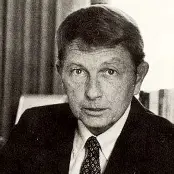
Duane P. Schultz
0Duane P. Schultz was an American psychologist and a leading historian of psychology whose textbooks defined the field for generations of students. He is best known for 'A History of Modern Psychology' (1969), a market-leading text praised for its biographical approach and comprehensive coverage, and for 'Psychology and Work Today' (1970), a foundational work in industrial-organizational psychology. He also co-authored 'Theories of Personality', a widely used textbook. A former professor at the University of South Florida, he held faculty appointments at several institutions. Schultz's engaging narrative style and emphasis on the lives of key theorists made the history of psychology accessible and compelling, cementing his legacy as one of the most influential pedagogical voices in the discipline.
Similar Minds
All authors →Key Insights
- ✦
What is Duane Schultz best known for?
Duane Schultz is best known for his widely used textbooks in psychology, particularly 'A History of Modern Psychology' and 'Psychology and Work Today'. His history text, first published in 1969, became a market leader for its engaging biographical approach, personalizing the development of psychological thought by focusing on the lives and contributions of key theorists. He also co-authored 'Theories of Personality' with his wife, Sydney Ellen Schultz. His textbooks have been translated into nearly a dozen languages and remain in print in multiple editions, making him one of the most influential psychology educators of his time.
- ✦
What is 'A History of Modern Psychology' about?
'A History of Modern Psychology' is a comprehensive textbook that traces the development of psychology from the late 19th century through the modern era. It is known for its biographical approach, which personalizes the history by detailing the lives, struggles, and contributions of influential psychologists. The book covers major schools of thought, including structuralism, functionalism, behaviorism, Gestalt psychology, and psychoanalysis, and discusses the social and intellectual contexts that shaped them. First published in 1969, it has been revised through multiple editions and remains a standard text in psychology courses worldwide.
- ✦
What other textbooks did Duane Schultz write?
In addition to his history of psychology, Duane Schultz co-authored 'Psychology and Work Today' (1970), a leading textbook in industrial and organizational psychology. He also co-authored 'Theories of Personality' with his wife, Sydney Ellen Schultz, which has gone through numerous editions and is widely used in personality psychology courses. Both texts are known for their clarity, engaging writing, and comprehensive coverage. His textbooks have been translated into many languages and are used in psychology programs around the world, reflecting his significant impact on psychology education across multiple subfields.
- ✦
Where did Duane Schultz teach?
Duane Schultz was a former professor of psychology at the University of South Florida. He also held faculty appointments at the University of North Carolina at Charlotte, Mary Washington College (now the University of Mary Washington), American University in Washington, D.C., and the University of Groningen in the Netherlands. He was later a courtesy professor at the University of South Florida. His extensive academic career across multiple institutions allowed him to influence a broad range of students and contribute to the development of psychology as a discipline.
- ✦
What was Duane Schultz's educational background?
Duane Schultz earned his undergraduate degree from Johns Hopkins University. He received a master's degree from Syracuse University and a PhD in social psychology from American University in Washington, D.C.. His academic training in social psychology provided a strong foundation for his later work in the history of psychology, industrial-organizational psychology, and personality theory. His diverse educational background contributed to his ability to write authoritatively across multiple subfields of psychology.
- ✦
How did Duane Schultz contribute to the history of psychology as a discipline?
Duane Schultz's primary contribution to the history of psychology was his role as a pedagogue and popularizer. Through his textbooks, particularly 'A History of Modern Psychology', he made the discipline's history accessible and engaging to generations of undergraduate students. His biographical approach—focusing on the lives, personalities, and struggles of key figures—humanized the subject and helped students connect with the material. By presenting the history as a compelling narrative rather than a dry chronology, he helped establish the history of psychology as a vital and interesting part of the psychology curriculum. His texts remain influential and are used in classrooms worldwide.
- ✦
Did Duane Schultz collaborate with his wife on his textbooks?
Yes, Duane Schultz collaborated extensively with his wife, Sydney Ellen Schultz, on many of his textbooks. Together, they co-authored 'Theories of Personality' and later editions of 'A History of Modern Psychology' and 'Psychology and Work Today'. They were widely regarded as a successful husband-and-wife textbook author team. Their collaboration combined Duane's historical and social psychological expertise with Sydney's contributions, resulting in texts that were both comprehensive and accessible. Their partnership in writing and revising these books spanned decades and produced some of the most enduring textbooks in psychology.
- ✦
What is the significance of Duane Schultz's work in industrial-organizational psychology?
Duane Schultz co-authored 'Psychology and Work Today', a foundational textbook in industrial-organizational (I-O) psychology. This book introduced students to the application of psychological principles to the workplace, covering topics such as employee selection, training, motivation, leadership, and organizational behavior. It has been a key resource in I-O psychology courses for decades. By making the field accessible to undergraduate students, Schultz helped popularize I-O psychology and contributed to its growth as a distinct subdiscipline. The book's enduring success reflects its clarity and relevance to both students and practitioners.