



Abnormal Psychology: An Integrative Approach
Barlow and Durand's textbook is organized around a single pedagogical claim: psychopathology is never caused by one force but by the interaction of biological, psychological, social, cultural, familial, and political factors. This integrative model rejects the 'single-cause, single-treatment' framing found in competing abnormal psychology texts. Each disorder chapter demonstrates how multiple causal streams converge, using case material drawn largely from the authors' clinical files. The textbook's distinctive mechanism is not a new theory of disorder but a consistent analytic habit—tracing interactions among forces rather than listing separate schools of thought.
Key Details
Related Books
View AllSimilar books from the same category, ranked by shared topics and reader engagement.


Key Insights — Read in 10 Minutes
What is the central claim of Barlow and Durand's textbook, and what does it reject?
The central claim is that psychological disorders are determined by multiple interacting forces—biological, psychological, social, cultural, familial, and political—rather than by any single cause. The textbook explicitly rejects the 'piecemeal single-cause, single-treatment model' that the authors attribute to competing abnormal psychology texts. This is a pedagogical and epistemological stance: students should learn to trace how causal streams converge in each disorder rather than memorize separate biological, psychodynamic, and behavioral accounts as alternatives. The integrative approach is presented as the method contemporary scientists actually endorse, not merely one option among many. The textbook's organization enacts this claim by embedding treatment discussion within disorder chapters rather than separating therapy into a distinct section.
What specific pedagogical framework did this textbook introduce to abnormal psychology teaching?
The textbook introduced a consistently applied biopsychosocial integration as the organizing structure for the entire course, rather than as a chapter topic. Earlier texts often presented schools of thought sequentially—biological perspectives, then psychodynamic, then behavioral—leaving students to synthesize. Barlow and Durand instead structure each disorder chapter around the interaction of forces, with case studies (reportedly 95 percent from the authors' own files) illustrating how biological vulnerability, psychological learning, and social context jointly produce and maintain pathology. A 1999 publisher description claimed the first edition was recognized as the only textbook presenting a truly biopsychosocial approach. This integration-as-organization principle influenced subsequent textbook design in the field, though the claim of uniqueness should be treated as the publisher's characterization rather than an independent scholarly verdict.
How has the textbook's authorship and edition history evolved?
The textbook originated with David H. Barlow and V. Mark Durand, first published by Brooks/Cole in 1994. Early editions appeared under Brooks/Cole and Wadsworth imprints, later under Cengage Learning. By the eighth edition (2018), Stefan G. Hofmann had joined as a third author. A ninth edition under the title Psychopathology: An Integrative Approach to Mental Disorders appeared in 2023. The edition numbering in library records is not perfectly consistent—some sources list a 2018 volume as both seventh and eighth edition depending on the catalog—so readers should verify the specific edition they are assigning. The companion volume Essentials of Abnormal Psychology provides a briefer version for courses requiring less detail.
How does the textbook's integrative approach relate to Barlow's research on anxiety disorders?
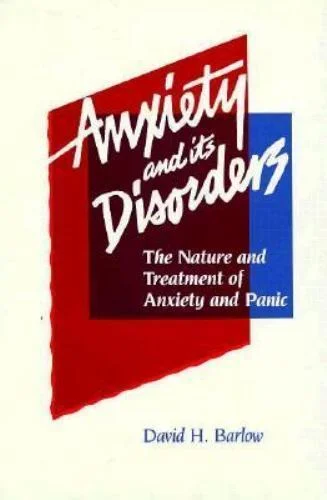
The textbook's integrative framework applies the same logic Barlow developed in his anxiety research, particularly the triple vulnerability model elaborated in Anxiety and Its Disorders. That model posits that anxiety disorders emerge from interacting biological temperament, generalized psychological vulnerability, and specific psychological vulnerability—an explicitly multi-force account. In the textbook, this style of explanation is generalized across all disorder categories: each chapter asks how constitutional, learning-historical, and contextual factors converge. The textbook thus serves as a teaching vehicle for the etiological reasoning Barlow developed in his specialized monographs, translated into a format accessible to undergraduates who will not read the primary theoretical literature. The relationship is one of applied pedagogical extension rather than direct argumentative dependence.
What is a common misreading of the integrative approach?
A frequent misreading treats 'integrative' as equivalent to 'eclectic'—a little biology, a little psychology, a little social context, combined without theoretical discipline. Barlow and Durand's approach is not additive but interactionist: the claim is that causal forces modify one another, so that the effect of a biological vulnerability depends on psychological and social conditions, and vice versa. Another misreading assumes the textbook denies the value of categorical diagnosis; in fact, it teaches DSM classification while insisting that diagnostic categories do not map cleanly onto single etiologies. The integrative stance is about causal explanation and treatment planning, not about rejecting nosology. Instructors using the text should make this distinction explicit, because students often reduce integration to a checklist of factors rather than a model of their interdependence.
How does this textbook compare with competing abnormal psychology texts in its treatment of DSM-5?
The textbook's edition cycle has tracked DSM revisions, with the seventh edition (2015) and eighth edition (2018) incorporating DSM-5 changes. A user review of the seventh edition noted that it had not yet been fully updated to coincide with DSM-5 at the time of that printing, though later printings and the eighth edition addressed this. Competitors such as Comer's Abnormal Psychology and Kring's text follow similar update patterns, and the timing of DSM-5 integration varied across publishers. The distinctive feature of Barlow and Durand is not superior DSM coverage but the insistence that DSM categories are descriptive starting points whose causal heterogeneity the integrative model is designed to unpack. Instructors adopting the text should confirm which DSM version a given printing reflects, as used copies may lag.
Wealthy Psyche is an intellectual archive. We do not host, distribute, or sell book copies — physical or digital. We provide structured knowledge to help you think better, faster.