



Eihei Kōroku (Extensive Record)
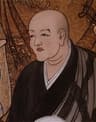
Eihei Kōroku is not a treatise but a compiled record: ten volumes of Dharma-hall discourses, informal talks, kōan commentaries, and verse delivered by Dōgen at Eiheiji and earlier temples, edited largely by his disciple Koun Ejō. Its distinctive value lies in what it preserves rather than what it argues — the day-to-day pedagogical voice of Dōgen addressing monks, lay patrons, and rival lineages. The collection is the primary source for his later-period emphasis on causality (jinshin inga) and his increasingly sharp critique of original-enlightenment (hongaku) complacency. Because the extant text was shaped by posthumous editing, reading it as Dōgen's unmediated words mistakes editorial construction for authorial intention.
Key Insights
✦What does Eihei Kōroku contain that Shōbōgenzō does not?
Shōbōgenzō is a collection of independent philosophical essays composed over decades, whereas Eihei Kōroku records the oral and ceremonial teaching Dōgen delivered at specific times and places, primarily after his move to Echizen in 1243. Its ten volumes comprise formal Dharma-hall discourses (jōdō), informal talks (shōsan), kōan commentaries (mondō), and appreciatory verses. The difference is not merely generic. Eihei Kōroku shows Dōgen addressing monks in training and lay patrons directly, often with a sharper sectarian edge and a more explicit emphasis on karmic causality than the more philosophically elaborated fascicles of Shōbōgenzō. It is the closest thing to a record of how Dōgen actually taught in his final decade, though the word 'record' must be qualified by its editorial history.
✦Who compiled Eihei Kōroku, and how did the text reach its present form?
The collection was assembled chiefly by Koun Ejō (1198–1280), Dōgen's closest disciple and second abbot of Eiheiji, with later involvement by other editors. Ejō's editorial hand is visible throughout, and he is credited with transcribing and organizing much of the material in volumes 1 through 7, which contain Dōgen's formal kanbun sermons delivered between roughly 1244 and 1253. A condensed one-volume version, Eihei Goroku, circulated earlier — first printed in 1358 — and became the basis for many later editions. The full ten-volume Eihei Kōroku was not printed until the Edo period. This layered transmission means the text we read is the product of multiple editorial stages, not a single authorial manuscript.
✦How have modern scholars assessed the editorial interventions in Eihei Kōroku?
Textual scholarship has documented specific alterations that change the doctrinal import of individual passages. A study in the Komazawa University repository examines how the Edo-period editor Manzan changed a key phrase in a Dharma-hall discourse from a formulation consistent with Dōgen's non-dual practice-realization stance into one implying that practice follows realization as a later stage. The same study notes that the original wording in Ejō's recension aligns with Shōbōgenzō Busshō's claim that Buddha-nature is not possessed before realization but is inseparable from it. Steven Heine and other scholars have similarly argued that extant Eihei Kōroku editions were significantly edited in the Edo period under shogunal oversight of religious sects. These findings do not make the text unusable, but they require readers to treat variant readings as doctrinally consequential rather than incidental.
✦What role does Eihei Kōroku play in the Critical Buddhism debate over Dōgen's stance on original enlightenment?
Eihei Kōroku is a central evidentiary text for the Critical Buddhism movement associated with Hakamaya Noriaki and Matsumoto Shirō. They locate in its first volume a key passage describing Dōgen's return from China 'empty-handed,' which they read as evidence of a decisive turn away from tathāgatagarbha and hongaku frameworks. Hakamaya argues that Dōgen's later teaching, preserved in the record, stresses karmic causality and repentance in a way that the 75-fascicle Shōbōgenzō does not. Steven Heine's analysis in Pruning the Bodhi Tree documents the debate and notes that traditional Sōtō scholars such as Kagamishima Genryū have responded with detailed fascicle-by-fascicle comparisons. The disagreement is not merely about Dōgen's development; it concerns which textual corpus — the essayistic Shōbōgenzō or the recorded sermons of Eihei Kōroku — should anchor the interpretation of his mature thought.
✦What should readers know about the English translation of Eihei Kōroku before relying on it?
The first complete English translation is Taigen Dan Leighton and Shohaku Okumura's Dōgen's Extensive Record, published by Wisdom Publications (2004 hardcover; a paperback edition followed in 2010). It includes introductions by Steven Heine and John Daido Loori and is the standard scholarly access point. Reviewers have praised its readability and its success in conveying Dōgen's warmth and range, while noting that it is a translation of a compiled, historically mediated text rather than of a single autograph. Because the underlying Japanese edition used for the translation is not always foregrounded in the running text, readers interested in textual questions should consult the translators' notes and compare specific passages against the Shunjūsha edition or the older Eihei Goroku where doctrinal stakes are high.
✦Is it accurate to treat Eihei Kōroku as simply 'Dōgen's later teachings' in a straightforward chronological sense?
Not without qualification. The collection is organized by genre and location rather than strict chronology, and some material in the later volumes may preserve earlier talks or editorial rearrangements. More importantly, the condensed Eihei Goroku circulated for centuries as the accessible version, and its selections shaped how Dōgen's recorded teaching was received before the full ten-volume text became available in print. Calling Eihei Kōroku 'later teachings' is therefore a useful shorthand but not a precise description of its contents or its reception. The text is better approached as a curated archive of Dōgen's pedagogical activity, edited and re-edited, whose value lies in what it reveals about his teaching practice rather than in any claim to transparent immediacy.
Wealthy Psyche is an intellectual archive. We do not host, distribute, or sell book copies — physical or digital. We provide structured knowledge to help you think better, faster.