


.webp?alt=media&token=fe90549a-9842-4d96-b442-a481f7724ad7)
Exploring Federalism
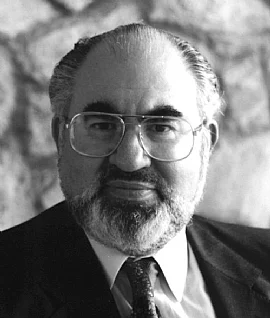 Daniel J. Elazar
Daniel Elazar's Exploring Federalism argues that federalism is not merely a constitutional arrangement dividing power between central and regional governments, but a comprehensive political theory rooted in covenant, partnership, and the diffusion of power. Elazar distinguishes federalism from decentralization and from simple territorial devolution: genuine federalism requires non-centralization—power shared among multiple centers that are constitutionally protected and mutually negotiating rather than hierarchically subordinate. He treats federalism as a matrix of self-rule plus shared rule, applicable to states, federacies, confederations, and non-territorial communities, and grounded in the covenantal tradition of the Hebrew Bible, Puritan New England, and the American founding.
Key Details
Related Books
View AllSimilar books from the same category, ranked by shared topics and reader engagement.
.webp?alt=media&token=aa57557c-98c6-4edb-ba61-0189bc741142)
.webp?alt=media&token=d825d9b8-81eb-48cc-9855-03fb63662959)
Key Insights — Read in 10 Minutes
What is the central claim of Exploring Federalism, and what does it reject?
Elazar argues that federalism is a fundamental political theory—based on covenant, partnership, and the diffusion of power—not simply a structural division between national and state governments. He rejects the reduction of federalism to decentralization, administrative devolution, or a hierarchical center-periphery relationship. For Elazar, genuine federalism requires non-centralization: multiple constitutionally protected centers of power that share rule and negotiate as partners. He also rejects treating federalism as uniquely American, presenting it as a general principle applicable across cultures and historical periods.
What specific concepts did Elazar introduce or systematize in this book?
Elazar systematized the distinction between federalism and decentralization, and introduced the widely cited formula of self-rule plus shared rule as the essence of federal arrangements. He also developed non-centralization as the defining structural principle, and used covenant—drawn from the biblical and Puritan traditions—as the normative foundation of federal politics. His typology extends federalism to federacies, confederations, leagues, associated states, and non-territorial communities, giving comparative federalism a vocabulary that scholars still use.
How does Exploring Federalism differ from William Riker's approach to federalism?
Riker treats federalism as a bargain among politicians seeking territorial expansion and military security, with a central government and constituent units each retaining autonomy—a largely strategic and institutional account. Elazar treats federalism as a normative and covenantal political culture, emphasizing partnership, power sharing, and non-centralization as ends in themselves. Where Riker asks what incentives produce federal bargains, Elazar asks what values and traditions sustain federal politics. Their contrast frames much of the later debate between positive and normative theories of federalism.
How has Elazar's argument held up since the book's publication?
Elazar's non-centralization concept and self-rule plus shared rule formula remain standard reference points in comparative federalism and are widely cited in scholarship on multinational states and the European Union. However, critics argue his covenantal framework is culturally specific to the Jewish and Anglo-American traditions and travels poorly to federal systems without that background. Others contend his broad typology stretches federalism so far that it loses analytical precision. The book remains influential but is often used selectively—its concepts more than its normative thesis.
What real-world systems or practices reflect Elazar's conception of federalism?
Elazar's framework is applied to established federations like the United States, Canada, Australia, Germany, and Switzerland; to multinational arrangements such as Belgium, Spain, and India; and to confederal or federacy arrangements including the European Union and Puerto Rico's relationship with the United States. His non-centralization principle is invoked in debates over devolution in the United Kingdom and constitutional design in post-conflict states. The self-rule plus shared rule formula is a standard analytic tool in comparative politics and in policy discussions of multi-level governance.
What is a common misconception about Exploring Federalism?
A common misconception is that Elazar equates federalism with decentralization. He explicitly rejects that equation: decentralization keeps ultimate authority at the center and delegates downward, while federalism constitutionally protects multiple centers that share rule as partners. Another misreading treats the book as a purely descriptive typology; in fact it advances a normative covenantal argument about why federal arrangements are morally and politically valuable. Readers looking only for institutional mechanics will miss that the book is as much about political culture and covenant as about structure.
Wealthy Psyche is an intellectual archive. We do not host, distribute, or sell book copies — physical or digital. We provide structured knowledge to help you think better, faster.