



Leaders in Education: A Biographical Directory
 James McKeen Cattell
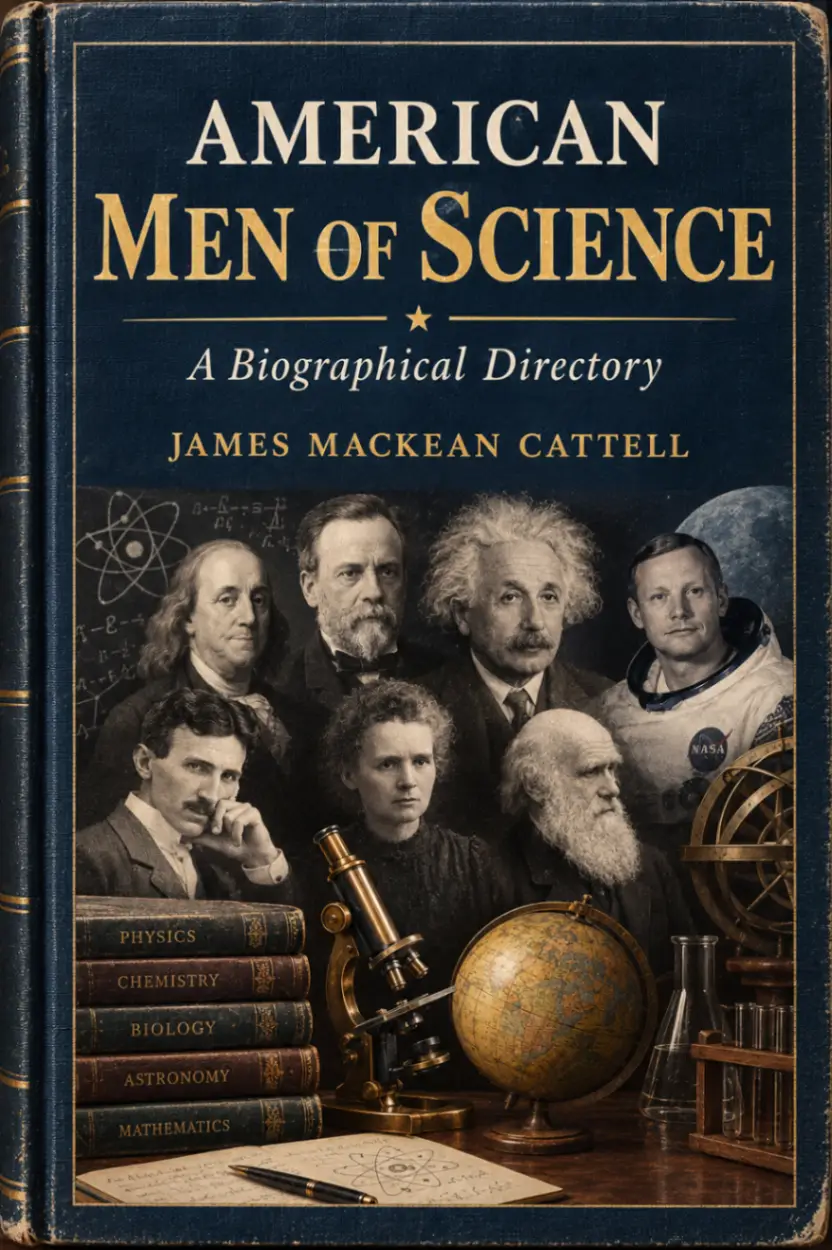
Edited by Cattell and published by The Science Press, this biographical directory compiles sketches of thousands of living American educators to address the isolation of institutions and promote the unity of education. The first edition (1932) contains over 11,000 entries covering teachers and administrators from nursery school through university. Cattell's preface frames the volume as a practical instrument for studying the antecedents, achievements, and geographic distribution of educational workers, extending the biographical methodology he pioneered with American Men of Science into the domain of education.
Key Details
Related Books
View AllSimilar books from the same category, ranked by shared topics and reader engagement.


Key Insights — Read in 10 Minutes
What was the purpose of Leaders in Education, and how did Cattell justify the project?
Cattell's stated purpose was to address the isolation of American educational institutions and the resulting mutual unfamiliarity among educators. In his preface, he observed that workers in American education are little known to one another because of the isolation of the institutions they serve, and he expressed the hope that the dictionary would emphasize and promote the unity of education. Beyond this unifying function, Cattell argued that biographical collections provide materials for studying the antecedents, achievements, and geographic distribution of a given class of individuals. The volume was thus both a practical networking tool and a data source for the scientific study of educational personnel, mirroring the rationale behind his earlier American Men of Science.
What was the scope of the first edition, and how many educators were included?
The first edition, published in 1932 by The Science Press, contained biographical sketches of somewhat more than 11,000 living educators. The volume ran to 1,037 pages and was 26 centimeters tall. Its coverage extended across all grades of educational institutions, from the nursery school through the university, encompassing teachers, administrators, and other workers in the field. By the second edition in 1941, the directory had expanded to 17,500 biographical sketches. The fourth edition, published in 1971 after a twenty-three-year hiatus, described its 15,000 entries as detailed biographical sketches of decision makers and outstanding contributors to the educational community, with coverage limited primarily to Canada and the United States.
How does Leaders in Education relate to Cattell's American Men of Science?
Leaders in Education extends the biographical methodology Cattell had developed with American Men of Science, which was the standard reference book of biographies of men in the field of science. The educational directory adopts the same underlying premise: that identifying and cataloguing the personnel of a field is a prerequisite for studying its structure and advancing its interests. The 1971 review of the fourth edition explicitly describes Leaders in Education as a companion volume to American Men of Science and Directory of American Scholars. Cattell's editorial experience with the scientific directory directly informed the educational one, and his career as editor of Science, School and Society, and The Scientific Monthly provided the institutional network from which he drew contributors and respondents.
What criticisms or limitations have been identified in the directory's selection methods?
The fourth edition's selection process drew scrutiny. Editors mailed questionnaires to presidents and deans of accredited universities, professors of education, state commissioners, members of accreditation boards, superintendents of major school systems, and authors of pedagogical books, asking them to nominate candidates for inclusion. However, the actual basis of selection from among the nominations was not stated, leading one reviewer to wonder whether all persons who were nominated were actually included. The same review noted marked variations in the representation of persons from particular geographic areas or holding particular positions: curriculum directors of moderate-sized school systems appeared while superintendents of much larger systems did not, and deans of all colleges within some universities were included while only deans of education appeared from others.
How did the editorial team for Leaders in Education evolve across editions?
James McKeen Cattell edited the first edition (1932) and the second edition (1941), for which he was joined by Jaques Cattell and E. E. Ross. Cattell died in 1944, and the third edition (1948) was edited by Jaques Cattell and E. E. Ross alone. By the fourth edition (1971), the publisher had become Jaques Cattell Press in collaboration with R. R. Bowker, with no individual editor credited in the same way. The fifth and final edition appeared in 1974. This progression from a single founding editor to institutional authorship reflects both Cattell's personal role in establishing the series and its eventual absorption into the reference publishing industry.
What is the most common misconception about Leaders in Education based on its title?
A common misconception treats the volume as a collection of essays or theoretical writings by prominent educators, analogous to a reader or anthology. It is in fact a biographical directory—a reference work consisting of brief factual entries on individual educators, organized alphabetically and intended for lookup rather than sustained reading. Each entry includes information such as birth date and place, education, career history, honors, society memberships, publications, professional interests, and address. The title's ambiguity has led some to assume a different genre than the one Cattell produced. The 1971 review notes that the format is essentially the same as American Men of Science, confirming its nature as a prosopographical reference tool rather than a collection of pedagogical essays.
Wealthy Psyche is an intellectual archive. We do not host, distribute, or sell book copies — physical or digital. We provide structured knowledge to help you think better, faster.