


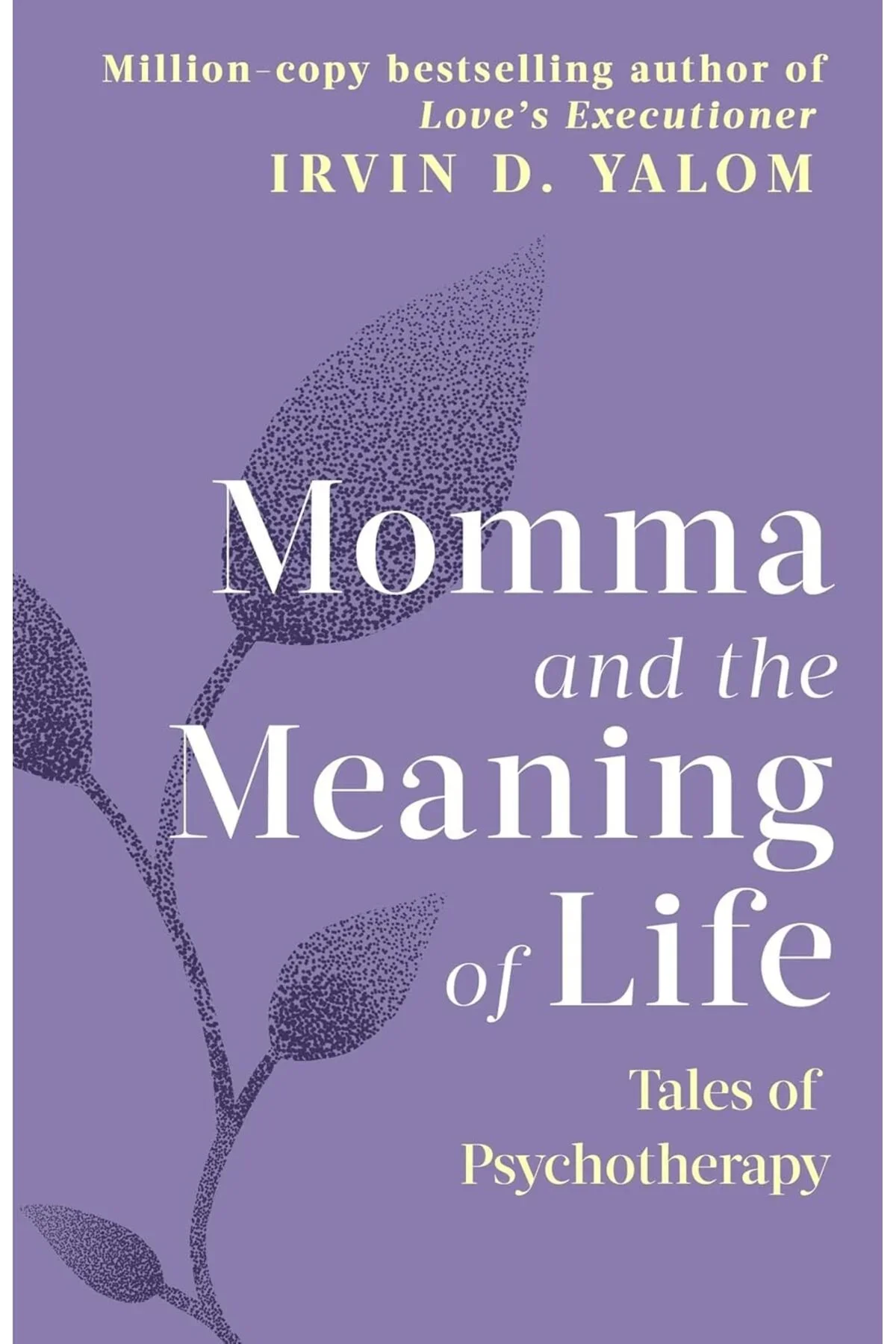
Momma and the Meaning of Life: Tales of Psychotherapy
 Irvin David Yalom
Yalom's collection of six therapy tales extends his signature method: using the therapist's own countertransference, including his unresolved relationship with his mother, as clinical material. The book's distinctive mechanism is the deliberate mixing of nonfiction and fiction—Yalom states that the title story is an autobiographical fantasy and two later tales are largely invented—to probe what therapy actually feels like rather than what it claims to do. Across the cases, the recurring argument is that confronting mortality, grief, and the wish for maternal approval is the substance of therapeutic work, not the elimination of symptoms. The title story enacts this most directly, as Yalom's dead mother drifts through his dreams and challenges his lifelong need for her approval.
Key Details
Related Books
View AllSimilar books from the same category, ranked by shared topics and reader engagement.


Key Insights — Read in 10 Minutes
What is the central claim of Momma and the Meaning of Life, and what does it reject?
The central claim is that therapy's deepest work occurs when patients and therapist confront mortality, grief, and the unfinished business of intimate relationships—not when symptoms are managed through quick techniques. Yalom rejects the model of therapy as a set of therapeutic fixes applied to discrete problems. The six stories are designed to show what really happens in therapy, including its promises and perils . The title story makes the argument personal: Yalom's dead mother appears in his dreams, and he reflects that he may still be motivated by a childhood wish to please her, asking 'Momma, how'd I do?' even decades after her death . The book thus treats the therapist's own unresolved life as part of the evidence, not as a contaminant to be hidden.
How does the book mix fact and fiction, and why does Yalom do this?
Yalom is explicit about the mixture. In his afterword, he states that the first story is 'a true autobiographical fantasy'—the dream and events are true, but the precise conversation is invented. The next three stories are 'pure nonfiction flecked only with fiction to conceal the patients' identity,' and the final two contain a 'nonfictional nucleus' . This deliberate blending serves two purposes. Ethically, it protects patient confidentiality through disguise . Aesthetically, it allows Yalom to convey the felt experience of therapy—its dreamlike logic, its emotional truth—rather than a documentary transcript. The result is a book that asks to be read as truthful rather than literally factual, and Yalom provides an afterword to clarify the boundary.
What does the title story reveal about Yalom's relationship with his mother, and how does it function clinically?
The title story describes Yalom's relationship with his mother as one of claustrophobic overidentification: her desire for closeness assaulted his need for separateness, and her love came mixed with disapproval . Ten years after her death, he reflects that he may still be driven by the wish to please her. This is not merely personal confession; it is Yalom's method in action. By exposing his own unfinished business, he demonstrates that the therapist's inner life is not a neutral instrument but a participant in the therapeutic field. The story thus functions as clinical evidence for the book's broader argument: that the need for recognition from a parent can persist long after death and shape how one works, loves, and seeks approval.
How was the book received, and what are its main criticisms?
Reception was mixed but largely favorable. Kirkus Reviews called it a worthy sequel to Love's Executioner, praising its profound observations on death and the desperate attempts to modify one's personality to live more fully, and singled out 'Seven Advanced Lessons in the Therapy of Grief' as stunning . A review in Psychiatric Services praised Yalom's self-revealing generosity but noted that the final two fictional stories create a 'somewhat disjointed' feeling, as the collection shifts abruptly from clinical fact to fanciful invention . Yalom's own website acknowledges the book's status as a 'hidden gem' rather than a major work, which is a fair assessment: it is a valuable companion to his better-known case narratives rather than a foundational statement .
How does this book relate to Love's Executioner and Existential Psychotherapy?
The book extends Love's Executioner's format of narrated cases that expose the therapist's countertransference, but with a more explicit focus on grief and the mother-bond. The connection to Existential Psychotherapy is stated in Yalom's own afterword: the existential frame of reference posits that patients fall into despair because of encounters with death, isolation, freedom, and meaninglessness, and these themes form the spine of his 1980 textbook . Momma and the Meaning of Life applies that framework in narrative form, particularly in the long Irene case, which traces bereavement and 'rage grief' over years of work. The book is therefore an application of the theory rather than an extension of it, valuable for showing how existential concerns surface in the texture of clinical relationships.
Wealthy Psyche is an intellectual archive. We do not host, distribute, or sell book copies — physical or digital. We provide structured knowledge to help you think better, faster.