


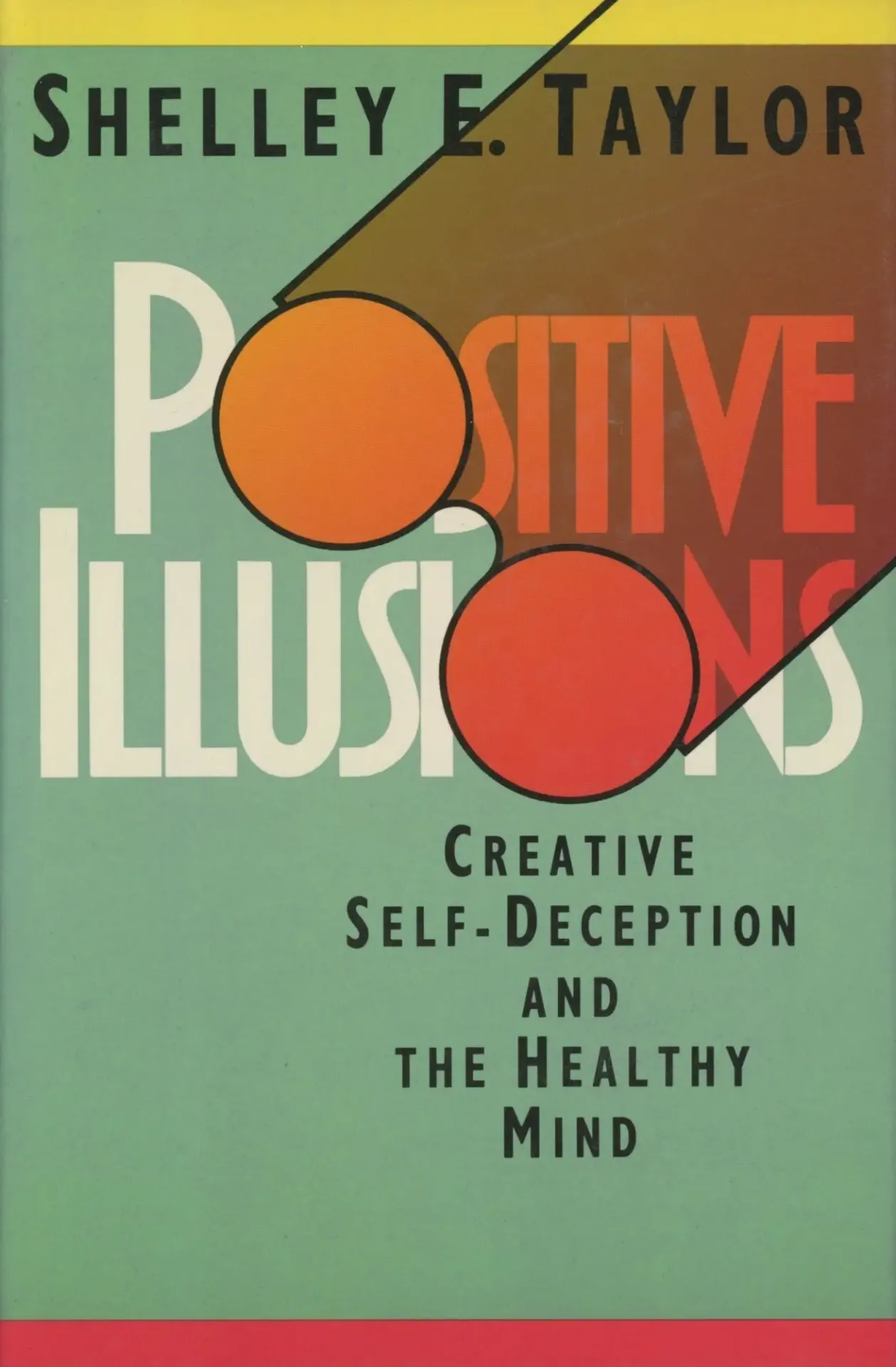
Positive Illusions: Creative Self-Deception and the Healthy Mind
Taylor's central thesis is that the psychologically healthy mind is not an accurate mind: normal people hold mildly distorted, overly positive views of themselves, their control over events, and their future prospects, and these 'positive illusions' actively promote mental and physical well-being. Drawing on research with cancer patients, disaster survivors, and ordinary populations, she argues that unrealistic optimism, exaggerated personal control, and self-aggrandizing self-perception buffer against adversity, sustain motivation, and even improve health outcomes. The book inverts the conventional assumption that mental health equals accurate reality testing, proposing instead that a degree of benign self-deception is adaptive and constitutive of well-being.
Key Details
Related Books
View AllSimilar books from the same category, ranked by shared topics and reader engagement.


Key Insights — Read in 10 Minutes
What are the three forms of positive illusion Taylor identifies, and how does each operate?
Taylor specifies three interrelated positive illusions. First, unrealistically positive views of the self: people consistently rate themselves as better than average on desirable traits and abilities, and evaluate themselves more favorably than others evaluate them . Second, exaggerated perceptions of personal control: individuals believe they have more influence over outcomes than objective circumstances warrant, a belief that encourages persistence and reduces helplessness. Third, unrealistic optimism about the future: most people believe they are more likely than their peers to experience positive events and less likely to experience negative ones like illness, divorce, or job loss . These illusions are not deliberate lies but automatic, unconscious biases in information processing—the mind cordons off negative information and distorts incoming data in a positive direction .
How does Taylor use depressive realism to support her argument, and what criticism did the book receive on this point?
Taylor argues that depressed individuals are often more accurate in their perceptions than healthy people—they lack the positive biases that normally shelter people from reality. This 'depressive realism' serves as evidence that positive illusions are constitutive of mental health: if realism accompanies depression, then illusion accompanies well-being . Nancy Mairs, reviewing in the Los Angeles Times, found this framing troubling because it adopts a 'fundamentally gloomy vision of reality' in which Taylor herself declares that without freedom from illness and disability, the enjoyment of other aspects of life is undermined . Mairs, who lives with multiple sclerosis, objected that her own experience contradicts this bleak premise, and that Taylor's scientific authority smuggles in an unexamined assumption that reality is inherently distressing and only illusion makes it bearable .
What specific evidence did Taylor draw on from studies of cancer patients and trauma survivors?
Taylor's evidence base includes research with breast cancer patients, rape victims, and survivors of disasters. Recovered cancer patients who believed they would never have a relapse, rape victims who claimed newfound control and mastery over their social environment, and victims of life-threatening events all showed benefits from 'benign fictions' they invented . These findings directly challenged the clinical assumption that accurate reality testing is a marker of mental health. If cancer patients with unrealistically optimistic beliefs adjusted better than those with accurate prognoses, then illusion—not realism—was doing adaptive work. Taylor's argument thus inverted the standard therapeutic goal of helping patients accept harsh truths, suggesting instead that protective illusions should be respected rather than dismantled .
How was the book received by reviewers, and what limitations did they note?
Reviews were mixed. Sylvia Shellenberger, in Family Systems Medicine, praised the book as a clear, accessible introduction to cognitive intervention strategies, noting its utility for students and health care professionals, though she observed that systemic therapists would not assume reality and illusion are always easy to distinguish . Nancy Mairs found the book generally brisk and authoritative but criticized its prose as often tedious, with the phrase 'illusions about the self, the world, and the future' repeated so often she began to wince . Mairs also noted that Taylor relies heavily on summarizing research studies rather than developing vivid examples, which would have dramatized her points and held attention more fully . These criticisms suggest the book's strength lay in its thesis and synthesis rather than its literary execution.
How does Positive Illusions relate to Taylor's later work on cognitive adaptation and the tending instinct?
The book extends the 'cognitive adaptation' theory Taylor first outlined in a 1983 American Psychologist article, which proposed that adjustment to threatening events involves searching for meaning, gaining a sense of mastery, and restoring self-esteem . Positive Illusions provides the detailed empirical and theoretical elaboration of that framework, particularly the mechanisms of control and self-enhancement. The book also anticipates Taylor's later tend-and-befriend theory by emphasizing that social relationships and optimism work together to buffer stress—a theme she would develop more fully in The Tending Instinct. Taylor's consistent research program across these works is the argument that psychological resources, including mildly distorted positive beliefs, have measurable biological and health benefits, not merely subjective ones .
What is the most common misconception about the book's argument, and how does Taylor's framework respond to it?
The most persistent misconception treats positive illusions as equivalent to denial or delusion—a refusal to face reality that must eventually collapse. Taylor explicitly rejects this. The illusions she describes are mild, ubiquitous, and adaptive, not psychotic distortions or deliberate avoidance. They operate automatically and unconsciously, shaping how information is processed rather than blocking it entirely . A second misconception assumes the book advocates for self-deception as a strategy one can consciously adopt. Taylor's point is descriptive, not prescriptive: normal cognition already functions this way, and the evidence suggests that dismantling these biases—as some therapies attempt—may be counterproductive. The book's argument is that mental health is not the absence of bias but the presence of biases that lean toward optimism and efficacy .
Show 1 more insights
What role does the concept of 'creative self-deception' play in the book, and what does it mean?
Creative self-deception is Taylor's term for the mind's active, constructive role in generating positive illusions. The word 'creative' signals that these distortions are not passive errors but generative processes that build adaptive frameworks for coping . When people face adversity, they do not merely receive reality and respond; they actively construct meanings, narratives, and beliefs that make the situation bearable and actionable. The cancer patient who believes she will beat the odds, the trauma survivor who finds new purpose, the ordinary person who expects good outcomes—all are engaged in creative self-deception that serves psychological and physiological functions. Taylor's framework thus positions the mind as an active agent in well-being, not a passive recorder of objective conditions .
Wealthy Psyche is an intellectual archive. We do not host, distribute, or sell book copies — physical or digital. We provide structured knowledge to help you think better, faster.