


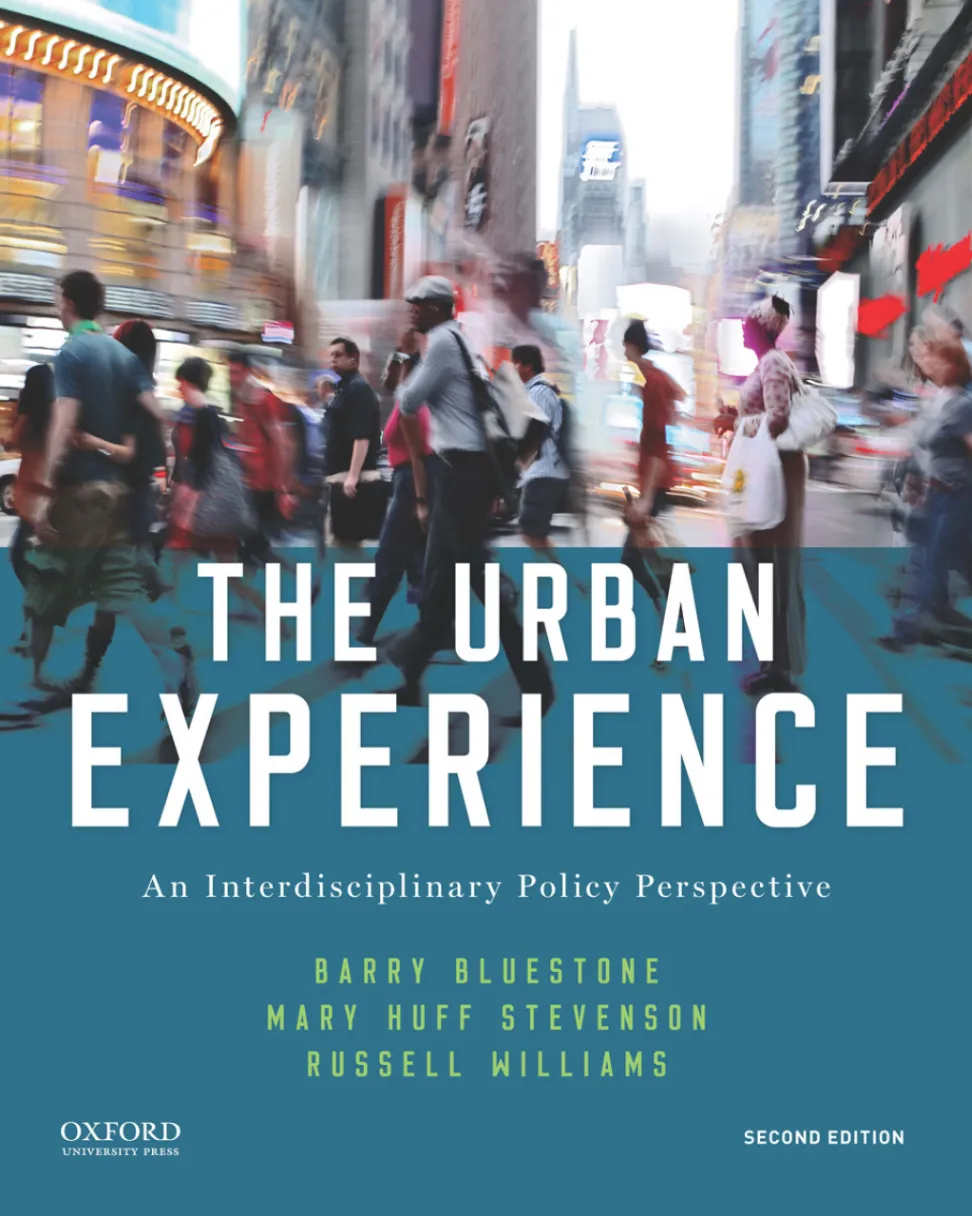
The Urban Experience
 Stanley Milgram
Milgram's central argument in this work is that the distinctive psychological character of city life—its pace, its impersonality, its selective inattention—arises not from the moral failings of urbanites but from an adaptive response to stimulus overload. The city bombards the individual with more inputs than can be processed, forcing systematic triage: less time per encounter, disregard for low-priority stimuli, and the withdrawal of social involvement. Milgram frames these behaviors as rational adaptations to a quantitative problem of cognitive capacity, measured through inventive field experiments comparing city and town conduct.
Key Details
Related Books
View AllSimilar books from the same category, ranked by shared topics and reader engagement.



Key Insights — Read in 10 Minutes
What is the central claim of Milgram's urban psychology, and what does it reject?
Milgram argues that the characteristic behaviors of city dwellers—walking faster, avoiding eye contact, withholding assistance in non-emergencies—are not expressions of moral deficiency or innate rudeness. They are adaptive responses to what he calls stimulus overload: the city presents more sensory inputs, social encounters, and decision demands than an individual can fully process. The overload model, adapted from systems theory, treats the urbanite as a limited-capacity system forced to set priorities and discard low-priority inputs. This rejects dispositional explanations that attribute urban impersonality to callousness or alienation, and it reframes city behavior as a rational, if sometimes tragic, management of cognitive scarcity [citation:1][citation:24].
What specific experiments or methods did Milgram use to study urban behavior?
Milgram and his students at CUNY devised a grab bag of field experiments comparing city and small-town behavior. They measured walking speeds in downtown Boston versus Concord, Massachusetts, finding city pedestrians moved about ten percent faster [citation:1]. The lost-letter technique tested helping behavior by scattering addressed, stamped letters in different neighborhoods and counting how many were mailed . Other studies examined willingness to give up a subway seat, response to line intrusions, and the formation of 'mental maps' of cities. These methods shared a commitment to discrete, observable outcomes—did the person act or not—which gave Milgram's findings a clarity and conclusiveness that continuous measures often lack .
How does the overload hypothesis explain bystander non-intervention in urban crises?
Milgram's analysis of the Kitty Genovese case argues that urban withdrawal from social responsibility is a direct function of input overload. When cries for help are general rather than directed at a specific person, and when potential helpers have been conditioned by city life to restrict involvement as a matter of routine cognitive economy, no single individual feels a special responsibility to act. Milgram and Hollander emphasized that urban friendships are not necessarily fewer or weaker, but they are not physically proximate—allies are 'miles from the scene' . The overload model thus reframes the bystander problem not as apathy but as a structural mismatch between the demands of a crisis and the adaptive habits of urban attention.
How has the overload model held up since Milgram introduced it?
The overload framework has proven durable as a descriptive account of urban behavior, though subsequent research has refined and complicated it. The walking-speed finding has been replicated in multiple cities, and the broader correlation between city size and pace of life is well documented [citation:1]. However, critics have noted that overload alone cannot explain why some cities maintain stronger community ties or why urban helping behavior varies so widely across neighborhoods and cultures. Later environmental psychology has emphasized the interaction between cognitive load and contextual factors like neighborhood stability, social capital, and perceived safety. The model remains a foundational contribution because it made the city a legitimate subject for experimental social psychology, bridging Simmel's and Wirth's theoretical speculations with measurable behavioral data [citation:1][citation:24].
Where does 'The Urban Experience' fit in relation to Milgram's other publications?
This work is not a standalone monograph but rather the urban-psychology essay from Milgram's broader collected works, most notably 'The Individual in a Social World: Essays and Experiments' (1977). In that collection, 'The Experience of Living in Cities' forms the opening section, followed by chapters on the urban bystander, waiting-line intrusions, mental maps of New York and Paris, and the 'familiar stranger' [citation:12][citation:22]. The essay originated as a 1970 Science article that Milgram considered one of his most significant contributions—it became a Citation Classic and was adapted into a documentary film, 'The City and the Self,' in 1972 [citation:1][citation:14]. It stands as the theoretical centerpiece of his urban research program at CUNY.
How has this work been misread or oversimplified?
A common misreading treats Milgram's overload model as a justification for urban callousness or a deterministic claim that city dwellers are incapable of compassion. Milgram himself noted that the absolute level of cooperativeness among urban subjects was 'quite high' and did not accord with the stereotype of the aloof, self-centered urbanite [citation:9]. The model describes a general tendency, not an iron law; it explains why city behavior shifts toward efficiency and self-protection under conditions of high input, but it does not claim that all urbanites withhold all help. Another oversimplification collapses the urban work into the obedience studies, treating Milgram as a one-experiment psychologist. In fact, urban psychology occupied a much larger portion of his professional career than obedience did [citation:24].
Wealthy Psyche is an intellectual archive. We do not host, distribute, or sell book copies — physical or digital. We provide structured knowledge to help you think better, faster.