


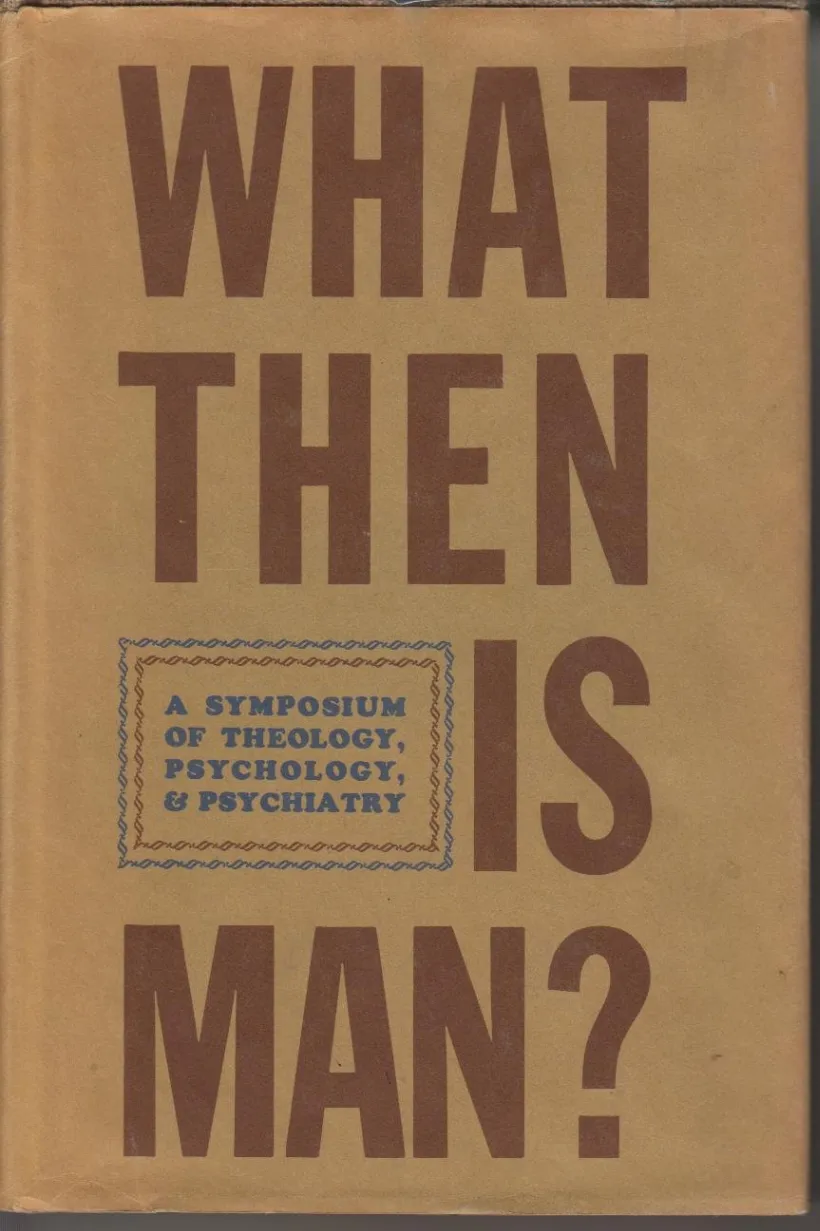
What, Then, Is Man? A Symposium of Theology, Psychology, and Psychiatry
 Paul Everett Meehl
This volume is not a single-author monograph but a collaborative symposium prepared under Meehl's chairmanship at Concordia Seminary, asking what theology should make of psychology and psychiatry's accounts of human nature. Its central argument is that a Christian anthropology can engage biological, behavioral, and psychodynamic findings without either spiritualizing them away or capitulating to reductionism. Chapters address determinism, guilt, faith, pastoral counseling, and the tensions between psychological and theological vocabularies. Meehl's distinctive contribution is methodological: he insists that apparent conflicts between the disciplines be subjected to rigorous logical analysis rather than rhetorical resolution.
Key Details
Related Books
View AllSimilar books from the same category, ranked by shared topics and reader engagement.

Key Insights — Read in 10 Minutes
What is the central question of this symposium, and what does it reject?
The volume asks what theology should make of the insights and concepts of psychology and psychiatry, as the synopsis puts it, without either dismissing them as secular intrusions or accepting them uncritically as replacements for theological anthropology . It rejects two positions: the spiritualizing tendency that treats psychological findings as irrelevant to Christian accounts of persons, and the reductionist tendency that treats biological and behavioral descriptions as exhaustive. A Goodreads review describes the book as humanizing and incarnating its subject, addressing human issues through biology and psychology alongside the spirit, dealing with the whole of man rather than selected parts . The symposium's stance is neither defensive nor capitulating; it is an exercise in disciplined intellectual engagement.
How was this volume produced, and what was Meehl's role?
The book was prepared by a special committee of experts under the direction of the School for Graduate Studies at Concordia Theological Seminary in St. Louis, and published in 1958 as number three in its Graduate Study series . Library records note that the greatest contribution was made by the committee's chairman, Dr. Paul Meehl . It is not a single-authored work but a symposium, with Meehl listed as primary contributor alongside H. Richard Klann, Alfred F. Schmieding, and Kenneth H. . Meehl was a University of Minnesota clinical psychologist and past APA president , making his leadership of a Lutheran theological project a notable intersection of his professional and religious commitments.
What topics does the symposium cover?
The table of contents traces a progression from foundational anthropology to practical application. It opens with the Christian view of man and the philosophical presuppositions of psychologists, then moves through biological nature and the molding of behavior into psychodynamics and psychopathology. It addresses tensions between psychology and theology, determinism, valid and displaced guilt in relation to psychological health and spiritual condition, faith and personality, pastoral counseling, and salutary interaction processes in the Christian parish . A later paperback edition includes additional retrospect chapters on faith healing, conscience in pastoral counseling, the dualism problem, differential psychology, and indeterminacy and teleological constraints . The scope is deliberately comprehensive, refusing to isolate doctrinal anthropology from clinical reality.
What is Meehl's distinctive methodological contribution to the symposium?
A review in Concordia Theological Monthly highlights the symposium's insistence that the compatibility of learning theory and theological formulations of the same behavioral event could only be properly investigated through detailed and rigorous logical analysis . This is the Meehl signature: apparent conflicts between psychology and theology are often not substantive disagreements but confusions produced by nonoverlapping terminologies. The review notes the symposium's observation that when pastor and psychotherapist seem to get in each other's way, it is sometimes difficult to tease out the precise locus of cognitive disagreement because they use largely nonoverlapping terminologies . Meehl's contribution is to demand that the disciplines clarify their terms before pronouncing on each other's claims.
How does the symposium treat the relationship between determinism and Christian faith?
The volume devotes a chapter to determinism and related problems, treating it as a genuine point of tension rather than a pseudo-problem. The Concordia Theological Monthly review notes the symposium's approach to learning theory, which describes acquisition in terms of habit, expectancy, cathexis, and perception, and suggests that compatibility with theological formulations requires logical analysis rather than assertion . Meehl had a longstanding philosophical interest in determinism and free will, later evident in his Selected Philosophical and Methodological Papers. The symposium does not resolve the tension by fiat; it models the kind of careful conceptual work Meehl believed was necessary for any honest engagement between scientific and theological accounts of human action.
How does this volume relate to Meehl's better-known work on clinical prediction?
The symposium occupies a different register from Meehl's clinical and methodological writings, but it shares a common intellectual commitment: the insistence that claims be examined by rigorous logical analysis rather than accepted on authority or dismissed on prejudice. In Clinical versus Statistical Prediction, the target was clinicians' unexamined confidence in their own judgment; here, the target is the unexamined assumption that psychology and theology must be in conflict, or that their reconciliation can be achieved by vague gestures toward holism. The volume is a document of Meehl's engagement with the Lutheran intellectual tradition in which he was trained, and it shows that his methodological rigor was not confined to the laboratory or the clinic but extended to questions of ultimate anthropological significance.
Wealthy Psyche is an intellectual archive. We do not host, distribute, or sell book copies — physical or digital. We provide structured knowledge to help you think better, faster.