

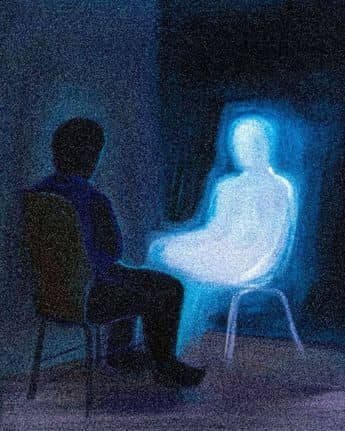
You woke this morning into what felt like a coherent world. A body. A name. A schedule. A set of concerns waiting politely in the anteroom of consciousness. You did not pause to ask whether any of this was real in the way you assumed. The floor felt solid. The anxiety about the upcoming meeting felt solid. The memory of last night's argument felt solid. The entire edifice of your existence presented itself as self-evidently, undeniably there. And yet, according to one of the most sophisticated investigations into the nature of reality ever conducted by the human mind, you woke not into a world, but into a dream that has no dreamer, a mirage that has no water, an enchantment so complete that the enchanted one is merely another character within the enchantment. This is Maya.
Maya is the most misunderstood term in the spiritual lexicon. It is commonly translated as “illusion,” which immediately evokes a sense of unreality, of something false or deceptive in a moral sense. The mind recoils. “My suffering is real. My body is real. My bank account is real.” And indeed, at the relative level, they are. Maya is not a denial of the relative reality of experience. It is a profound, unsettling diagnosis of the nature of that reality. Maya does not mean the world does not exist. It means the world does not exist as you perceive it—solid, separate, composed of independent objects and a separate subject who experiences them. It exists as a seamless, dynamic appearance in consciousness, and the primary characteristic of that appearance is to conceal its own nature while making the concealment feel like the only possible reality. You are not just perceiving an illusion. You are inside it, constructed by it, and the “you” who wants to escape is the final, most exquisite product of the illusion itself.
The Etymology of Enchantment: What Maya Actually Points To
Beyond the Crude Translation of “Illusion”
The Sanskrit root ma means “to measure,” “to build,” or “to create.” Maya is the measuring principle, the creative power that brings the immeasurable into apparent form. The same root gives us words like meter, measure, matrix, and matter. Maya is the matrix of apparent reality, the divine measuring stick that segments the indivisible, timeless totality into the experience of space, time, and causation. It is not a lie. It is a magic act. The magician does not lie to you. The magician creates an experience within which certain laws appear to operate, and the appearance is so compelling that your nervous system responds as if it were real. The rope appears as a snake, and the body trembles. The trembling is real. The adrenaline is real. The snake is not. Maya is the principle by which the rope of non-dual awareness appears as the snake of the world—and then, astonishingly, also appears as a separate character who is terrified of it.
This is the crucial subtlety that escapes most casual interpretations. Maya is not just the external world of objects. It is also the internal world of the subject. The one who perceives the illusion is part of the illusion. The rope does not just appear as the snake. It also appears as the person seeing the snake, running from the snake, and later telling a story about the snake. The entire drama—subject, object, and the space between them—is the unfoldment of Maya. Advaita Vedanta calls this the simultaneous veiling (avarana) and projecting (vikshepa) power of Maya. It veils the true nature of Brahman, the non-dual reality, and projects the dazzling, convincing display of the phenomenal world. You are not looking at the display. You are the display, looking at itself through a manufactured pair of eyes.
The Rope and the Snake: A Deconstruction
The classic Vedantic analogy is deceptively simple. At dusk, a man sees a coiled rope on the path and mistakes it for a snake. He jumps back, heart pounding. A friend arrives with a lantern, and the snake is seen for what it always was: a rope. The snake never existed, and yet the experience of the snake was real. The fear was real. The physiological response was real. The mistake was not a failure of intelligence. It was a failure of illumination.
This analogy maps perfectly onto the human condition. The rope is Brahman, the formless, timeless awareness that is the substratum of all experience. The dim light is the mind, the instrument of perception that operates under the limiting conditions of ignorance. The snake is the world of separate objects, including the separate self, appearing to exist independently. The fear is the entire spectrum of human suffering—anxiety, desire, grief, anger, the desperate pursuit of pleasure and the frantic avoidance of pain. The friend with the lantern is the teaching, the scripture, the guru, the direct inquiry that illuminates the truth. The recognition is liberation, moksha, which is not gaining something new but seeing clearly what was always the case.
But let us sit with the uncomfortable part of the analogy. The man does not partially see the snake. He completely sees it. He would bet his life on it. His senses confirm it. His memory confirms it. His entire cognitive apparatus is unified in the conclusion: snake. This is the terrifying power of Maya. It does not feel like an illusion. It feels like the only possible reality. The illusion is not just perceptual; it is structural. It is built into the very apparatus of cognition. The mind, which is itself a product of Maya, cannot think its way out of Maya any more than a character in a novel can edit the manuscript from within the story. Something from outside the system must intervene. That intervention is the transmission of jnana, of direct knowing, which is not the accumulation of new concepts but the dissolution of the conceptual framework altogether.
The Five Faces of Maya in Daily Experience
The Maya of Time: The Future That Never Arrives
The most pervasive and least questioned aspect of Maya is time. We live in a psychological timeline that stretches backward into memory and forward into anticipation. The present moment, which is the only moment that ever actually exists, is reduced to an infinitesimal, almost irrelevant sliver between the vast territories of past and future. The mind spends almost no time in the present. It is constantly reviewing, regretting, replaying, or it is projecting, planning, worrying, hoping. This is not a neutral habit. It is the primary mechanism by which Maya sustains the illusion of the separate self. The ego cannot survive in the present moment, because in the present moment, there is no story. There is just what is. The ego requires time to construct its narrative of “me and my life.” Without the psychological past, there is no one to be angry about what was done. Without the psychological future, there is no one to be anxious about what might happen. The ego is a time-traveling entity that never lands in the only place it could die: the eternal now.
Advaita Vedanta’s understanding of time is radical. Time is not a fundamental dimension of reality but a mental construct, a category of Maya. In deep sleep, time vanishes. Upon waking, the mind reconstructs it from memory traces. The sense of a continuous self moving through time is a narrative convenience, not an ontological fact. The “you” of ten years ago is not the same entity as the “you” of now, except in the story told by memory. The “you” of ten minutes from now is a pure projection that may bear no resemblance to whatever arises. Seeing through the Maya of time does not mean you stop using clocks. It means you stop living in a psychological timeline and begin to live in the felt immediacy of presence, where the past is a present memory and the future is a present thought. Both are happening now. Both are made of now.
The Maya of Space: The Container That Was Never Built
Just as time appears to create a linear sequence, space appears to create separation. I am here, and the tree is over there. My body ends at my skin, and the air begins beyond it. This feels like simple, undeniable perception. But look closer. Where exactly does your body end? The skin is porous, exchanging gases and moisture with the atmosphere. The lungs are filled with air that was just “outside.” The food you ate this morning, which was “not you,” is now being integrated into your cells. The boundary is a convention, a useful map, not the territory. On a subtler level, the entire experience of “out there” is happening “in here,” in the consciousness that perceives. The tree you see is an image in awareness. The sound of traffic is a vibration in awareness. The sensation of your feet on the ground is a sensation in awareness. There is no objective space “out there” into which consciousness peers. Consciousness is the space in which the appearance of an external world manifests. Maya creates the convincing illusion of a three-dimensional container with objects distributed within it, but upon investigation, the container and its contents are both made of the same substance: perception, which is consciousness itself.
This is not a philosophical argument. It is a direct, verifiable observation. Close your eyes. Listen to a sound. Where is that sound occurring? The mind automatically projects a location: “that bird is in the tree to my left.” But the actual experience of the sound is a pure sensation in the field of hearing. That field is not located in space. Space is located within it. The same applies to the sensation of the body. You feel your hand. The sensation seems to be “in” the hand, but the hand itself is a sensation. The entire body is a constellation of sensations appearing in the space of awareness. The body is not in awareness; awareness is the very substance of the body-experience. The Maya of space dissolves when you stop believing the map and attend directly to the cartography of raw experience.
The Maya of Causality: The Link That Is Only a Habit
The third fundamental category of Maya is causality. We perceive the world as a chain of cause and effect. The billiard ball strikes another, and the second moves. The insult causes the anger. The promotion causes the happiness. This framework is so deeply embedded that questioning it feels like questioning rationality itself. Yet David Hume, the Scottish empiricist, demonstrated that causality is never actually perceived. We see event A followed by event B. We infer a necessary connection. But the connection itself is a mental addition, a habit of association. We do not see causation. We see conjunction and project compulsion.
Advaita Vedanta takes this further. In a dream, a dream lion chases a dream man. The dream man’s fear seems to be caused by the lion. But upon waking, it is clear that the lion, the man, the fear, and the apparent causal link were all the simultaneous manifestation of a single dreaming consciousness. There was no real sequence. There was no real causation. There was only the appearance of causation, perfectly synchronized to create a compelling narrative. Maya is the principle that makes the dream of waking life appear to obey linear causation. The spiritual implication is profound. If your suffering is not truly caused by external events, then changing external events cannot end suffering. Freedom is not found by rearranging the dream to be more pleasant. It is found by waking from the dream entirely.
The Maya of Identity: The Character Who Never Was
The most intimate and devastating face of Maya is the ahamkara, the I-sense, the ego. This is the illusion’s masterpiece. Having created an apparent external world of space, time, and causality, Maya then creates an apparent internal subject to navigate it. You were given a name, a body, a family history, a set of personality traits, and a continuous narrative memory. All of this coalesced into a felt sense of “me,” a center of experience that seems to be the thinker of thoughts, the feeler of feelings, and the doer of actions. This is the most deeply hypnotic aspect of the illusion because it is the one who is reading these words right now. The “I” that thinks “I am a seeker, I am trapped in Maya, I want to be free” is itself the central knot of Maya.
The deconstruction of this identity is the heart of the Advaitic path. It is not an intellectual exercise. It is a direct, ruthless, and ultimately liberating inquiry into the nature of the one who inquires. When you look for the self, you find thoughts, sensations, and perceptions, but you never find an independent entity that owns them. The self is not a thing. It is an activity—the activity of identification. Maya is the habit of mistaking the activity for an entity. The recognition of this is not the destruction of the self but the seeing that it was never there in the first place. The character in the movie cannot escape the screen, because it is the screen. The escape is not an event in the plot. It is the recognition of the screen's sole reality.
The Neuroscience of the Constructed World
The Brain as a Reduction Valve
Modern neuroscience, in its own language, has arrived at a description of perception that echoes the concept of Maya with unsettling precision. The brain does not passively receive an objective external world. It actively constructs a model of reality based on limited sensory data, constantly making predictions and filling in gaps. What you see is not what is out there. It is a neural cartoon, a controlled hallucination generated by the neocortex and shaped by evolution to be useful for survival, not truthful about ultimate reality. The colors you perceive do not exist in the physical world; they are translations of electromagnetic wavelengths into a usable qualia map. The solidity of objects is an inference from electromagnetic repulsion; matter is overwhelmingly empty space. The seamless flow of vision is a trick; the eye makes saccades, and the brain edits out the blur.
Neuroscientist Anil Seth describes conscious experience as a “controlled hallucination,” and the phrase is a near-perfect scientific paraphrase of Maya. The world you experience is a virtual reality, a dashboard representation that hides the complexity of the underlying reality so that you can navigate it. The problem is not the dashboard. The problem is that you forgot it's a dashboard and started believing you live inside the gauges. Maya is the principle by which the map is mistaken for the territory, and the map-maker—the ego—is mistaken for a real, permanent entity.
The Default Mode Network and the Narrative Trap
The default mode network, a network of brain regions active during mind-wandering and self-referential thought, is the neurological seat of the narrative self. It is constantly weaving the story of “me,” linking past memories to future projections, generating the sense of a continuous, coherent identity. This network is hyperactive in most people, and its activity correlates with rumination, anxiety, and depression. The constant chattering story of “my life and its problems” is not reality. It is the DMN broadcasting its simulation. And yet, for most people, this simulation is reality. They are completely fused with the narrator in their heads.
Meditation, particularly self-inquiry and open awareness practices, deactivates the DMN. In states of flow, deep absorption, or psychedelic experience, the DMN quiets, and with it, the sharp boundaries of the self soften or dissolve. Subjects report a sense of unity, of boundlessness, of reality being more real than ordinary perception. They are, momentarily, seeing past the dashboard. Advaita Vedanta frames this not as an altered state induced by a technique but as a glimpse of the ever-present reality that is normally obscured by the constant, anxious storytelling of the ego. The goal is not to achieve the glimpse and cling to it. The goal is to stabilize the recognition that the storytelling itself is Maya, and that you are the silent awareness in which the story appears and dissolves.
The Psychological Dimensions of Maya
Cognitive Distortions as the Personal Face of Maya
Every human being lives inside a unique distortion field, a personalized Maya constructed by conditioning, trauma, temperament, and belief. Cognitive behavioral therapy has catalogued these distortions: catastrophizing, black-and-white thinking, personalization, mind-reading, emotional reasoning. The depressed person lives in a world literally colored by a dark filter. The anxious person lives in a world populated by imminent threats. The narcissist lives in a world where they are either the grandiose hero or the persecuted victim of every scene. Each person is convinced their world is the real one. Each person is living in a private Maya, a dream within the collective dream.
The psychological work of healing is largely the work of becoming conscious of these distortions, challenging them, and replacing them with more balanced perspectives. This is essential and valuable work. But Advaita gently points out that even the balanced perspective is still a perspective, still a construction, still a dashboard. The fully realized sage is not someone with no cognitive distortions. It is someone who no longer mistakes any cognitive framework for reality itself. The mind may still have preferences and tendencies. The difference is that there is no longer an identification with the mind. The dashboard is seen as a dashboard. It can be used without being believed in. This is the end of psychological suffering—not the perfection of the dashboard, but the end of the belief that you are the driver looking at it.
Attachment Theory and the Primordial Separation
The deep sense of being a separate self, which Advaita identifies as the root of Maya, has a psychological parallel in the experience of birth and early childhood. The infant emerges from a state of oceanic unity in the womb into a world of sharp boundaries, unmet needs, and a gradual dawning of a separate identity. Attachment theory maps how this primal separation can become a wound—anxious, avoidant, or disorganized patterns that shape a lifetime of relating. The adult then spends their life seeking to return to a felt sense of union, often through romantic relationships, addiction, or achievement. The hunger for merger is a distorted, externalized memory of the non-dual state.
This is where Advaita’s perspective offers not just philosophy but a kind of ultimate therapy. It says the separation never actually happened. The sense of being a separate self who was born and will die is itself the illusion. The reality is the awareness that is present before, during, and after the entire drama of an individual life. The wound is not healed by getting the love you missed. The wound is recognized as a mistake in identity. You are not the wounded child. You are the awareness in which the entire movie of “wounded child seeking healing” appears. This recognition, when it is a lived reality and not just a concept, is the end of the search for wholeness outside yourself.
The Social Dream: Collective Maya in the Digital Age
Social Media as a Maya Amplifier
The digital world, particularly social media, is a technological amplification of Maya's primary mechanisms. It creates a parallel reality, a hyper-simulated space where carefully curated representations are mistaken for reality. People present idealized avatars of themselves—happier, more successful, more beautiful, more enlightened—and then compare their own messy, internal experience with these polished external fictions. The result is a pandemic of anxiety, inadequacy, and depression. This is not a bug. It is the logical outcome of a system built on Maya's principles: appearance mistaken for substance, the image mistaken for the real.
The influencer who posts about their perfect life while crumbling in private is a perfect modern icon of Maya. They are not necessarily lying. They are presenting a slice, a performance, a character. The follower who feels inadequate because their own life doesn't match the highlight reel is caught in the same illusion from the other side. Both are trapped in a hall of mirrors where no one is seeing anyone clearly. The follower is not envying the real person. They are envying the projection, which itself is a projection of an internal lack. The entire ecosystem is Maya feeding on Maya, a hungry ghost realm of insatiable comparison. The only way out is not a better social media platform. It is the recognition that the one who compares, the ones being compared, and the platform on which the comparison occurs are all the same luminous emptiness.
The Economy of Desire and the Manufactured Lack
Modern consumer capitalism is a system that runs on Maya. Its fundamental operational principle is the manufacturing of dissatisfaction. An advertisement’s job is to create a sense of lack where none was previously felt, and then offer a product to temporarily fill it. You were perfectly fine with your phone until you saw the new model. You were comfortable with your body until the algorithm showed you a fitness influencer. You were content in your relationship until a movie portrayed a romance so perfect it made yours feel broken. The system cannot allow you to feel complete, because complete people are bad consumers. The entire economy depends on a population perpetually chasing the next purchase, the next upgrade, the next experience that will finally make them feel enough.
This is Maya operating at a civilizational scale. The collective dream is one of perpetual inadequacy and the endless pursuit of external solutions. Advaita Vedanta is not a political philosophy, and it does not offer a blueprint for economic reform. But its diagnosis of the human condition is a direct, radical challenge to the foundational myth of consumer culture. It says the lack you feel is not real. It is a phantom created by the ego, which is itself a phantom. The only thing you truly need is to see through the one who thinks they need. This is not a prescription for poverty or a rejection of material comfort. It is an invitation to stop looking for your completion in a system designed precisely to keep you feeling incomplete.
The Guru, the Scripture, and the Inescapable Paradox
Why You Cannot Think Your Way Out of Maya
One of the most humbling aspects of Maya is that it cannot be defeated by the mind that it has constructed. The intellect is a product of Maya and operates within Maya's rules. You cannot think your way to the truth, because thinking is the mechanism of the illusion. This is the great trap. A sincere seeker reads the Upanishads, studies Vedanta, and accumulates a vast library of spiritual concepts. They become a walking encyclopedia of non-duality. They can explain the difference between vivarta vada and parinama vada. They can quote Shankara at length. And yet, nothing has fundamentally shifted. The spiritual knowledge has become a new costume for the ego, a new dashboard, a “spiritual Maya.” The seeker is now proud of their seeking. They are still trapped, now in a golden cage rather than an iron one.
This is why the tradition insists on the necessity of a living teacher, a guru, and not just a book. The guru is not transmitting information. Information is part of Maya. The guru is, ideally, a presence that has stabilized in the recognition beyond Maya, and through a mysterious resonance, that presence can catalyze a similar recognition in the student. The guru is like the friend with the lantern in the rope-snake story. The lantern is not an argument. It is illumination. The guru's words may use logic, but their function is not logical persuasion. It is to point the attention back to the one who is trying to understand, to exhaust the mind's ability to grasp, until in a moment of grace, the grasping collapses and what remains is simply what has always been.
The Shruti as a Mirror
The Vedantic scriptures, the Shruti, are not dispensers of dogmatic truth. They are a mirror held up to the self. Their function is to dismantle the student's false identifications, layer by layer. The Pancha Kosha teaching, the analysis of the three states of consciousness, the method of adhyaropa-apavada (superimposition and negation)—all of these are sophisticated tools for deconstructing Maya. They are not a description of reality. Reality cannot be described, because description is dualistic. They are a systematic negation of every description the mind can offer, until the mind falls silent and the truth shines by its own light. The classic formula is neti, neti—not this, not this. Whatever you can perceive, think, or experience is not the ultimate reality. It is an object in awareness. You are the awareness. The scriptures are a relentless dismantling of everything that can be dismantled, until only the dismantler remains—and then the dismantler is itself recognized as the final veil.
Aspect of the Path | Misunderstanding | Actual Function |
|---|---|---|
Scripture (Shruti) | A source of new beliefs to adopt | A mirror and a negation tool; a pointer that dismantles false concepts |
Guru (Teacher) | An external authority to worship and depend on | A catalytic presence and a reflection of the student's own deeper Self |
Sadhana (Practice) | A technique to achieve a future state | A preparation of the mind to recognize what is already present |
Jnana (Knowledge) | Intellectual understanding of concepts | Direct, non-conceptual recognition; the collapse of the knower-known split |
The Lived Experience of Thinness: When Maya Begins to Crumble
The Gap Between Thoughts
For most people, life is a continuous stream of mental commentary, a dense fog of Maya that obscures the silent, open space of awareness. But there are moments, often overlooked, when the fog thins. The moment of a sneeze, when the mind is momentarily blasted clean. The moment of total aesthetic absorption, when a sunset stops the thinking mind in its tracks. The moment of an unexpected shock, when the world seems to freeze. The moment of falling in love, when the beloved's face fills the entire universe and the ego vanishes. The moment between waking and sleeping, when the constructs of the day dissolve into formlessness. These are windows.
Advaita asks you to pay attention to these gaps, not as special spiritual highs to chase, but as clues. What is present in those moments? Awareness. Silence. Presence. No “me,” and yet existence is undeniably there. That is not a special state. That is the ever-present background of all states, normally covered by the noise of Maya. The practice is not to try to achieve those moments. The practice is to recognize that the awareness shining in the gap is the same awareness shining now, in the middle of reading, thinking, and the ordinary hum of life. The gap is not a doorway to somewhere else. It is a reminder that the wall you thought was solid is actually a lattice, and the light has always been streaming through.
The Witness and the Witnessed Collapse
As practice deepens, the sense of being a witness, a detached observer of phenomena, can become a refined trap. The “witness” is still a subtle position, a last stand of the ego. It feels peaceful, spacious, superior to the old chaos. But it is still a separation. The final collapse of Maya is the recognition that the witness and the witnessed are made of the same substance. There is no awareness separate from its contents. The contents are awareness, taking shape. The tree is not witnessed by consciousness. The tree is consciousness, appearing as tree. The sadness is not witnessed by a calm inner observer. The sadness is consciousness, appearing as sadness.
This is the end of the spiritual path as a journey. There is no longer a traveler, a destination, or a distance. There is only This—undivided, luminous, perfectly whole, appearing as the vast multiplicity of the world without ever ceasing to be one. Maya is not destroyed. How can an illusion be destroyed? It is simply seen through. It is recognized as the play of Brahman, the lila, the divine dance of form and formlessness. The world remains exactly as it was. The body ages. Events occur. Pleasures and pains arise and pass. But there is no longer a separate one who is identified with them, clinging to the pleasures and resisting the pains. There is only the seamless flow of reality, and that reality is known to be your own Self. This is jivanmukti, liberation while living. It is not a state of inhuman perfection. It is a state of indestructible peace in the midst of the beautiful, terrible, ordinary miracle of being alive.
The Fear of Waking Up
The Ego’s Resistance to the End of Maya
If this diagnosis is true, why doesn't everyone pursue it with total urgency? Why do so many who hear these teachings intellectually nod in agreement and then return to the dream unchanged? The answer lies in the nature of the ego itself. The ego is Maya's representative within the dream, and it correctly perceives the teaching as a mortal threat. The ego's primary function is survival. It survives by maintaining the illusion of separation. The promise of liberation is the promise of the ego's dissolution. To the ego, this sounds not like freedom but like annihilation. It would rather be a miserable someone than a blissful no one.
This resistance is often unconscious. The mind will find a thousand ways to deflect the teaching. It will make it into an intellectual hobby. It will find fault with the teacher. It will claim it is not ready, it needs to work on its psychological issues first, it needs to achieve more in the world, it will do it later, when the kids are grown, when the career is settled. This is Maya protecting itself. The “I” that will do the work later is the very knot that must be untied. The teaching is not for a future you. It is for the awareness that is reading now, prior to the thought “I am not ready.” That awareness is already free. The only obstacle is the belief in the thought that there is an obstacle.
The Comfort of the Cage
The dream of Maya, for all its suffering, is familiar. The ego knows its grooves. The drama, the striving, the occasional pleasures, the familiar pains—this is the known terrain. Waking up is a step into the unknown, and the unknown is terrifying to the mind because the mind cannot survive there. The cage is painful, but it is a known cage. Freedom is the vast, uncharted sky, and the bird that has spent its life in the cage often fears the open door.
There is a profound psychological tenderness required here, often overlooked in the austere language of non-duality. The fear of awakening is not a moral failing. It is a natural, almost biological self-protection mechanism. The path is not to bully the ego into submission but to cultivate enough inner safety and stability that the ego can begin to relax its grip. Practices of grounding, self-compassion, and psychological integration are not distractions from the non-dual path. They are often necessary preparations. A fragile, traumatized psyche may be shattered by a premature, forceful dismantling of identity. The traditional Vedantic path includes sadhana chatushtaya, the fourfold qualifications—discrimination, dispassion, the six treasures (including mental calmness and self-control), and a burning desire for liberation. The mind must be made strong enough to withstand its own dissolution. This is not a path for the faint of heart, but the heart that is ready finds in it the only thing worth finding: the end of all searching.
Living in the World After Maya Is Seen
Action Without Actor
One of the most common questions is: “If I realize Maya, will I still be able to function in the world? Will I still work, love, create?” The answer is yes, but the quality of functioning is radically transformed. Action continues, but there is no longer the sense of a doer. The body-mind organism, now free of the constant friction of egoic interference, responds to situations with an effortless appropriateness. The sage does not wander around in a fog of detachment. They eat when hungry, sleep when tired, and respond with precision to whatever life presents. Their actions may appear highly ambitious and engaged to the outside observer, but internally there is no one taking credit, no one worrying about the outcome, no one comparing the result to a desired standard.
This is the ideal of Karma Yoga lived to its ultimate conclusion. The action is offered to the totality. The fruit is received as the totality's response. There is no personal stake, and therefore no psychological suffering. The action can be incredibly intense, but it is the intensity of a storm, not of a clenched fist. It is energy moving freely, unobstructed by a self that needs things to be a certain way in order to be okay. This is true freedom: not the absence of activity, but the absence of the illusion of a separate agent.
Relationship Without Other
In the realm of love, the dissolution of Maya brings not coldness but an intimacy so complete it is almost unbearable in its beauty. The beloved is no longer an “other” to be possessed, managed, extracted from, or defended against. They are recognized as the Self, appearing in a particular, precious form. Love is no longer a transaction between two separate entities. It is the play of the One in the form of two, a dance where the dancer and the partner are the same being. This does not mean the end of the relational form. The relationship may continue, with all its mundane details and human textures. But the core of suffering—the fear of loss, the need for validation, the resentment of unmet expectations—unwinds. What remains is a pure, unconditional seeing, a cherishing of the form without clinging to it, because the form is known to be a temporary, luminous wave on the ocean of your own Self.
Domain of Life | Under Maya (Egoic Mode) | After Recognition (Liberated Mode) |
|---|---|---|
Work/Action | Driven by lack, fear, and identity maintenance; burnout and anxiety common. | Effortless, precise, creative; action arises from wholeness, not deficiency. |
Relationships | Transactional; a source of validation and fear of loss; the "other" is an object. | Intimate, unconditional; the "other" is seen as the Self; freedom and love coexist. |
Pleasure and Pain | Clinging and aversion; suffering is compounded by narrative resistance. | Fully felt, fully released; no secondary suffering from the story of "why me." |
Time | Lived in the psychological past and future; present is a means to an end. | Lived in the timeless now; past and future are present thoughts, not traps. |
Sense of Self | Contracted, fragile, constantly needing defense and enhancement. | Expansive, unshakable peace; the person continues as a useful appearance. |
The Final Paradox
The teaching of Maya is a finger pointing at the moon. The finger is not the moon. These words, as you read them, are part of Maya. The “you” who feels you are understanding or not understanding is part of Maya. The desire to wake up from Maya is part of Maya. This is the final, inescapable paradox. There is no exit from the dream from within the dream. There is only the sudden, uncaused recognition that the dream has no substance, the dreamer was always a dreamed character, and the only reality is the awareness in which dreaming and waking both appear as passing states.
That awareness is not something you attain. It is what you are, right now, before the next thought arises. The thought “I am trapped in Maya” is an appearance in that awareness. The feeling of being a seeker is an appearance in that awareness. The silence after the thought is that awareness. The subtle joy of that silence is the first, gentle taste of the truth that has never been hidden. It was only overlooked in the frantic search for the next thought, the next goal, the next distraction. Stop. Even for a moment. Notice the awareness that is noticing. It has no shape, no color, no location. It has no beginning and no end. It is not touched by any story. It is perfectly, radiantly empty, and yet it is the fullness in which all stories unfold. This is the reality that Maya veils. This is what you have always been.
Maya is not the enemy. It is a masterful, beautiful, heart-wrenching illusion, a play of light and shadow whose only purpose is to bring you, through the exhaustion of every possible escape, to the recognition that you were never bound. The serpent was always a rope. The seeker was always the sought. The dream was always the dreamer, and the dreamer was always the infinite, dreaming of finitude so that it could have the exquisite joy of waking up to itself. And you are that.
