


Existentialism
Existentialism is the philosophy of radical freedom, absurdity, and authentic self-creation in a universe devoid of inherent meaning. Emerging from Kierkegaard, Nietzsche, Heidegger, Sartre, and Camus, it confronts the individual with the terrifying responsibility: you are condemned to be free. There is no pre-written essence, no divine script, no cosmic purpose waiting to be discovered. Meaning is not found—it is forged through choice, action, and commitment. This subcategory explores anxiety as a teacher, bad faith as the refusal to choose, and the art of living without consolation.
Books

Authors

Niccolò Machiavelli
Niccolò Machiavelli was an Italian diplomat, political philo…

Erich Fromm
Erich Fromm was a German social psychologist, psychoanalyst,…

Baltasar Gracián
Baltasar Gracián was a Spanish Jesuit and baroque prose writ…

Sun Tzu
Sun Tzu was a Chinese general, military strategist, and phil…

Thomas Hobbes
Thomas Hobbes was an English philosopher, best known for his…

Heraclitus
Heraclitus of Ephesus was a pre-Socratic Greek philosopher k…

Aristotle
Aristotle was a Greek philosopher and polymath, a student of…

Plato
Plato was an Athenian philosopher and student of Socrates. H…

Epictetus
Epictetus was a Greek Stoic philosopher born a slave. His Di…
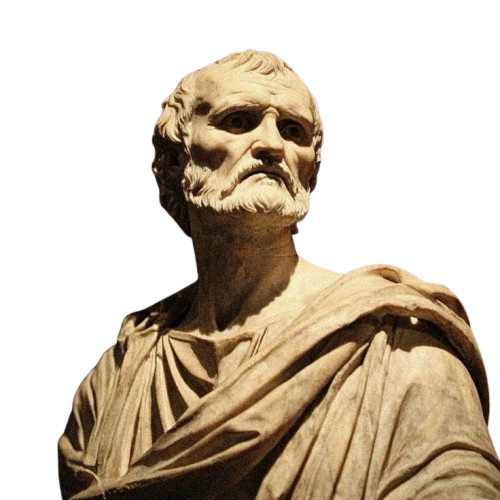
Seneca
Lucius Annaeus Seneca (Seneca the Younger) was a Roman Stoi…

Marcus Aurelius
Marcus Aurelius was a Roman Emperor (161–180 AD) and a Stoi…

Swami Vivekananda
Swami Vivekananda was an Indian Hindu monk and chief discipl…

Gautama Buddha
Siddhartha Gautama, known as the Buddha (the Awakened One), …

Osho
Osho (born Chandra Mohan Jain) was an Indian spiritual teac…

Jiddu Krishnamurti
Jiddu Krishnamurti was an Indian philosopher, speaker, and w…

Kautilya (Chanakya)
Kautilya was an ancient Indian teacher, philosopher, economi…
Key Insights
What does “existence precedes essence” actually mean?
For a paperknife, essence (design, function) precedes existence. For a human, you are born as a blank—no fixed nature. Your essence emerges from your choices across a lifetime. You are not born courageous; you become courageous by acting courageously.
What is “bad faith” (mauvaise foi)?
Pretending you are not free to avoid the terror of choosing. Examples: “I have no choice because of my upbringing,” “I’m just not a morning person,” “Society forces me to work this job.” Bad faith is lying to yourself that you are a passive object.
How is existentialism different from nihilism?
Nihilism says “no meaning exists, so nothing matters.” Existentialism says “no pre-existing meaning exists, so everything matters—because you are the source.” The absurd is not a dead end; it is the starting line for authentic creation.
What is the “absurd” according to Camus?
The collision between the human need for meaning and the universe’s silent indifference. The absurd is not solved by suicide (physical or philosophical). It is lived by revolt, freedom, and passion—embracing life without hope but not without joy.
How does existentialism handle morality without God?
You are “condemned to be free”—your actions set a precedent for all humanity. When you choose, you simultaneously legislate for everyone. This is not comfortable. You bear full responsibility without external justification. Morality becomes an endless act of creation.
What is “authenticity”?
Living in full awareness of your freedom, your mortality, and the absurd—and choosing your projects nonetheless. The inauthentic person flees into social roles (“I am a manager, a father, a Christian”) as if those labels were essences. The authentic person chooses to play those roles consciously.
What role does death play in existentialism?
Heidegger’s “being-toward-death”: death is the most personal, non-relational possibility. When you internalize that you could die at any moment, trivial preoccupations collapse. You stop living as “the they” (das Man) and start living as yourself.
Can existentialism lead to paralysis (existential crisis)?
Yes, initially. Sartre called it “anguish”—the dizziness of freedom without rails. But you move through it by realizing that not choosing is still a choice. Action, even imperfect action, cuts through paralysis. The only sin is not choosing.