


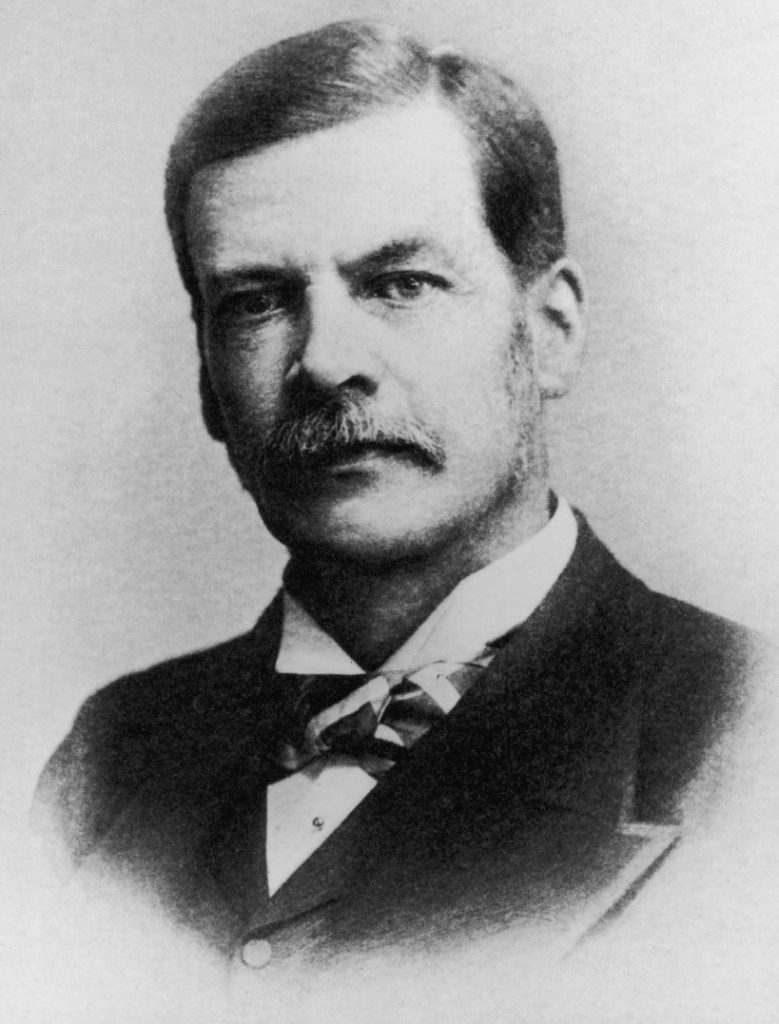
Harold Nicolson
0British diplomat, politician, and writer who brought practitioner's insight to the theory of international relations. His 1939 book Diplomacy, written after twenty years in the Foreign Service, argued that sound diplomacy rests on continuity, secrecy, and professional expertise—principles he saw threatened by democratic accountability and summitry. As a junior member of the British delegation at Paris in 1919, his Peacemaking, 1919 combined history with diary testimony of the conference's failures. Later an anti-appeasement MP, he concluded that European federation and world government were possible only with institutional foundations and military safeguards.


Key Insights
- ✦
What was Nicolson's central argument in his 1939 book Diplomacy?
Nicolson argued that sound diplomacy requires continuity of purpose, centralized authority for policy formation, and a professional service of experts. He traced the evolution of diplomatic method from the Greek city-states—whose assemblies were 'ignorant, volatile and impulsive'—through Renaissance Italy, the French system of de Callières, and into the modern era . His critique of democratic diplomacy focused on its uncertainty: final decisions rested with assemblies swayed by emotion rather than reason. He also identified a key modern problem: negotiators now addressed domestic audiences through broadcast media rather than their counterparts at the table, turning negotiation into propaganda .
- ✦
How did Nicolson's experience at the Paris Peace Conference shape his view of diplomacy?
Nicolson served as a junior member of the British delegation at the 1919 Paris Conference, and his book Peacemaking, 1919 combines a historical account with his personal diary from those six months. He wrote that his diary should be read 'as people read the reminiscences of a subaltern in the trenches'—with distrust of headquarters, irritation at staff officers, and belief that one's own sector was the center of the battle . The diary ends with prophetic disillusionment: 'To bed, sick of life.' This firsthand experience of the conference's failures informed his lifelong skepticism about Wilsonian idealism and his emphasis on professional expertise over popular enthusiasm.
- ✦
How did Nicolson's view of diplomacy differ from Woodrow Wilson's idealism?
Nicolson was a realist who rejected Wilson's faith in self-determination and open diplomacy. His aristocratic upbringing in a diplomatic household and twenty years in the Foreign Service convinced him that diplomacy required secrecy, continuity, and professional expertise—not popular participation. Wilson believed that public opinion and transparent negotiations would produce lasting peace; Nicolson saw the Paris Conference's failures as evidence that democratic diplomacy was uncertain and vulnerable to emotion . Yet Nicolson was not a pure realist: his later work concluded that European federation and world government were possibilities, but only when supported by institutional foundations and military safeguards .
- ✦
What was Nicolson's political career and how did it end?
Nicolson left the Foreign Office in 1929 and was elected National Labour MP for West Leicester in 1935, squeezing through with a plurality of only 87 votes . He served as a Junior Minister in Churchill's wartime government from 1940 and was an anti-appeasement voice in Parliament. He lost his seat in the 1945 general election . He later joined the Labour Party and stood in the 1948 Croydon North by-election, but lost again. His political career was secondary to his writing; his Diaries and Letters, edited by his son Nigel, remain his most celebrated work.
- ✦
What is the significance of Nicolson's Diaries and Letters?
Nicolson kept a diary without a single break from January 1, 1930 until October 1964, producing some three million words . He typed it every morning after breakfast, and his son Nigel later edited it into three published volumes . The diaries are prized for their acute observation of people and events—'the conflict between principle and ambition in a person's nature, the role that chance plays in great events, the subtleties of race and class distinctions' . They provide a unique insider's record of British political and diplomatic life across four decades, from the rise of fascism to the Cold War.
- ✦
How is Nicolson regarded as an international relations thinker?
A 2005 study by Oxford University Press described Nicolson as 'an important international thinker, alongside theorists as diverse as E. H. Carr and Leonard Woolf' . His distinctive contribution was that of the practitioner-theorist: his aristocratic background, diplomatic service in Constantinople, Tehran, and Berlin, and participation in the Paris Peace Conference forged a philosophy of international affairs that combined elements of realism and idealism . His writing on diplomacy remains a classic account of how professional diplomacy actually works, written by someone who had practiced it at the highest levels.
- ✦
What were Nicolson's other major works beyond Diplomacy?
Nicolson wrote over thirty books . Among the most notable are The Congress of Vienna (1946), a study of allied unity from 1812-1822 ; Curzon: The Last Phase (1934), a study of his former chief; and Good Behaviour (1955), a study of civility . He also wrote the official biography of King George V, published in 1952, for which he was appointed Knight Commander of the Royal Victorian Order . His Peacemaking, 1919 remains a classic firsthand account of the Paris Conference .