



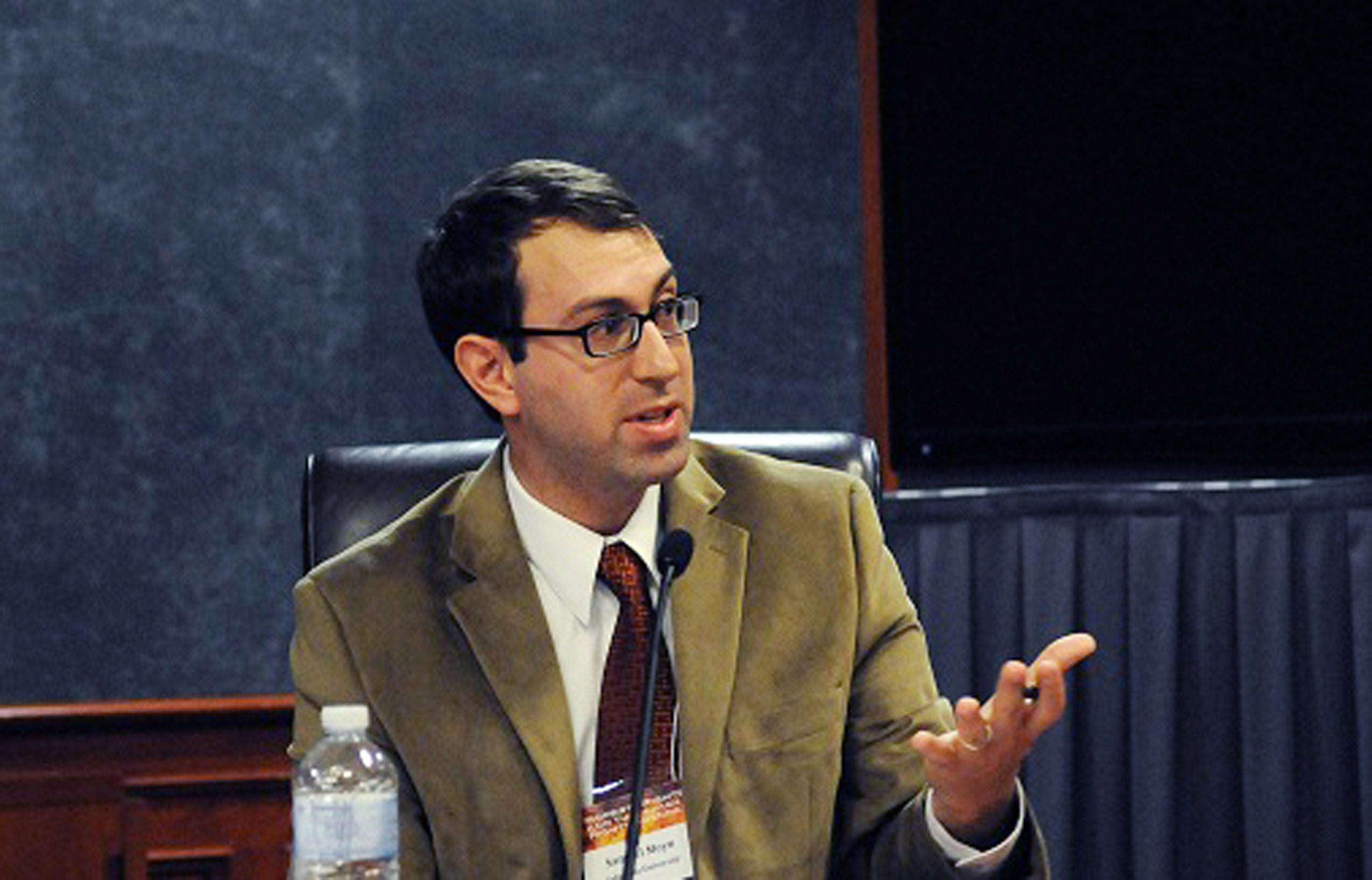
Jack Donnelly
0American political scientist who defended the universality of human rights against cultural relativist challenges, most systematically in Universal Human Rights in Theory and Practice (1989). Donnelly argued that human rights are 'relative universalities'—grounded in a historically specific Western conception of human dignity, yet defensible across cultures because they protect what he calls 'equal concern and respect.' He distinguished the concept of human rights from particular conceptions, enabling cross-cultural dialogue without abandoning normative foundations. His work also addressed humanitarian intervention, group rights, and the 'Asian values' debate, and he later expanded into international relations theory at the University of Denver.


Key Insights
- ✦
What does Donnelly mean by 'relative universality'?
Donnelly's central theoretical move is to distinguish the universality of human rights from their absoluteness. Human rights are universal in that they apply to all human beings, but they are 'relative' in two senses: first, the idea of human rights itself is historically specific, emerging in the modern West; second, the particular implementation of human rights varies across cultural and political contexts. This framework allows Donnelly to defend the core concept of human rights—equal concern and respect for all persons—while acknowledging legitimate variation in how rights are interpreted and realized. The concept is universal; the conceptions are relative .
- ✦
How does Donnelly respond to the 'Asian values' critique of human rights?
Donnelly directly addressed the 'Asian values' argument—advanced by leaders like Singapore's Lee Kuan Yew and Malaysia's Mahathir Mohamad—that human rights are Western impositions incompatible with Asian traditions of community and social harmony. He argued that the critique often conflates authoritarian state interests with genuine cultural traditions, and that Asian societies contain their own resources for human dignity. In 'The Relative Universality of Human Rights' (2007), he showed that the 'Asian values' challenge mischaracterizes both Western and Asian political thought, ignoring democratic movements within Asia that invoke human rights. Cultural difference is real, but it does not justify abandoning universal standards .
- ✦
What is the Universal Declaration model in Donnelly's work?
Donnelly treats the Universal Declaration of Human Rights (1948) and its two covenants as the authoritative expression of international human rights norms. He calls this the 'Universal Declaration model'—a conception that treats certain rights as universal and obligatory for all states. In his book Universal Human Rights in Theory and Practice, he explains and defends this model against both cultural relativist objections and arguments that economic development may justify sacrificing rights. The model recognizes economic and social rights alongside civil and political rights, rejecting the view that human rights are exclusively liberal individualist protections .
- ✦
How did Donnelly's view of humanitarian intervention differ from Michael Ignatieff's?
Donnelly took a more restrictive position on humanitarian intervention than Ignatieff. He reserved intervention for cases of genocide or at least ethnic cleansing, reflecting deep concerns about impartial enforcement and the potential for abuse by powerful states . In his work, he acknowledged that humanitarian intervention is sometimes morally justified but warned that it can perpetuate Western hegemony and be applied selectively, reflecting geopolitical rather than moral priorities. Ignatieff, by contrast, advocated a broader 'responsibility to protect' and expressed greater openness to American imperial power as a vehicle for human rights protection .
- ✦
What is the main criticism of Donnelly's universality framework?
Critics argue Donnelly understates the significance of the Western origins of human rights for non-Western societies. The exclusion of non-Western peoples from drafting the UDHR creates a sense of distance and suspicion that Donnelly's semantic analysis cannot dissolve . Indigenous peoples, for instance, were not participants in the original framework, and their collective rights—centering on group survival and traditional folkways—were marginalized. A constructivist perspective suggests that perceived differences matter as much as analytically demonstrable ones: if non-Western actors believe human rights discourse is Western-dominated, that belief shapes their reception regardless of philosophical arguments .
- ✦
What has been Donnelly's career trajectory at the University of Denver?
Donnelly joined the University of Denver in 1992 after teaching at the Boston area and Chapel Hill. He holds the Andrew W. Mellon Professorship at the Josef Korbel School of International Studies and has served as Degree Director for International Human Rights . In recent years, his research shifted from human rights toward international relations theory, particularly reconceptualizing the structures of international societies and analyzing globalization as a process of continuous transformation. His 2024 book Systems, Relations, and the Structures of International Societies represents this later focus.
- ✦
Which of Donnelly's works are considered most influential?
Universal Human Rights in Theory and Practice, first published in 1989 and now in its third edition (2013), is widely recognized as one of the preeminent works in international human rights. The American Political Science Review called it a book that 'treats the leading issues of a subject in such a clear and challenging manner that it becomes central to understanding that subject' . His textbook International Human Rights, co-authored with Daniel J. Whelan and now in its sixth edition, is a standard course text. 'The Relative Universality of Human Rights' (2007) remains his most cited journal article .