

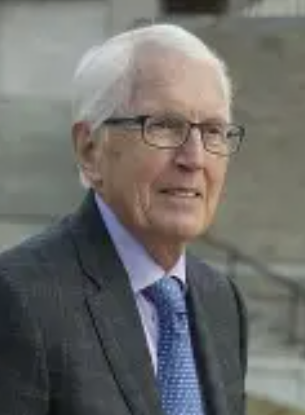
James O. Prochaska
0James O. Prochaska (1942–2023) was an American clinical and health psychologist who revolutionized the understanding of behavior change. He is best known as the lead developer of the Transtheoretical Model (TTM) of Behavior Change, also called the 'Stages of Change' model, which identifies five stages individuals progress through when modifying behavior. A professor at the University of Rhode Island for 50 years and director of its Cancer Prevention Research Center, he authored over 400 publications, including the influential books 'Changing for Good' and 'Systems of Psychotherapy'. His work, cited over 133,000 times, has been applied globally to improve health behaviors like smoking cessation, diet, exercise, and addiction recovery[reference:0][reference:1].


Key Insights
- ✦
What is James Prochaska best known for?
James Prochaska is best known for developing the Transtheoretical Model (TTM) of Behavior Change, also widely referred to as the 'Stages of Change' model. This framework identifies five stages individuals move through when modifying behavior: precontemplation, contemplation, preparation, action, and maintenance[reference:2]. His work has been applied globally to improve health behaviors such as smoking cessation, diet, exercise, and addiction recovery[reference:3]. He is recognized as one of the most cited authors in psychology[reference:4].
- ✦
What are the stages of change in Prochaska's model?
The five stages of change in Prochaska's Transtheoretical Model are: precontemplation (not yet acknowledging the problem), contemplation (acknowledging but not yet ready to change), preparation (planning to take action soon), action (actively modifying behavior), and maintenance (sustaining the change over time)[reference:5]. The model also includes processes of change and levels of change, providing a comprehensive framework for understanding how people successfully alter their behaviors[reference:6].
- ✦
What is the Transtheoretical Model of Behavior Change?
The Transtheoretical Model (TTM), developed by Prochaska and Carlo DiClemente beginning in 1983[reference:7], is an integrative framework for understanding how individuals change their behavior. It combines stages, processes, and levels of change to explain the complex journey from problem behavior to sustainable healthy behavior[reference:8]. The model has been used extensively in health psychology to develop interventions for smoking, diet, exercise, safe sex practices, and mental health issues like alcohol and drug abuse[reference:9].
- ✦
What books did James Prochaska write?
James Prochaska authored or co-authored over 400 publications, including several influential books. His most notable works include 'Changing for Good' (1994), co-authored with John Norcross and Carlo DiClemente, which popularized the stages of change model for a general audience[reference:10]; 'Systems of Psychotherapy: A Transtheoretical Analysis' (now in its 9th edition), a comprehensive textbook on psychotherapy[reference:11]; and 'Changing to Thrive' (2016), co-authored with his wife Janice Prochaska[reference:12].
- ✦
What awards did James Prochaska receive?
James Prochaska received numerous prestigious awards throughout his career. He was named one of the Top Five Most Cited Authors in Psychology by the American Psychological Society[reference:13] and received an Innovator's Award from the Robert Wood Johnson Foundation[reference:14]. He was the first psychologist to receive the Medal of Honor for Clinical Research from the American Cancer Society[reference:15]. In 2013, he received the Outstanding Contributions to Health Psychology award from the American Psychological Association[reference:16], and was recognized as one of the top three preeminent clinical psychologists of the modern era[reference:17].
- ✦
Where did James Prochaska study and work?
James Prochaska was born in Detroit, Michigan, in 1942[reference:18]. He earned his B.A. (1964), M.A. (1967), and Ph.D. (1969) in psychology from Wayne State University[reference:19]. In 1969, he joined the faculty at the University of Rhode Island, where he served for 50 years until his retirement in 2020[reference:20][reference:21]. He was a professor of clinical and health psychology and director of the Cancer Prevention Research Center[reference:22].
- ✦
How did Prochaska's personal life influence his work?
Prochaska's childhood was scarred by his father's alcoholism and violence, which left him feeling helpless[reference:23]. This experience motivated him to pursue a career in psychology and to understand how people can change for the better[reference:24][reference:25]. His work on the Transtheoretical Model was born from studies examining why some smokers were able to quit while others failed[reference:26]. He also co-founded Pro-Change Behavior Solutions with his wife, Janice, to disseminate his behavior change science[reference:27].
- ✦
What is Prochaska's legacy in health psychology?
James Prochaska's legacy is that of a transformative figure in health psychology. His Transtheoretical Model provided a practical, evidence-based framework for understanding and facilitating behavior change that has been adopted worldwide[reference:28]. His work has been cited over 133,000 times[reference:29], influenced countless interventions in public health, and helped millions of people improve their health behaviors. He also founded Pro-Change Behavior Solutions to translate his science into real-world applications[reference:30], and his philanthropic support established the Prochaska Professor in Population Health at URI[reference:31].