



Montesquieu
Charles-Louis de Secondat, Baron de La Brède et de Montesquieu (1689–1755), was a French judge and political philosopher whose The Spirit of the Laws (1748) refined the doctrine of separation of powers. His singular contribution was to conceive the judicial power as an independent third branch of government—co-equal with the legislative and executive—whereas Locke had subsumed judging under executive authority. This tripartite division, with each branch restraining the others through checks and balances, aimed to safeguard political liberty against despotism. His ideas directly influenced the framers of the U.S. Constitution, who cited him extensively in the Federalist Papers.
Bibliography
See all →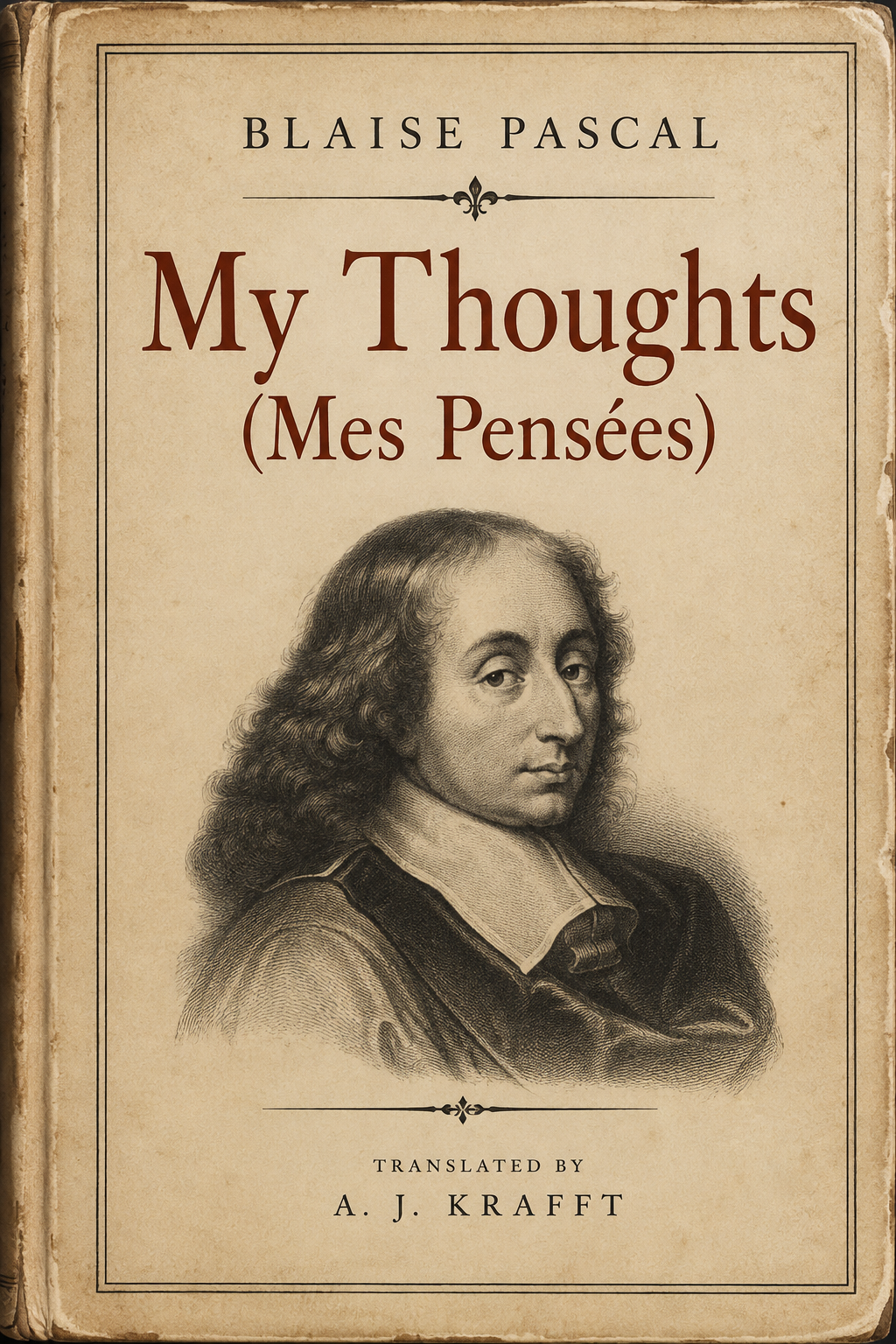
My Thoughts (Mes Pensées)
Montesquieu's My Thoughts is not a treatise but the private laboratory of his pu…

Considerations on the Causes of the Greatness of the Romans and Their Decline
Montesquieu's Considerations argues that Rome's greatness and its decline were p…

Persian Letters
Montesquieu's Persian Letters uses two fictional Persian travelers, Usbek and Ri…
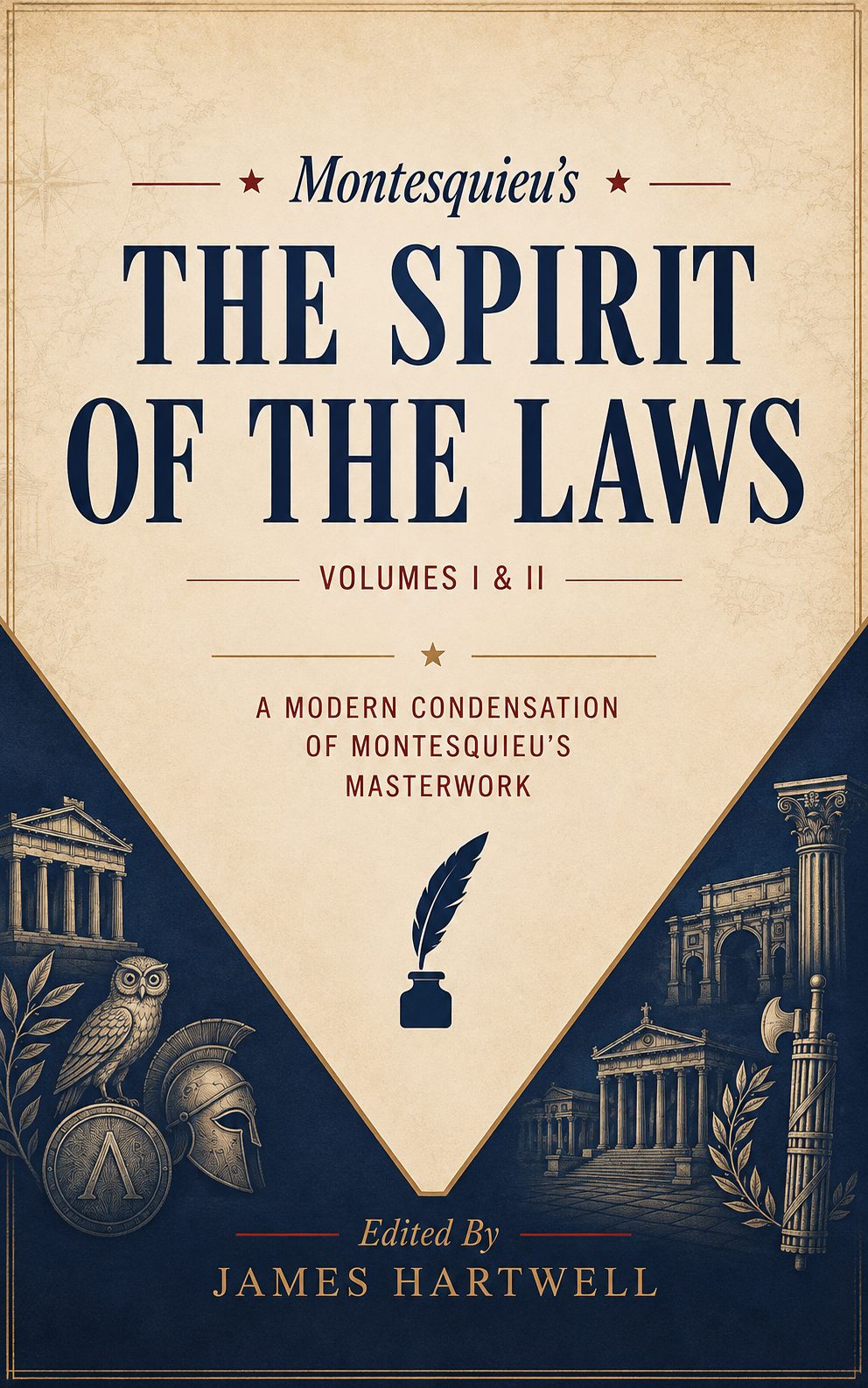
The Spirit of the Laws
Montesquieu's The Spirit of the Laws argues that laws are not abstract commands …


Key Insights
- ✦
How did Montesquieu's separation of powers differ from John Locke's?
Locke's Two Treatises of Government (1689) divided power into legislative, executive, and federative functions, but he treated the judiciary as part of the executive and made the legislature supreme. Montesquieu's decisive innovation in The Spirit of the Laws was to elevate the judicial power to a distinct, co-equal branch. He argued that 'there is no liberty if the power of judging be not separated from the legislative and executive powers.' This tripartite scheme, with each branch checking the others, became the structural template for constitutional government.
- ✦
Did Montesquieu actually believe the British constitution embodied his separation of powers?
Montesquieu presented England as the model of political liberty, but his admiration rested on a partial reading. He described the British constitution as separating legislative, executive, and judicial powers, yet in practice the eighteenth-century British system fused them—the monarch's ministers sat in Parliament, and the House of Lords served as the final court of appeal. Later historians noted this idealization. Still, his idealized account proved more influential than the actual British arrangement, precisely because it gave constitution-makers a clear theoretical blueprint.
- ✦
How did Montesquieu's ideas actually shape the U.S. Constitution?
Montesquieu was the most-cited Enlightenment authority during America's constitutional decade. Madison and Hamilton invoked him repeatedly in The Federalist Papers—Hamilton opened Federalist No. 9 by aligning the proposed constitution with 'that great man Montesquieu.' His tripartite division and checks-and-balances framework informed the Convention's design: a bicameral legislature, an independent executive with veto power, and a judiciary insulated from political pressure. Madison also engaged critically with Montesquieu's climate theory and his preference for small republics, adapting rather than simply copying his ideas.
- ✦
What is Montesquieu's climate theory, and why is it controversial?
In Books XIV–XVIII of The Spirit of the Laws, Montesquieu argued that a nation's climate—its heat, cold, and soil—shapes its inhabitants' temperament and, consequently, the laws suitable to them. Hot climates supposedly breed indolence and despotism; cold climates foster vigor and liberty. This environmental determinism was criticized even in his own day by Voltaire and later by scholars as empirically shaky. Yet his deeper point—that laws must fit a society's particular circumstances rather than follow a single universal model—remains a foundational idea in comparative constitutional law.
- ✦
Was Montesquieu a democrat?
No. Montesquieu admired moderate monarchy and the English mixed constitution, not popular democracy. He feared that extreme equality would breed factionalism and that democratic republics required a 'virtue'—civic selflessness—too fragile to sustain in large, commercial states. In The Spirit of the Laws, he classified democracy, aristocracy, and monarchy as distinct forms of government, each with its own animating principle. His preference for balanced, moderate government was about limiting power, not extending political participation. Modern constitutionalism inherited his institutional restraints far more than his social attitudes.
- ✦
How does Montesquieu's 'checks and balances' actually work?
Montesquieu did not advocate absolute separation—that would paralyze government. His system relies on mutual restraint: the legislature makes laws but the executive can veto them; the executive enforces laws but the legislature controls funding and can impeach officials; the judiciary is independent but judges are drawn from the people and serve temporarily. Each branch possesses a 'power to check' the others. This dynamic balance, which he saw operating in England, aimed to prevent any single branch from dominating and thereby to protect political liberty as security under law.
- ✦
What did Montesquieu get wrong about the British constitution?
Montesquieu described the British constitution as a clean separation of legislative, executive, and judicial powers, each in distinct hands. But eighteenth-century Britain did not work that way: the crown's ministers sat in Parliament, the upper house exercised judicial functions, and the monarch retained significant prerogative. Scholars have long noted that Montesquieu's account was more prescriptive than descriptive—a normative model built from partial observation. Ironically, this misreading was productive: it gave the American founders a coherent theory of institutional design they could implement more consistently than Britain ever did.
- ✦
How is Montesquieu's theory applied in modern constitutions?
His tripartite framework is embedded in the U.S. Constitution (1787), the French Declaration of the Rights of Man (1789), and countless constitutions worldwide. Articles I, II, and III of the U.S. Constitution embody separate legislative, executive, and judicial branches with overlapping powers. The French Fifth Republic's Conseil constitutionnel and the German Basic Court reflect his concern for an independent judiciary. While parliamentary systems merge executive and legislative functions, they still maintain judicial independence. Montesquieu's core insight—that concentrated power threatens liberty—remains a foundational axiom of constitutional design.