


Carl Schmitt
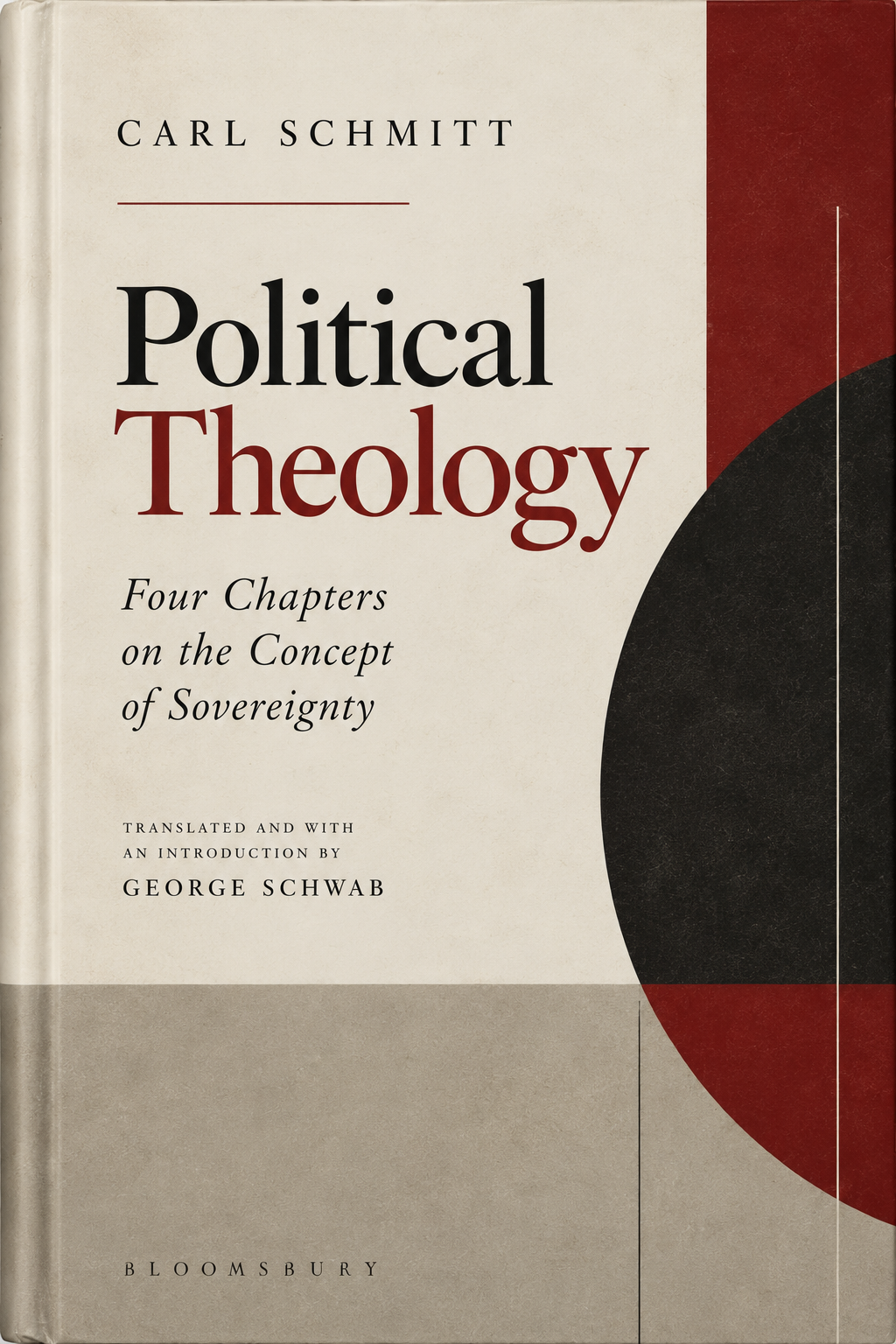
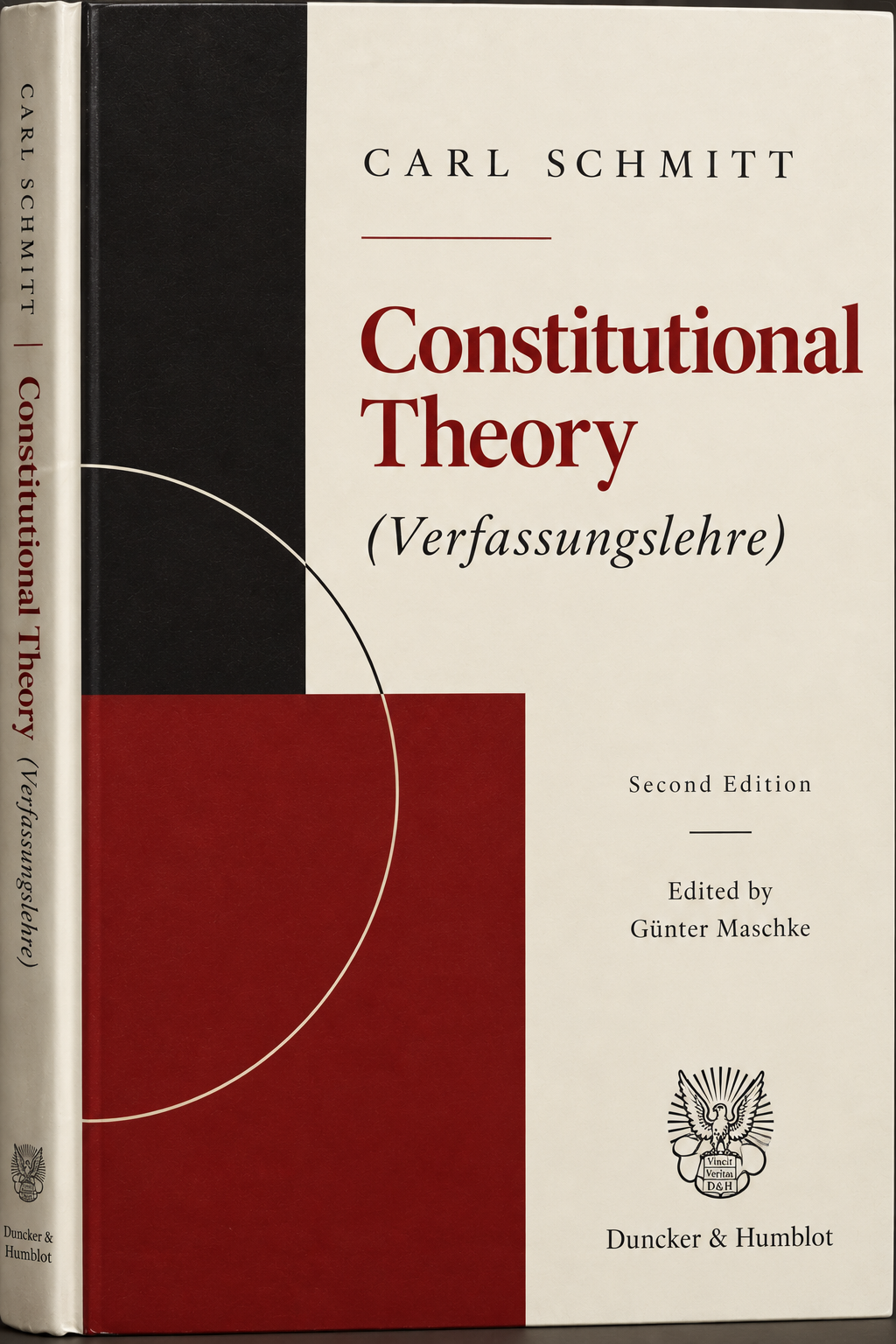
Carl Schmitt (1888–1985) redefined constitutional theory through his radical decisionism, asserting that sovereignty consists in the power to decide the exception—the moment when legal norms suspend. In *Political Theology* (1922) and *Constitutional Theory* (1928), he distinguished between the *constitution* (a fundamental political decision by the sovereign power) and constitutional *laws* (derivative rules), arguing that any legal order rests on an existential political choice. He rejected liberal legalism's claim that law can constrain sovereign will, and he developed the friend-enemy distinction as the core of the political. Though his 1933 Nazi affiliation tainted his legacy, his concepts—especially the state of exception and constituent power—remain indispensable for understanding constitutional crises, emergency powers, and the limits of legal normativity.
.webp?alt=media&token=2cf94c6e-4ffe-48d3-a154-8958c9497f85)


✦What does Schmitt mean by 'sovereign is he who decides on the exception'?
Schmitt's opening sentence in *Political Theology* captures his core claim: sovereignty is not the power to make laws but the authority to suspend the legal order in an emergency. When the normal legal framework fails to address a crisis, the sovereign steps in to decide what counts as an exception and how to respond—thereby revealing that law is not self-sufficient but depends on a political decision. This decision cannot be derived from legal norms; it is a concrete existential choice about the community's survival. For Schmitt, this exposes the fiction of liberal constitutionalism, which tries to eliminate the exception.
✦How does Schmitt's constitutional theory differ from Kelsen's legal positivism?
Schmitt and Kelsen were fierce rivals. Kelsen's Pure Theory grounds law in a presupposed Grundnorm that provides unity to the legal system; for Kelsen, the constitution is a higher norm in a hierarchical structure. Schmitt rejects this: the constitution is not a norm but a political decision by the constituent power—a collective will that establishes the form and existence of the political unity. Norms cannot validate themselves; they depend on a prior political act. Schmitt accused Kelsen of abstract formalism that ignores reality, while Kelsen dismissed Schmitt's decisionism as a dangerous legitimization of arbitrary power.
✦What is the 'constituent power' in Schmitt's work, and why is it important?
Schmitt defines constituent power (*pouvoir constituant*) as the political will of the people (or a monarch) that creates the constitution. It is the active, sovereign force that precedes and founds any constitutional order. Unlike constituted powers (the legislature, executive, judiciary), which operate within the constitution, constituent power remains latent and can re-emerge in revolutionary moments. This distinction explains how new constitutions arise and why no legal system can fully bind its creator. It has influenced post-colonial and revolutionary constitutionalism, including debates on popular sovereignty and constitutional amendment.
✦What is the friend-enemy distinction, and how does it relate to constitutional order?
For Schmitt, the political is defined by the existential distinction between friend and enemy—not a moral or economic category but a criterion of intensity: groups that are potentially willing to fight and die for their identity. The constitution, in Schmitt's view, is a product of this political decision about who belongs to the community and who is excluded. Liberal constitutionalism tries to depoliticize this distinction by subordinating politics to law, but Schmitt insists that every legal order rests on a prior decision about the political identity of the state. This line of thought has been revived in debates on populism, migration, and emergency powers.
✦Why did Schmitt join the Nazi Party, and how does that affect his intellectual legacy?
Schmitt joined the Nazi Party in May 1933, supported Hitler's seizure of power, and served as a legal advisor, producing justifications for the regime's actions, including the exclusion of Jews from the legal profession. His anti-liberal, anti-Semitic writings during this period have made him a deeply controversial figure. His early works, however, continue to be studied because they offer sharp critiques of legal formalism and parliamentary democracy. Scholars debate whether his ideas are inherently fascist or can be abstracted into a broader critique of liberalism. His Nazi affiliation has led to a complex reception, with some arguing his concepts are indispensable, others condemning them as poisoned.
✦How does Schmitt's concept of the state of exception apply to modern counterterrorism and emergency powers?
Schmitt's analysis has been widely cited to understand the expansion of executive power after 9/11, from indefinite detention to surveillance programs. He argued that in emergencies, law cannot guide action; instead, the sovereign must decide on measures to preserve the state, often operating outside legal constraints. Critics worry that invoking the exception normalizes extralegal state power, undermining the rule of law. Defenders of executive prerogative draw on Schmitt to justify proactive responses to existential threats. His framework remains a live reference in constitutional law, political theory, and security studies.
✦What is the common misconception about Schmitt's notion of the exception?
A frequent oversimplification is that Schmitt simply glorifies arbitrary dictatorship. He does not argue that the sovereign should rule arbitrarily at all times; rather, he insists that a legal order cannot predict every contingency, so the decision on the exception is a necessary function that cannot be eliminated by legal norms. He also argued that the sovereign is constrained by the political identity of the state—the decision must preserve that identity, not merely serve the ruler's whim. However, his failure to specify institutional safeguards against abuse has made his theory appealing to authoritarian regimes, even if he personally feared total disorder more than tyranny.