


Quentin Skinner
Quentin Skinner (b. 1940) revolutionized the study of political thought by insisting that texts must be understood as speech acts performed by historical agents within specific intellectual contexts. His methodological manifesto, *Meaning and Understanding in the History of Ideas* (1969), drew on J.L. Austin's speech-act theory to argue that historians must recover not merely what an author *said* but what they were *doing* by saying it—challenging, legitimizing, or subverting prevailing conventions. This contextualist approach, central to the Cambridge School, yielded the monumental *Foundations of Modern Political Thought* (1978). Later, Skinner recovered the 'neo-Roman' theory of liberty as freedom from dependence, contrasting it with the liberal negative liberty of non-interference. A Regius Professor at Cambridge, he remains a pivotal figure bridging history and political philosophy.
.webp?alt=media&token=a48b59aa-f2e7-4ffa-b7c6-c65330fd2589)


✦What is Skinner's methodological innovation, and why is it called 'contextualism'?
Skinner's methodological innovation, 'contextualism,' holds that the meaning of a political text cannot be grasped by reading it in isolation. Instead, it must be situated within the linguistic conventions and debates of its time. Drawing on speech-act theory, he argues that authors are not simply making propositions but performing actions—such as criticizing, defending, or subverting—within a specific intellectual milieu. This approach rejects the 'myth of doctrines' (reading later concepts into earlier texts) and the 'myth of coherence' (forcing a text into a system). Instead, it treats political thinkers as historical agents responding to their contemporaries.
✦How does Skinner's 'neo-Roman' concept of liberty differ from Isaiah Berlin's negative liberty?
Skinner recovers a third concept of liberty, distinct from Isaiah Berlin's famous distinction between negative (freedom from interference) and positive (freedom to realize one's potential) liberty. The neo-Roman or republican view defines liberty as freedom from dependence or arbitrary domination. A slave who is not interfered with by a kind master is still unfree because they are dependent on the master's will. This conception emphasizes the importance of political institutions and civic virtue in securing freedom, contrasting with the liberal focus on individual autonomy and the absence of external constraints.
✦What is the significance of Skinner's *Foundations of Modern Political Thought*?
Published in 1978, Skinner's two-volume *Foundations of Modern Political Thought* is a landmark in intellectual history. It traces the development of political concepts—such as the state, liberty, and rights—from the late medieval period through the Reformation. Skinner argues that the modern idea of the state emerged from the transformation of Renaissance civic humanism and the Lutheran reformation. The work won the Wolfson Prize and was named by the *Times Literary Supplement* as one of the 100 most influential books of the past 50 years. It remains the standard reference for the period.
✦How does Skinner's approach to Hobbes differ from traditional interpretations?
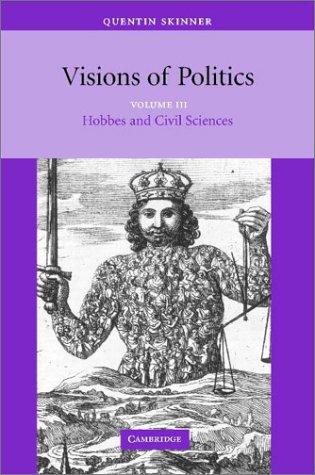
Skinner has written extensively on Hobbes, including *Reason and Rhetoric in the Philosophy of Hobbes* (1996) and *Hobbes and Republican Liberty* (2008). He challenges the view that Hobbes was simply a proponent of negative liberty. Instead, Skinner shows that Hobbes was engaged in a debate with republican writers and that his own theory of liberty evolved. He argues that Hobbes's 'fundamental aim is to stress that ... to a city or body politic' and that Hobbes's view of liberty should not be seen as purely negative. This contextual reading reveals Hobbes as a more complex and politically engaged thinker.
✦What role did Skinner play in the revival of republicanism?
Skinner was a leading figure in the revival of republican political theory in the late 20th century, alongside scholars like J.G.A. Pocock and Philip Pettit. His work, particularly *Liberty before Liberalism* (1998) and *Visions of Politics* (2002), recovered the tradition of civic humanism and the neo-Roman theory of liberty. He showed that republicanism offers a distinct alternative to both liberalism and communitarianism, emphasizing political participation, the rule of law, and freedom from domination. This revival has influenced contemporary political debates about civic virtue, citizenship, and the dangers of arbitrary power.
✦What is a common misconception about Skinner's contextualism?
A common misconception is that Skinner's contextualism reduces texts to mere reflections of their historical context, leaving no room for their enduring philosophical significance. However, Skinner explicitly argues that understanding a text's historical context is a prerequisite for philosophical evaluation, not a substitute for it. He does not deny that texts can have universal truths; he insists that we must first understand what an author was doing in their own time before we can assess their contemporary relevance. His approach is thus a form of historicism, but one that aims at a deeper philosophical understanding, not historicist relativism.
✦What is the legacy of Skinner's work in contemporary political theory?
Skinner's work has fundamentally reshaped the study of political thought, establishing the Cambridge School as a dominant methodological paradigm. His emphasis on context, language, and agency has influenced historians, philosophers, and political scientists alike. His recovery of the neo-Roman concept of liberty has revitalized republican political theory, providing a powerful critique of liberalism. He has also been a major influence on the history of concepts and intellectual history more broadly. His ongoing work on rhetoric and persuasive speech continues to push the boundaries of the field.