


R.A.W. Rhodes
R.A.W. Rhodes fundamentally reshaped the study of British governance through his 'differentiated polity' model, which depicts the state not as a monolithic hierarchy but as a fragmented system of interorganizational networks. He defined governance as 'self-organizing, interorganizational networks' that complement markets and hierarchy, and developed the influential policy network typology with David Marsh distinguishing policy communities from issue networks along a continuum of integration [citation:2][citation:8][citation:15]. His work on the 'hollowing out' of the state argued that central government had lost capacity upward to the EU, downward to local government, and outward to agencies [citation:5]. In later years, he pioneered an interpretive approach with Mark Bevir that 'decentred' governance into the beliefs and practices of actors, and founded the Political and Administrative Ethnography series to encourage fieldwork [citation:4][citation:11].
.jpg?alt=media&token=21836ce3-6a84-44f1-9c85-c2930a483f30)
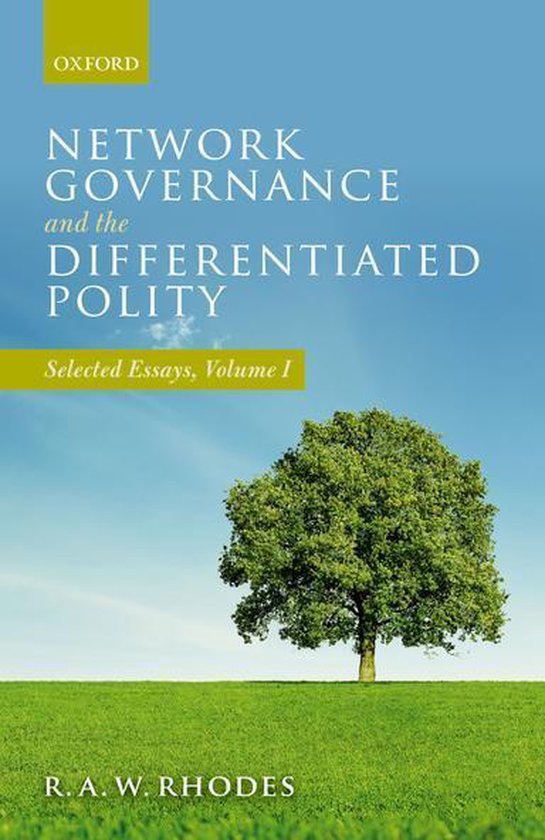

✦What is the 'differentiated polity' model?
The differentiated polity is Rhodes' alternative to the conventional Westminster model of British government. Instead of a unified, hierarchical system dominated by cabinet and Parliament, it presents a fragmented policy-making landscape characterized by functional and territorial divisions. The model highlights how power is dispersed among a range of intergovernmental and policy networks which have become increasingly autonomous from central control. Managing these networks requires diplomatic skills rather than top-down command [citation:6][citation:11].
✦How does Rhodes' policy network typology distinguish between policy communities and issue networks?
Working with David Marsh, Rhodes developed a continuum to classify the relationship between government and interest groups. At one end is the 'policy community': a tightly integrated, stable network with restricted membership, shared values, and significant resource dependency between actors, often leading to a 'private government' insulated from public scrutiny. At the other end is the 'issue network': a loose, unstable grouping with many participants and limited interdependence, characterized by fluctuating involvement and weaker consensus [citation:8][citation:15].
✦What is the 'hollowing out of the state' thesis?
Rhodes introduced this concept to describe the erosion of the central state's capacity in the UK during the late 20th century. He argued that the British state was being hollowed out in three directions: upward to international institutions like the European Union; downward to local and regional governments; and outward to executive agencies, quangos, and private sector contractors. This process, driven by privatization and managerial reforms, fragmented service delivery and made central government increasingly reliant on negotiating with autonomous networks rather than commanding them [citation:1][citation:5].
✦How does Rhodes' interpretive approach differ from his earlier network analysis?
In his later work with Mark Bevir, Rhodes shifted from a structural analysis of institutions to a more ethnographic and interpretive approach. This method 'decentres' governance, meaning it unpacks institutional practices into the diverse beliefs and traditions of the actors involved. They argue that governance is not a fixed structure but a set of narratives and cultural practices shaped by historical traditions and the dilemmas actors face. This led him to conduct observational fieldwork on government elites, moving beyond formal models to understand politics 'up close and personal' [citation:4][citation:11].
✦What is Rhodes' concept of 'governance without government'?
In his influential 1996 article, Rhodes argued that governance is distinct from government, referring to 'self-organizing, interorganizational networks' that allocate resources and exercise coordination. He stipulated that these networks are a governing structure that complements markets and hierarchies. They are characterized by mutual adjustment and trust, and they pose a challenge to governability because they can become autonomous and resist central guidance. This concept has become central to the scholarly understanding of governance [citation:1][citation:7].