


Theda Skocpol
Theda Skocpol (b. 1947) revolutionized comparative politics by insisting on the autonomy of the state as an independent actor in social revolutions. In her landmark *States and Social Revolutions* (1979), she deployed comparative historical analysis to demonstrate that revolutions in France, Russia, and China were not primarily products of class conflict or mass mobilization, but of state breakdowns triggered by international pressures and fiscal crises. This 'state-centric' framework—later extended in *Bringing the State Back In* (1985)—challenged society-centered theories (Marxism, pluralism, structural-functionalism) that treated the state as a mere arena for social forces. A Victor S. Thomas Professor at Harvard, Skocpol later turned to American political development, examining the gendered origins of U.S. social policy (*Protecting Soldiers and Mothers*, 1992) and the Tea Party movement (*The Tea Party and the Remaking of Republican Conservatism*, 2012).

States and Social Revolutions: A Comparative Analysis of France, Russia, and China

Diminished Democracy: From Membership to Management in American Civic Life

Boomerang: Health Care Reform and the Turn Against Government
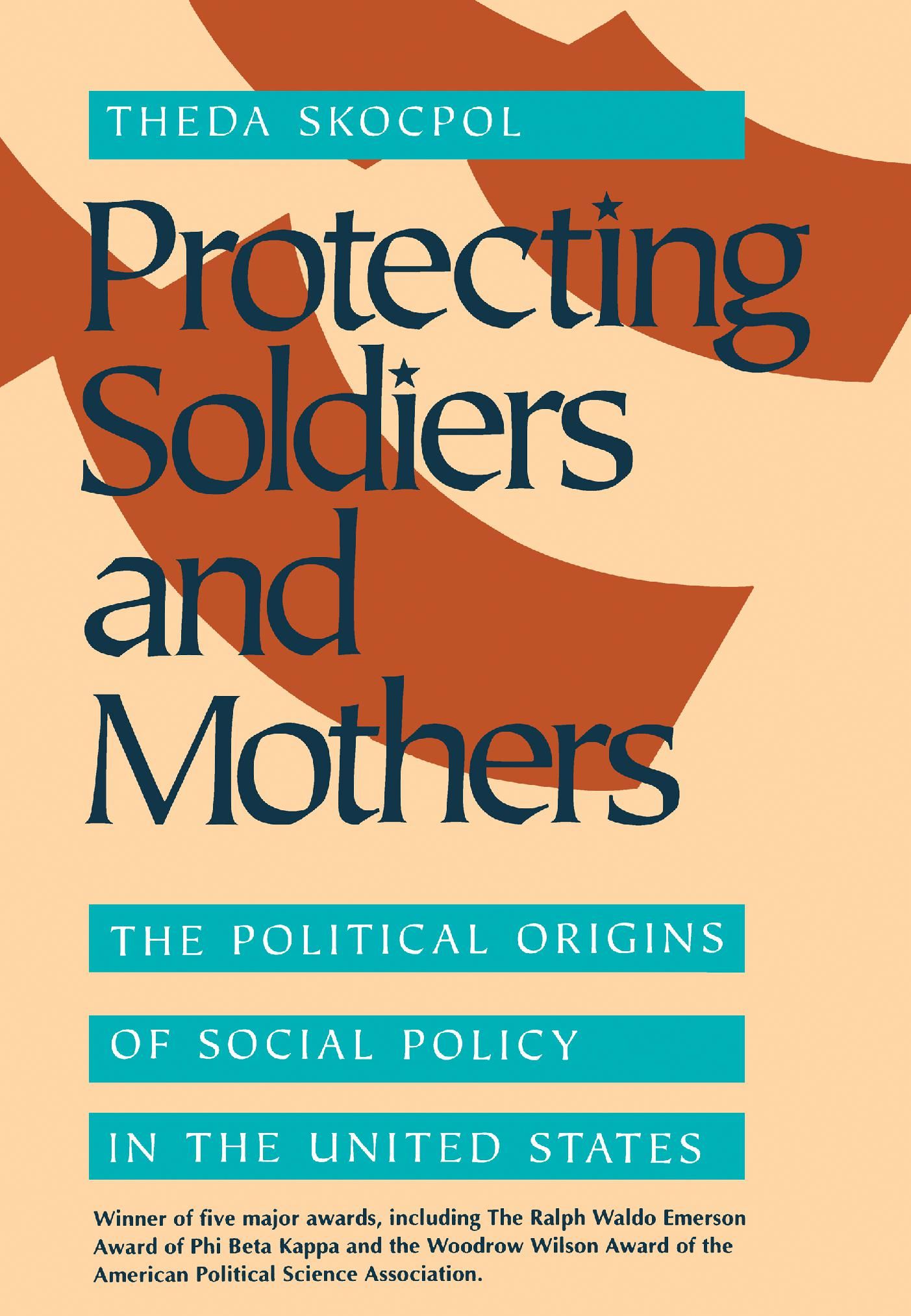
Protecting Soldiers and Mothers: The Political Origins of Social Policy in the United States


✦What is Skocpol's theory of 'state autonomy' and why was it revolutionary?
Skocpol's theory of state autonomy holds that states are not simply passive arenas for class or interest-group competition, but organizations that can formulate and pursue their own goals independently of social pressures. This was a direct challenge to the dominant pluralist and Marxist frameworks of the 1970s, which saw the state as an instrument of dominant classes or a neutral arbiter of competing interests. By showing that state managers acted on their own—for example, in responding to international military threats or fiscal crises—Skocpol carved out an independent causal role for political institutions in explaining revolutionary outcomes.
✦How did Skocpol's *States and Social Revolutions* differ from Marxist theories of revolution?
While Marxists traditionally explain revolutions as class struggles driven by contradictions between productive forces and relations of production, Skocpol argued that revolutions occur when states collapse under the weight of international pressures and fiscal strains. She emphasized that the peasantry, not the industrial proletariat, was the key revolutionary actor in agrarian societies, and that state breakdown—not class consciousness—was the proximate cause of revolutionary upheaval. Her approach was 'state-centered' rather than 'society-centered,' treating the state as a potential autonomous agent.
✦What is 'comparative historical analysis' and how does Skocpol use it?
Comparative historical analysis (CHA) is a methodological approach that uses systematic comparison of a small number of cases to identify causal mechanisms and test hypotheses. Skocpol's *States and Social Revolutions* is the exemplar of this method: she compares three major revolutions (France, Russia, China) to isolate the common structural conditions—state fiscal crisis, international military pressure, and peasant revolt—that produced revolutionary outcomes. CHA allows scholars to move beyond single-case narratives to develop generalizable theories while retaining historical depth and context.
✦How does Skocpol's later work on American political development relate to her earlier state theory?
Skocpol extended her state-centric framework to American political development in *Protecting Soldiers and Mothers* (1992), where she showed that the U.S. welfare state was shaped not by industrialization or class struggle, but by the political logic of Civil War pensions and Progressive-era maternalist reforms. She argued that the state's organizational structure—particularly federalism and the weakness of bureaucratic capacity—explained why the U.S. developed a 'maternalist' welfare state rather than a European-style social insurance system. This demonstrated the enduring power of her institutionalist approach across different policy domains.
✦What role did Skocpol play in the 'Bringing the State Back In' movement?
Skocpol was a co-editor and leading contributor to *Bringing the State Back In* (1985), a landmark volume that institutionalized state-centric theory in political science and sociology. Alongside Peter Evans and Dietrich Rueschemeyer, she organized a research agenda that treated states as potentially autonomous actors capable of shaping social and economic outcomes. The volume inspired a generation of scholars to study state capacity, bureaucratic politics, and the historical formation of political institutions, revitalizing comparative politics and political sociology in the 1980s and 1990s.
✦What is a common misconception about Skocpol's theory of revolutions?
A common misconception is that Skocpol ignores agency or ideology in revolutions. In fact, she explicitly acknowledges that revolutions involve mass mobilization and revolutionary leadership. However, she argues that these factors alone cannot explain why revolutions occur; they depend on prior structural conditions—state breakdown, international pressure, and peasant revolt. Her theory is not deterministic but identifies the *necessary* conditions that make revolutionary agency possible. She also later explored the role of ideology in *Social Revolutions in the Modern World* (1994), showing that her framework accommodates ideational factors.
✦What is the legacy of Skocpol's work in contemporary political science?
Skocpol's legacy is twofold. First, she established state-centric theory as a permanent feature of comparative politics, challenging both Marxist and pluralist orthodoxies. Second, she legitimated comparative historical analysis as a rigorous methodology, demonstrating that small-N comparisons can yield powerful causal explanations. Her work has influenced research on revolution, state-building, welfare states, and American political development. Her later scholarship on civic engagement and the Tea Party shows her continued relevance to understanding contemporary American politics. She received the Johan Skytte Prize in 2007, one of political science's highest honors.