


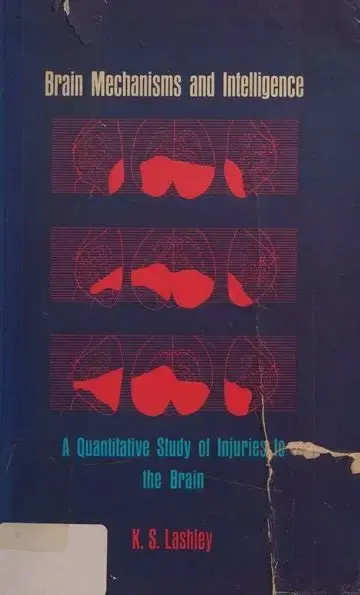
Brain Mechanisms and Intelligence: A Quantitative Study of Injuries to the Brain
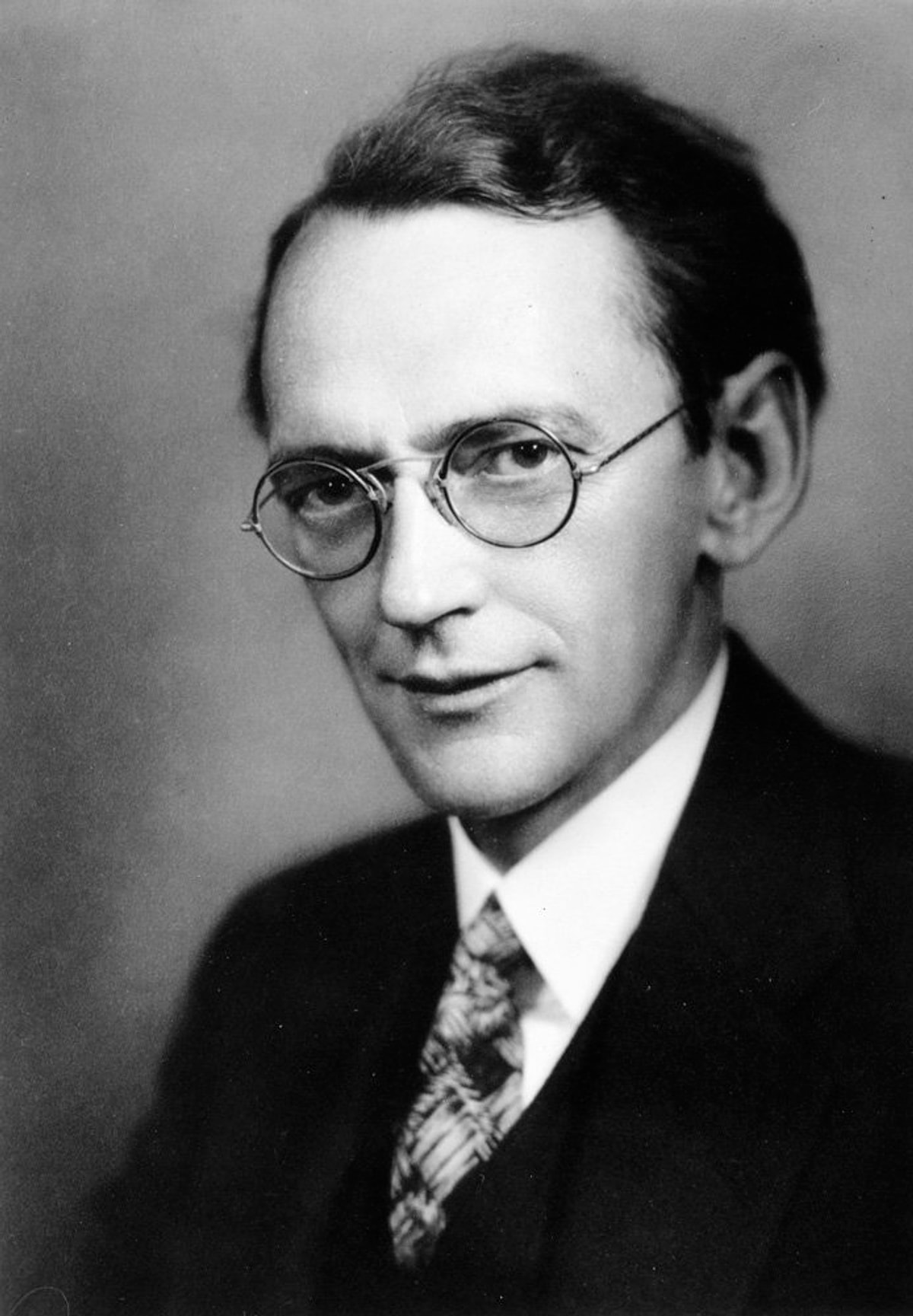 Karl Spencer Lashley
Lashley's 1929 monograph presents the results of systematic brain ablation experiments on rats, arguing that complex learning is not localized in specific cortical regions. Its central findings are two principles: equipotentiality, the capacity of any intact part of a functional area to subserve functions lost by destruction of the whole, and mass action, the proportional relationship between the amount of cortex destroyed and the severity of performance deficits on difficult tasks. The book challenged strict connectionist and localizationist models by showing that maze-learning efficiency depends on the total mass of intact tissue, not lesion location.
Key Details
Related Books
View AllSimilar books from the same category, ranked by shared topics and reader engagement.



Key Insights — Read in 10 Minutes
What are the principles of equipotentiality and mass action, and what view of brain function do they reject?
Equipotentiality holds that any intact part of a functional area can carry out functions lost by destruction of the whole, with efficiency varying by area and function type. Mass action holds that performance on complex tasks declines in proportion to the total amount of cortex destroyed, not as a function of lesion location [citation:2][citation:10]. Together they reject strict cerebral localization—the view that discrete functions reside in specific cortical regions and that damage to those regions produces selective deficits. Lashley's experiments with rats in mazes showed that up to roughly 15 percent cortical destruction produced no measurable impairment, but beyond that threshold, greater tissue loss meant greater difficulty on complex tasks [citation:5].
How did the book challenge the behaviorist framework Lashley was trained in?
Lashley was trained in Watsonian behaviorism but departed from its chain-reflex model of learning. Watson held that maze learning involved kinesthetic sense and a conditioned chain of specific motor responses. Lashley observed that rats with lesions affecting motor movements could still complete mazes efficiently, sometimes dragging themselves or rolling over at turns without losing their way [citation:10]. He argued this could not be explained by chained motor habits. His alternative emphasized central regulation and the concept of directionality, which anticipated Tolman's cognitive map [citation:10]. Despite this departure, Lashley insisted he remained a behaviorist, writing to Hebb in 1949 that he was 'the only surviving behaviorist' while rejecting the Gestalt label [citation:6].
What was the Buytendijk critique of the book's use of maze learning and statistics to measure intelligence?
The Dutch physiologist Frederik J. J. Buytendijk corresponded with Lashley from 1929 to 1932 and criticized the methodological foundations of the rat experiments. He questioned whether maze-learning performance could serve as a valid measure of intelligence, noting that animals slower than others in one trial often learned faster upon repetition [citation:11]. He reproduced Lashley's experiments and argued that Lashley had 'no right' to talk about intelligence based on such data [citation:11]. Buytendijk's deeper objection was to the reliance on statistics without careful observation of individual animal behavior, reflecting his phenomenological approach to biology [citation:4][citation:9]. This exchange illuminates interwar disagreements over quantitative versus qualitative methods in neurophysiology.
How did Lashley's principles relate to the search for the engram?
Lashley coined the term 'engram' for the physical memory trace that learning must produce in the nervous system. His ablation experiments were, in part, an attempt to locate it. The failure to find a specific cortical region whose destruction selectively abolished maze learning led him to conclude that memory is not localized but diffusely distributed [citation:13]. This negative result shaped his principles of equipotentiality and mass action. The engram concept remained influential historically by focusing attention on the brain-behavior relationship, even though Lashley's own search was unsuccessful and his conclusion that learning 'just is not possible' reflected the impasse [citation:13]. Later research on synaptic plasticity would locate memory mechanisms at a level Lashley's methods could not access.
How did the book's influence extend into the work of Lashley's student Donald Hebb?
Donald Hebb worked with Lashley and extended his mentor's critique of localization, but he resolved the problem differently. Hebb's Organization of Behavior (1949) acknowledged the importance of autonomous central processes while introducing a mechanism—the Hebbian synapse—by which electrical activity could change neural structure [citation:6]. Where Lashley had argued for diffuse mass action, Hebb proposed that cell assemblies and phase sequences could form through experience, giving a more constructive account of how distributed activity produces organized behavior. Hebb also engaged the nature-nurture debate in ways Lashley had not, arguing for both innate potential and environmental stimulation as necessary determinants of intellectual growth [citation:6]. Hebb thus revised Lashley's framework rather than simply extending it.
Wealthy Psyche is an intellectual archive. We do not host, distribute, or sell book copies — physical or digital. We provide structured knowledge to help you think better, faster.