


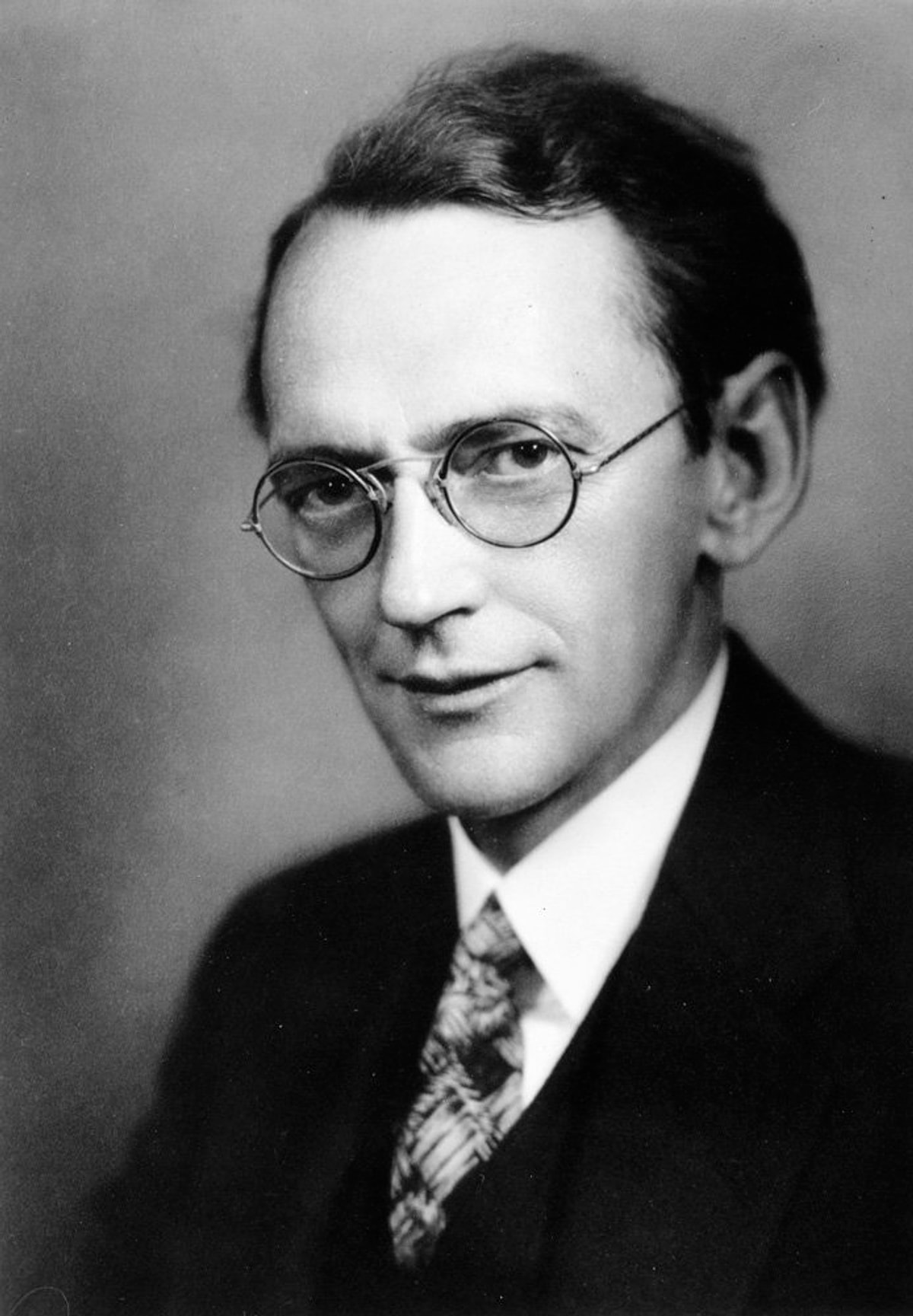
Karl Spencer Lashley
0Karl Spencer Lashley (1890–1958) was an American psychologist and behaviorist who is widely regarded as the father of neuropsychology[reference:0][reference:1]. A student of John B. Watson, he pioneered experimental work on the neural basis of learning and memory[reference:2][reference:3]. Through systematic lesion studies in rats, he challenged the prevailing view of strict cortical localization[reference:4]. His influential monograph *Brain Mechanisms and Intelligence* (1929) introduced the principles of mass action and equipotentiality, arguing that memory and complex functions are distributed across the cerebral cortex[reference:5][reference:6]. His 1951 paper, 'The Problem of Serial Order in Behavior,' further revolutionized understanding of motor control and influenced the cognitive revolution[reference:7]. Lashley's relentless search for the engram and his rigorous, quantitative approach established the methodological and theoretical foundations for modern neuroscience[reference:8].


Key Insights
- ✦
What is Karl Lashley best known for?
Karl Lashley is best known for his pioneering research on the neural basis of learning and memory[reference:9]. He is famous for his systematic lesion studies in rats, which led him to propose the principles of mass action and equipotentiality[reference:10]. His work challenged the idea of strict localization of function in the brain, suggesting that memory and complex cognitive processes are distributed across the cerebral cortex[reference:11]. He is widely regarded as the father of neuropsychology[reference:12][reference:13].
- ✦
What is the principle of mass action in Lashley's theory?
The principle of mass action, proposed by Karl Lashley, states that the efficiency of a complex cognitive function, such as learning or memory, is reduced in proportion to the amount of brain tissue that is damaged, rather than the specific location of the damage[reference:14][reference:15]. This principle suggests that learning and memory are distributed across the cerebral cortex as a whole, rather than being localized in a single, specific region[reference:16].
- ✦
What is equipotentiality in Lashley's research?
Equipotentiality is a principle derived from Lashley's research which posits that, in the event of damage to one area of the brain, other parts of the brain can take over the functions of the damaged region[reference:17]. This principle is particularly associated with sensory systems and suggests that any part of a functional area can perform the functions of another part[reference:18]. It challenged the strict localizationist view of brain function and supported the idea of neural plasticity.
- ✦
What was the 'engram' and why was Lashley's search for it famous?
The 'engram' is a hypothetical construct representing the physical trace or location of a memory in the brain[reference:19]. Karl Lashley spent a major part of his career attempting to identify the engram through a series of lesion experiments in rats[reference:20]. His famous, and ultimately unsuccessful, search led him to conclude that memories are not stored in a single, localized spot but are instead distributed across the cerebral cortex, a conclusion that profoundly influenced modern neuroscience[reference:21][reference:22].
- ✦
What is the significance of Lashley's 1951 paper 'The Problem of Serial Order in Behavior'?
Lashley's 1951 paper, 'The Problem of Serial Order in Behavior,' is a classic in psychology and neuroscience[reference:23]. In it, he argued that complex sequential actions, such as playing a piano or speaking a sentence, could not be controlled by a simple chain of reflexes due to the speed required[reference:24]. Instead, he proposed that behavior is guided by a central, hierarchically organized program. This insight has been highly influential in the study of motor control and also influenced Noam Chomsky's theory of generative grammar[reference:25].
- ✦
Where did Karl Lashley study and work?
Karl Lashley earned his Ph.D. in genetics from Johns Hopkins University in 1915, where he studied under the behaviorist John B. Watson[reference:26][reference:27]. He held professorships at the University of Minnesota, the University of Chicago, and Harvard University[reference:28]. From 1942 to 1955, he also served as the director of the Yerkes Laboratories of Primate Biology[reference:29]. He is listed as the 61st most eminent psychologist of the 20th century[reference:30].
- ✦
What are Karl Lashley's key publications?
Lashley's most influential work is his 1929 monograph *Brain Mechanisms and Intelligence*, which introduced his principles of mass action and equipotentiality[reference:31][reference:32]. His 1951 paper, 'The Problem of Serial Order in Behavior,' is another cornerstone of his legacy[reference:33]. A collection of his work was published posthumously as *The Neuropsychology of Lashley*[reference:34]. He published over 100 articles and monographs during his career[reference:35].
- ✦
How did Lashley's work influence modern neuroscience?
Lashley is considered a pioneer of neuroscience before the term even existed[reference:36]. His rigorous, quantitative experimental approach and his focus on brain-behavior relationships established a new standard for research[reference:37]. His principles of mass action and equipotentiality, while now considered too extreme, fundamentally challenged the prevailing localizationist dogma and paved the way for modern understanding of distributed neural networks and brain plasticity[reference:38]. His work on serial order also laid the groundwork for cognitive psychology[reference:39].
- ✦
What was Lashley's relationship with John B. Watson?
Karl Lashley was a student of John B. Watson, the founder of behaviorism[reference:40]. They collaborated on research in animal behavior during Lashley's postdoctoral years[reference:41]. However, Lashley eventually diverged from his mentor's theoretical perspective, placing a greater emphasis on the neurobiological basis of behavior and internal representations in the brain[reference:42]. Despite this, Watson's influence on Lashley's experimental, behaviorist approach is undeniable[reference:43].