



Chosen Peoples: Sacred Sources of National Identity
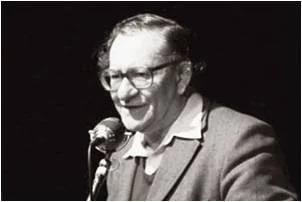 Anthony D. Smith
Anthony D. Smith's 2003 book argues that sacred belief remains central to national identity even in a secular, globalised world. Smith traces modern national identities to the ancient myth of ethnic election—the conviction that a people stands in a special covenantal relationship with the divine. He distinguishes conditional covenants of duty (ancient Israel) from unconditional, expansionist versions adopted by later European nations. Through case studies including England, France, Germany, Israel, Armenia, and the United States, Smith shows how myths of chosenness, sacred homelands, and golden ages supply the cultural resources that sustain national solidarity and persistence.
Key Details
Related Books
View AllSimilar books from the same category, ranked by shared topics and reader engagement.


Key Insights — Read in 10 Minutes
What is the central claim of Chosen Peoples?
Smith argues that sacred belief remains central to national identity even in an increasingly secular and globalised world. Modern nations draw on ancient myths of ethnic election—the conviction that a people has been chosen by God for a special destiny. These myths, often rooted in Judeo-Christian covenant traditions, supply the cultural resources that sustain national solidarity, sacred homelands, and collective mission. Smith contends that theories of nationalism which ignore religion miss something fundamental about why nations persist and inspire devotion.
What is the concept of 'ethnic election' that Smith develops in this book?
Ethnic election refers to the belief that a community stands in a privileged relationship with the deity. Smith distinguishes two forms: a conditional covenant, originating with the Israelites, where chosenness depends on adherence to a strict moral and ritual code; and an unconditional version adopted by many European nations, where privileges of election entail only vague duties of conversion or expansion. The concept helps explain why certain ethnies survived over long time spans and how their myths were politicised by modern nationalism.
How does Chosen Peoples relate to Smith's earlier work on ethno-symbolism?
Chosen Peoples represents the culmination of Smith's ethno-symbolic project, bringing together nearly forty years of reflection on ethnicity, nationalism, and religion. It deepens the framework developed in The Ethnic Origins of Nations by focusing specifically on the sacred dimension of ethnic identity. Where the earlier work established that modern nations draw on premodern ethnic cores, Chosen Peoples specifies the religious content of those cores—covenants, election myths, sacred homelands, and golden ages—and traces their transmission into modern national identities.
What case studies does Smith use to demonstrate his argument?
Smith draws on an unusually wide range of examples: Armenia, England, Scotland, Wales, Egypt, Ethiopia, France, Germany, Greece, Mexico, Turkey, Israel, and the United States. He examines historic landscapes in Ireland, Switzerland, and Egypt; Arthurian myths of Britain; Holy Russia and Byzantium; memories of golden ages; and the modern commemoration of the 'Glorious Dead' and war victims. This breadth allows him to show that the myth of chosenness appears across cultures and religious traditions, not only in the Judeo-Christian West.
How was Chosen Peoples received by reviewers?
Reception was largely positive. Irving Hexham called it a 'tour de force' that brings together Smith's lifetime of scholarship, praising the well-chosen examples and chapter structure. Mary Anne Perkins noted its 'erudition, accessibility, and interest,' describing it as an effective antidote to the tendency to dismiss religion's role in nationalism. The American Historical Review called it 'a big book: not in size, but in ideas'. However, Hexham criticised Smith's claim that Afrikaner nationalism drew on the 'genealogy of Ham,' finding no evidence in South African archives.
What is the most common misconception about Chosen Peoples?
A frequent misreading treats Smith's argument as claiming that nationalism is simply religion in disguise or that all nations are fundamentally religious. Smith explicitly rejects this. He argues that nationalism is 'a distinctly this-worldly movement and culture,' not a millennialist creed promising apocalypse. What nationalists draw from religion is not soteriology but 'the very core of traditional religions, their conception of the sacred and their rites of salvation'. The relationship is one of appropriation and analogy, not identity. Nationalism borrows sacred forms without becoming a religion itself.
Show 2 more insights
What are the weaknesses critics identified in the book?
Irving Hexham, while praising the book overall, identified two main problems. First, Smith's claim that Afrikaner nationalism used the 'genealogy of Ham' to justify racial servitude is unsupported by archival evidence. Second, Smith assumes Christian nationalisms are nourished by Old Testament covenant theology, but Hexham's examination of Afrikaner sermons shows the New Testament dominated their thinking. Hexham also notes Smith overlooks the influence of Jewish converts to Christianity on nineteenth-century Christian nationalism in the Netherlands and South Africa.
How does Smith's argument in Chosen Peoples differ from Ernest Gellner's modernist theory?
Gellner explains nationalism as an unintended consequence of industrialisation's demand for a culturally homogeneous workforce; religion plays no significant role in his account. Smith explicitly positions himself against this secular modernist paradigm. He argues that the persistence and emotional power of nationalism cannot be explained without reference to sacred beliefs, myths of election, and covenantal traditions inherited from premodern ethnies. Where Gellner sees nationalism as a functional response to industrial society, Smith sees it as a modern politicisation of ancient sacred identities.
Wealthy Psyche is an intellectual archive. We do not host, distribute, or sell book copies — physical or digital. We provide structured knowledge to help you think better, faster.