



Nationalism
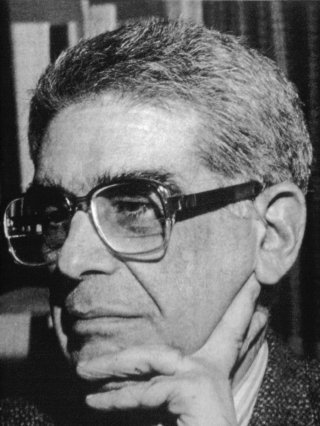 Elie Kedourie
Elie Kedourie's 1960 book argues that nationalism is not a natural human sentiment but a doctrine invented in Europe at the beginning of the nineteenth century. Drawing on the history of ideas, Kedourie traces its philosophical roots to Kantian self-determination as transformed by Fichte and Herder. Nationalism, he contends, is a form of 'ideological politics' that treats society as a blank canvas to be remade according to abstract principles, rather than 'constitutional politics' that attends to the practical concerns of a particular society. This invented doctrine, spread by intellectuals, has produced disorder rather than order in international life.
Key Details
Related Books
View AllSimilar books from the same category, ranked by shared topics and reader engagement.


Key Insights — Read in 10 Minutes
What is the central claim of Kedourie's Nationalism, and what does it reject?
Kedourie argues that nationalism is a doctrine invented in Europe at the beginning of the nineteenth century, not an ancient or natural sentiment. He rejects the idea that nationalism reflects pre-existing ethnic or cultural identities. Instead, he traces its philosophical foundations to Kantian self-determination as collectivised by Fichte and Herder. Nationalism, on this account, is a form of 'ideological politics' that seeks to remake society according to abstract principles, in contrast to 'constitutional politics' that attends to the practical concerns of a particular society. The doctrine, spread by intellectuals, has produced disorder rather than order in international life.
What specific concept of 'ideological politics' does Kedourie introduce?
Kedourie distinguishes 'ideological politics' from 'constitutional politics.' Constitutional politics attends to the common concerns of a particular society, mediating disagreements through institutions and upholding law above sectional interests. Ideological politics, by contrast, seeks to establish a state of affairs in which everyone will 'live happily ever after.' The ideologist, borrowing Plato's analogy, treats state and society as a canvas to be wiped clean so his vision of justice can be painted on a tabula rasa. For Kedourie, nationalism is one kind of ideological politics—an attempt to impose an idea upon the world rather than take its lead from the world as it is.
How does Kedourie connect Kant to the origins of nationalism?
Kedourie does not claim Kant was a nationalist. His argument is that the idea of self-determination, which is the core of Kant's moral theory, became the dominant idea in the moral and political discourse of Kant's successors, particularly Fichte. In Fichte's hands, the complete self-determination of the individual required national self-determination. Kedourie argues this intellectual connection exists in the realm of ideas, even if Kant himself would have rejected nationalism. Isaiah Berlin reinforced this connection by naming Kant as an unsuspecting source of nationalism.
How did Ernest Gellner criticise Kedourie's argument?
Gellner attacked Kedourie on two fronts. First, he argued that the 'history of ideas' approach is inappropriate for explaining nationalism, which is better understood through social and structural conditions like industrialisation. Second, Gellner mounted a passionate defence of Kant, arguing that Kedourie's search for intellectual progenitors of nationalism was motivated by conservative resentment rather than scientific inquiry. For Gellner, Kant was not the father of nationalism but the defender of enlightened cosmopolitanism—the very negation of nationalism. Kedourie responded to these criticisms in a postface added in 1984, reiterating that he did not accuse Kant of being a nationalist but traced how his ideas were transformed by successors.
How does Kedourie's approach differ from Ernest Gellner's and Benedict Anderson's?
Kedourie locates nationalism in the history of ideas, treating it as an invented doctrine that emerged from specific philosophical developments in late eighteenth and early nineteenth-century Europe. Gellner and Anderson, by contrast, offer structural explanations: Gellner traces nationalism to industrialisation's demand for a culturally homogeneous workforce; Anderson traces it to print capitalism and the decline of religious certainties. Kedourie is also more hostile to nationalism, viewing it as a destructive ideology, whereas Anderson at least acknowledges that nations inspire love and self-sacrifice, not merely fear and hatred of the Other.
What did Isaiah Berlin say about Kedourie's Nationalism?
Isaiah Berlin praised the original edition highly, writing that 'Kedourie's account of these ideas and their effect is exemplary: clear, learned and just.' Berlin himself had pointed to Kant as an unsuspecting source of nationalism, reinforcing Kedourie's argument about the philosophical lineage of nationalist doctrine. Berlin's endorsement helped establish the book's reputation as a classic text in the history of ideas. The fourth edition, published posthumously in 1993, includes a new introduction in which Kedourie reflects on the origins of the book and its relationship to contemporary nationalist conflicts.
Show 1 more insights
How has Kedourie's argument held up since 1960?
Kedourie's history-of-ideas approach has been largely superseded by modernist and ethno-symbolist theories that emphasise social, economic, and cultural factors over philosophical origins. His hostility to nationalism and his focus on its 'invented' character align him with modernists, but his method differs fundamentally from Gellner's structural functionalism or Anderson's cultural materialism. Critics argue that Kedourie overstates the role of intellectuals and ideas while neglecting the popular appeal of nationalism and the genuine grievances that fuel nationalist movements. Yet the book remains a classic for its elegant articulation of the view that nationalism is a modern ideological construct with dangerous consequences.
Wealthy Psyche is an intellectual archive. We do not host, distribute, or sell book copies — physical or digital. We provide structured knowledge to help you think better, faster.