


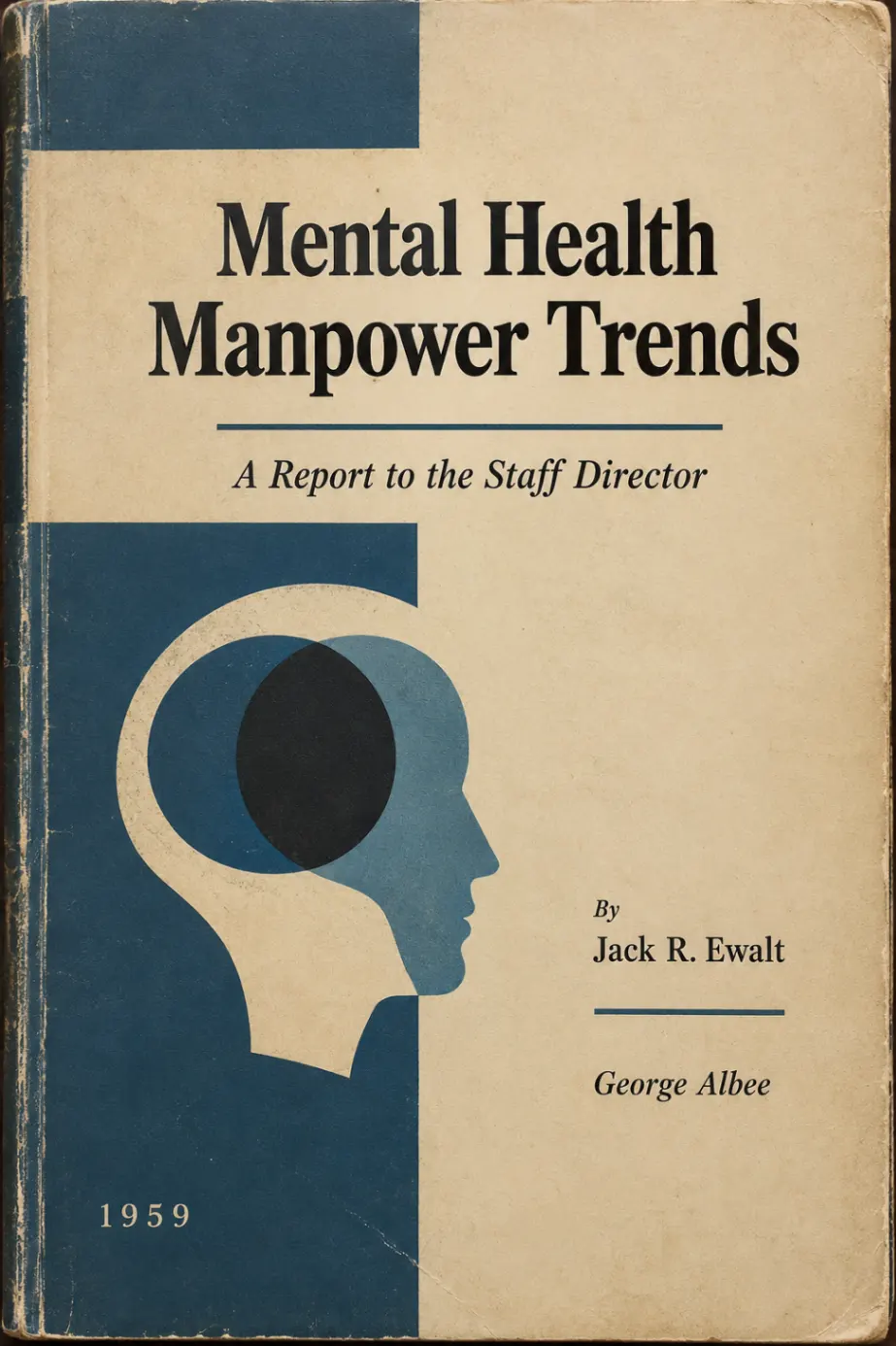
Mental Health Manpower Trends: A Report to the Staff Director, Jack R. Ewalt, 1959
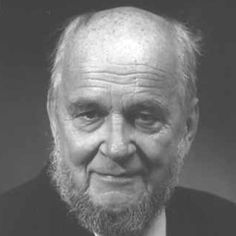 George Wilson Albee
Albee's 1959 monograph for the Joint Commission on Mental Illness and Health marshals demographic and educational data to demonstrate a structural impossibility: the supply of psychiatrists, psychologists, psychiatric nurses, and social workers cannot grow fast enough to meet projected demand. His conclusion—that the medical model of one-to-one treatment will never reach the majority of those needing care—became the empirical foundation for his lifelong argument that primary prevention through social change is the only viable mental health strategy.
Key Details
Related Books
View AllSimilar books from the same category, ranked by shared topics and reader engagement.



Key Insights — Read in 10 Minutes
What was Albee's central conclusion in Mental Health Manpower Trends, and how did he reach it?
Albee concluded that the United States would never produce enough psychiatrists, psychologists, psychiatric nurses, and psychiatric social workers to eliminate deficiencies in mental patient care, given projected population growth and existing educational pipelines . He reached this conclusion by relating mental health manpower shortages to broader national shortages in professional and scientific careers, and by documenting deficiencies in secondary and higher education that limited recruitment of talented students into these fields . The demographic arithmetic was the point: treatment capacity scales linearly, but population and demand do not, and the gap widens over time. This pessimistic finding directly motivated his subsequent turn toward primary prevention as the only structurally feasible alternative.
What specific data and methods did Albee use to analyze manpower supply and demand?
The 361-page report reviewed the history of training for each mental health profession—psychiatry, psychology, psychiatric nursing, and psychiatric social work—and evaluated their recruitment bases against demographic trends . Albee examined the educational system's capacity to channel bright students into professional careers, particularly in science, and assessed how the supply of candidates related to the upward population trend in the United States . The report also examined nonprofessional personnel such as practical nurses, attendants, and psychiatric aides, noting that a large proportion of patient care time was performed by relatively untrained workers . A contemporary review in the American Journal of Public Health praised it as a careful, scholarly appraisal without easy answers .
How did this report's findings shape the subsequent community mental health movement and national policy?
The report was the third monograph in the Joint Commission on Mental Illness and Health's national survey, a project established under President Eisenhower . Albee served as director of the Task Force on Manpower for the Commission in 1957, and his findings on provider shortages directly informed the Commission's final recommendations, which led to the development of community mental health centers . The report documented that the existing system could not scale through professional training alone, providing empirical justification for shifting care into communities and expanding the roles of nonprofessional workers. Albee later served on President Carter's Commission on Mental Health, continuing to shape policy from the prevention perspective he developed through this manpower research .
How does this book relate to Albee's later work and the primary prevention movement he founded?
Mental Health Manpower Trends is the empirical hinge between Albee's early career as a manpower analyst and his later identity as the leading advocate of primary prevention. The report demonstrated that the medical model could never treat its way out of the problem, and Albee drew the logical conclusion: if you cannot treat everyone who becomes ill, you must prevent illness from occurring . His protégé Lynne Bond recalls his saying that no mass disorder affecting humankind has ever been brought under control by treating an individual . He went on to establish the Vermont Conference on the Primary Prevention of Psychopathology in 1975, which held seventeen international conferences and became a major forum for prevention scholarship .
What was the immediate reception of the report, and how did reviewers assess its contribution?
Contemporary reviews recognized the report's rigor and its uncomfortable implications. A review in the American Journal of Public Health called it an excellent review of the manpower situation, noting that Albee did not offer easy answers but provided a thought-provoking volume recommended for anyone interested in mental health . The New England Journal of Medicine highlighted the disquieting points about the increasing lack of sufficient professional personnel to eliminate glaring deficiencies in care . The Journal's review also noted the report's frank pessimism that sufficient personnel will never become available if population trends continue without commensurate increases in recruitment and training . The work was not controversial for its methods but for the structural critique it implied of the treatment model.
Is Mental Health Manpower Trends still relevant given subsequent changes in mental health policy and workforce?
The specific numbers Albee analyzed are historical, but the structural argument remains relevant. The United States continues to face mental health workforce shortages, particularly in rural and underserved areas, and the treatment gap—the proportion of people with mental illness who receive care—persists. Albee's core insight that training pipelines scale slowly while demand can grow rapidly has not been refuted by subsequent policy experiments. Community mental health centers expanded access but did not solve the manpower problem he documented. His conclusion that prevention must be part of any adequate response is now widely accepted in principle, even where practice lags. The report remains a foundational document for understanding why prevention entered the mental health policy conversation at all.
Show 1 more insights
How does Albee's analysis in this book differ from contemporaneous approaches to mental health policy?
Most mental health policy discourse in the late 1950s focused on expanding treatment capacity: more hospitals, more clinicians, better training programs. Albee's report accepted those goals as necessary but demonstrated their insufficiency through demographic arithmetic. While others argued for incremental increases in supply, he showed that the gap between need and capacity was structural, not merely a matter of inadequate funding or recruitment effort . This reframing positioned prevention not as a supplement to treatment but as a necessary alternative to it, given finite resources. The report thus introduced a resource-scarcity logic into mental health planning that challenged the assumption that adequate treatment was achievable through professional expansion alone.
Wealthy Psyche is an intellectual archive. We do not host, distribute, or sell book copies — physical or digital. We provide structured knowledge to help you think better, faster.