


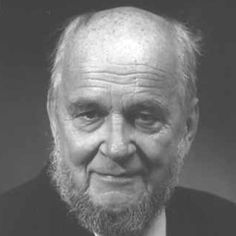
George Wilson Albee
0George Wilson Albee was a groundbreaking American clinical and community psychologist, widely considered the father of prevention in mental health. Born in St. Marys, Pennsylvania, he earned his Ph.D. in clinical psychology from the University of Pittsburgh. He spent his career at the University of Vermont, where he founded the Department of Psychology and the renowned Vermont Conference on the Primary Prevention of Psychopathology. Albee is best known for his pioneering work on the social causes of mental illness and his powerful advocacy for prevention over treatment. His 'manpower' model, which linked the prevalence of mental disorders to social stressors like poverty and discrimination, fundamentally shifted the field from an individual pathology focus to a public health perspective, making him a foundational figure in community psychology.

Key Insights
- ✦
What is George Albee best known for?
George Albee is best known as the 'father of prevention' in mental health and as a foundational figure in community psychology. His pioneering work argued that society must focus on preventing mental disorders through social change, rather than simply treating individuals after they become distressed. He developed a powerful model linking the prevalence of mental illness to social stressors, demonstrating that factors like poverty, unemployment, and discrimination are major causal agents. His relentless advocacy for prevention over treatment fundamentally shifted the field's focus from individual pathology to a social justice-oriented, public health perspective.
- ✦
What is George Albee's 'manpower' model of mental health?
Albee's 'manpower' model is a conceptual framework that explains the incidence of mental disorders as a product of social and environmental factors. The model posits that the number of people with mental disorders is a function of the balance between social stressors (e.g., poverty, racism, sexism, unemployment) on one side, and protective factors (like self-esteem, social support, and meaningful work) on the other. He argued that increasing the number of mental health professionals to treat individuals is an inefficient and insufficient response; the only truly effective solution, in his view, was to reduce social stressors and enhance protective factors, which are largely the purview of social policy and community action.
- ✦
What is the 'vitamin model' of mental health proposed by Albee?
The 'vitamin model,' also known as the social stress model, is an extension of George Albee's preventive framework. He used the analogy of vitamins to explain the relationship between social environments and mental health. Just as a vitamin deficiency can lead to physical illness, a deficiency in certain social 'nutrients'—such as adequate income, meaningful employment, social support, and a sense of purpose—can lead to psychological distress. Albee argued that providing these 'social vitamins' is the most effective form of prevention, as it directly addresses the root causes of mental health problems, much like addressing a nutritional deficiency prevents physical ailments.
- ✦
Where did George Albee work?
George Albee spent the majority of his distinguished academic career at the University of Vermont. He joined the faculty in 1954 and was instrumental in establishing the Department of Psychology there. He founded the university's PhD program in clinical and community psychology and directed it for many years. He also founded the Vermont Conference on the Primary Prevention of Psychopathology, an annual event that became a major forum for discussing and advancing prevention science. His tenure at the University of Vermont turned it into a world-renowned center for community psychology and mental health prevention research.
- ✦
What is George Albee's most famous book?
George Albee authored and edited several influential books, but his most famous is arguably 'Mental Health Manpower Trends' (1959), a report for the Joint Commission on Mental Illness and Health. In this work, he presented his 'manpower model' and made his powerful case against a purely clinical approach to mental health. This book was highly influential in shaping the community mental health movement. He also co-edited the three-volume series 'Primary Prevention of Psychopathology,' which collected the proceedings of his annual Vermont conferences and became a crucial resource for scholars and practitioners in the prevention field.
- ✦
What is Albee's critique of the traditional medical model of mental illness?
George Albee was a forceful critic of the traditional medical model, which he saw as fundamentally flawed for addressing mental health. He argued that locating the cause of mental disorders solely within the individual—as a disease or a biological defect—was both inaccurate and socially regressive. He contended that this model led to a massive and expensive system of 'warehousing' people in treatment, without addressing the social conditions that create distress. He saw the medical model as a way to depoliticize suffering and maintain a system of oppression, and he advocated for a paradigm shift toward prevention, social justice, and a public health approach.
- ✦
How has George Albee influenced the field of psychology?
George Albee's influence on psychology is monumental. He is considered one of the primary founders of community psychology and the single most important figure in the prevention of mental disorders. He reframed the very purpose of psychology, arguing that the discipline's primary goal should be social change to improve the conditions of life for all people, especially the most vulnerable. His advocacy for prevention has become a core value in many areas of psychology, influencing public policy, mental health service delivery, and the training of new psychologists. His legacy is a field that is more socially conscious, more focused on systemic issues, and more committed to justice.