


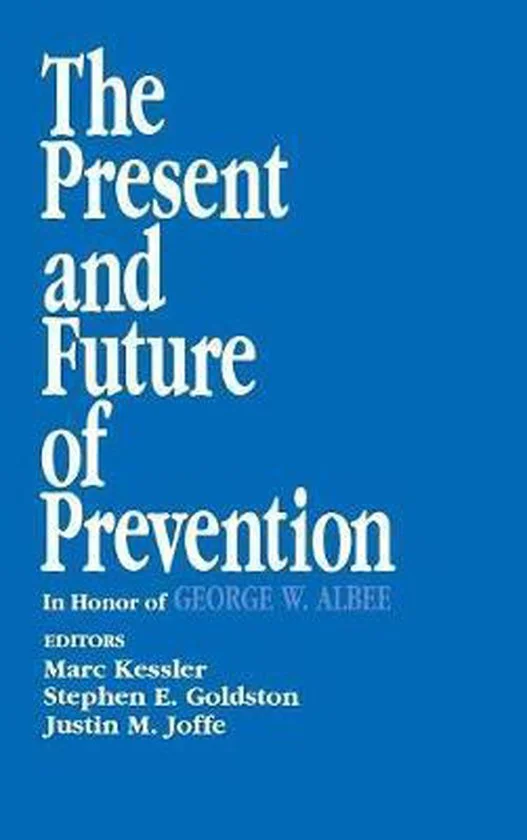
The Present and Future of Prevention: In Honor of George W. Albee
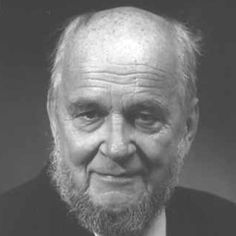 George Wilson Albee
This 1992 festschrift volume, edited by Kessler, Goldston, and Joffe, assembles contributions from leading prevention researchers to honor George Albee's foundational claim: that psychopathology arises primarily from toxic social conditions—poverty, racism, sexism—rather than from individual deficits or biochemical disorders. The essays operationalize this thesis across domains including substance abuse, cardiovascular disease, and urban schoolchildren's resilience, while tracing the history of community mental health and the political opposition prevention efforts face. The collection's distinctive contribution is its integration of Albee's social justice framework with concrete prevention strategies, demonstrating that primary prevention requires social change, not merely expanded treatment capacity.
Key Details
Related Books
View AllSimilar books from the same category, ranked by shared topics and reader engagement.



Key Insights — Read in 10 Minutes
What is George Albee's central argument about the causes of psychopathology and the implications for prevention?
Albee argued consistently from the 1950s through the 1990s that most mental disorders are not discrete diseases requiring medical treatment but learned patterns of response to stress, powerlessness, and exploitation . The noxious agents are social: poverty, racism, sexism, and class inequality. Because individual psychotherapy cannot reduce the incidence of new cases in a population—it only addresses existing casualties—the only effective strategy is primary prevention aimed at eliminating or reducing those social pathogens . This position directly challenged the medical model and the vested interests supporting it, making prevention inherently political. The volume's contributors elaborate this framework across multiple domains, demonstrating that social change and redistribution of power are prerequisites for reducing psychopathology rates.
How did Albee's early work on mental health manpower shortages lead to his prevention advocacy?
In the 1950s, as director of the Task Force on Manpower for the Joint Commission on Mental Illness and Health, Albee documented that there could never be enough medically trained professionals to treat all those with mental disorders—especially the poor and marginalized who needed help most . His 1959 book Mental Health Manpower Trends demonstrated that the treatment model was structurally incapable of meeting population needs . This conclusion led him to reject one-to-one intervention as the primary strategy and embrace public health approaches focused on prevention. The essays in this volume continue that trajectory, examining prevention efforts in schools, communities, and policy arenas where the limitations of clinical treatment are most evident.
What specific prevention strategies and models are documented in this volume?
The volume covers a diverse range of prevention applications: Emory Cowen and colleagues report on resilience among profoundly stressed urban schoolchildren, demonstrating that supportive school environments can strengthen resistance to social pathogens . Linda Dusenbury and Gilbert Botvin apply the competency enhancement model to substance abuse prevention, showing how building life skills reduces vulnerability . Other chapters address stressful life event theory, cardiovascular disease prevention, and rural women's empowerment . These case studies collectively illustrate Albee's public health framework: reduce the noxious agent (poverty, discrimination), prevent transmission (of stigma and destructive stereotypes), and strengthen host resistance (through skill-building and community support) .
How does this volume's approach differ from mainstream clinical psychology and psychiatry?
The fundamental divergence concerns causal attribution. Mainstream psychiatry and clinical psychology locate pathology within the individual—in genes, neurochemistry, or learned maladaptive patterns—and respond with treatment. Albee and the volume's contributors locate pathology in social arrangements that exploit and marginalize people, and respond with prevention through social change . Julian Rappaport's chapter on the death and resurrection of community mental health and Carolyn Swift's essay on empowerment and prevention explicitly frame this as a political struggle against professional and economic interests invested in the medical model . The volume thus positions itself not merely as a methodological alternative but as an ideological challenge to the power structure of mental health professions.
What barriers to implementing primary prevention does the volume identify?
Contributors identify several interlocking obstacles. Beverly Benson Long discusses the difficulty of developing a constituency for prevention—unlike treatment, which has identifiable beneficiaries and service providers, prevention's benefits are diffuse and future-oriented . Julian Rappaport traces how the community mental health movement was co-opted and weakened by institutional pressures favoring fee-for-service treatment . A 1983 article in the Journal of Primary Prevention noted that front-line personnel often do not know what primary prevention is, and even when they do, they face pressure to provide billable treatment . Albee himself identified ideological opposition from those committed to organic models, one-to-one intervention, and the view that social change is inappropriate for mental health workers .
How does this festschrift reflect Albee's influence on the next generation of prevention researchers?
The volume's structure itself demonstrates Albee's mentorship and intellectual legacy. Contributors include many who became leading figures in community psychology and prevention science: Emory Cowen, Rudolf Moos, Bernard Bloom, and Julian Rappaport, among others . The opening section, 'George Albee: An Appreciation,' by the editors, and Kenneth Clark's reminiscence establish the personal dimension of his influence . Ira Iscoe, writing after Albee's death in 2006, recalled Albee's metaphor that if we cannot prevent people from jumping into the rushing stream, we can at least teach them to swim—while noting that the mental health system pays off on casualties, not prevention . This volume was part of the Vermont Conference series Albee founded in 1975, which became a major forum for prevention scholarship .
Show 1 more insights
Was Albee's prediction of a 'fourth mental health revolution' centered on prevention realized?
Albee stated in the early 1980s that a fourth mental health revolution—prevention-oriented—was on the verge of beginning . A contemporaneous analysis in the Journal of Primary Prevention examined this claim and concluded the evidence was not strong: front-line community mental health workers remained unfamiliar with prevention concepts and operated under fee-for-service pressures . Three decades later, the assessment remains mixed. Prevention science has advanced methodologically, and social determinants of health are now widely recognized, yet treatment capacity still dominates mental health budgets. Albee's professorship at the University of Vermont, established in his memory, supports research on traumatic stress and underserved populations—work that extends his commitment to prevention and social justice but through technology-based interventions rather than the radical social change he advocated .
Wealthy Psyche is an intellectual archive. We do not host, distribute, or sell book copies — physical or digital. We provide structured knowledge to help you think better, faster.