


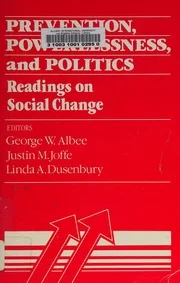
Prevention, Powerlessness, and Politics: Readings on Social Change
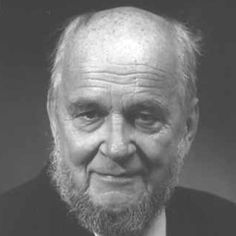 George Wilson Albee
This 1988 reader, distilled from the Vermont Conference series, argues that preventing psychopathology requires redistributing power away from exploiters and toward the exploited. Albee, Joffe, and Dusenbury organize the volume around a causal chain: social arrangements produce powerlessness, powerlessness produces psychopathology, and therefore effective prevention must be political—reducing victimization, building empowerment, and confronting the protectors of the status quo. The book pairs diagnostic chapters on the victims of powerlessness with strategies for individual, familial, and large-scale social change, and includes an unusually direct exchange between Albee and critics like Thomas Szasz and H. Richard Lamb over whether primary prevention is scientifically defensible or ideologically driven.
Key Details
Related Books
View AllSimilar books from the same category, ranked by shared topics and reader engagement.



Key Insights — Read in 10 Minutes
What is the central argument of Prevention, Powerlessness, and Politics, and what does it reject?
The volume argues that broad-based prevention of psychopathology requires social change and political action, not merely expanded clinical services. Its distinctive mechanism is a causal claim: abuse and exploitation produce powerlessness among those subjected to them, and that powerlessness is itself a major source of psychopathology . The editors reject the assumption that prevention can be accomplished through professional programs alone, insisting that the sources of resistance—protectors of the status quo—must be confronted directly. The book concludes with proposals for redistributing power in order to remove the futility confronting prevention workers . This framing makes prevention inherently political: if psychopathology arises from exploitation, then preventing it requires changing the arrangements that exploit.
How does this volume differ from Albee's earlier work on mental health manpower and prevention?
Where Mental Health Manpower Trends (1959) demonstrated that treatment capacity could never meet demand, this 1988 reader moves from diagnosis to political strategy. It is volume two in a series of readings drawn from the Vermont Conference on the Primary Prevention of Psychopathology, which Albee founded in 1975 . The preface explains that the first readings volume provided a general overview of prevention concepts; this second volume deliberately focuses on 'the need for social change and political action to accomplish broad-based prevention efforts' . The shift is from establishing prevention's necessity to specifying its political requirements—identifying victims of powerlessness, documenting empowerment strategies, and engaging directly with opponents of prevention.
Who are the named critics of primary prevention included in the volume, and what are their arguments?
Part Six, titled 'Sources of Resistance and Opposition to Prevention,' includes direct critiques from Thomas Szasz and H. Richard Lamb, with responses from the editors. Szasz contributes a libertarian analysis arguing against the prevention framework, prompting a response from Joffe and Albee . Lamb writes 'The Argument Against Primary Prevention,' and Albee answers with 'The Argument for Primary Prevention'; Goldston and Zusman offer additional reactions, followed by further exchanges . This unusual inclusion of opposing viewpoints distinguishes the volume from a straightforward advocacy collection. The editors clearly intended it as a forum for the debate that had grown heated in the 1980s, allowing readers to see the strongest objections alongside the rebuttals.
What specific topics and populations does the volume address in its sections on powerlessness?
Part Two, 'Effects of Powerlessness: The Victims,' assembles chapters on the concrete casualties of social arrangements: the education of oppressed children in a democracy, portraits of deprivation, mental retardation in the slums, a welfare funeral, sexual exploitation, sexual abuse of children, symptoms in women, family stress and children's responses, unmet needs of children, marital disruption as a stressor, and a typology of risks and disabilities of low status . Contributors include Ned O'Gorman, Thomas Cottle, Burton Blatt, F. Rick Heber, Stanley Brodsky, Stephen Goldston, Gertrude Rubin Williams, Marcia Guttentag, Grace Baruch, Rosalind Barnett, Michael Rutter, Edward Zigler, Bernard Bloom, and Elizabeth Taylor Vance . The section's structure embodies the volume's argument: psychopathology is not randomly distributed but clusters around socially produced victimization.
What is the significance of the volume's structure, with sections on individuals, families, and larger political change?
The progression from Part Three ('Strategies of Empowerment: Programs for Individuals and Families') through Part Four ('Programs Involving Social and Political Change') and Part Five ('Programs for Larger Social Change') reflects the editors' layered theory of intervention. Individual and family programs address immediate empowerment needs—sex education, overcoming self-hate, preparing young people for responsible parenting—but the volume insists these are insufficient without structural change. Later chapters address child care policy, the politics of aging, religion, behavioral settings, school reform, community action, and neighborhood change . The logic is cumulative: personal empowerment matters, but it cannot substitute for altering the institutional arrangements that generate powerlessness in the first place.
What does the concluding chapter by Albee, 'Toward a Just Society,' argue?
Albee's closing chapter draws lessons from the primary prevention of psychopathology to make a broader case for social justice as the ultimate prevention strategy. The title signals the volume's trajectory: from documenting how powerlessness produces pathology to envisioning a just society as the necessary condition for prevention. Gisela Konopka's preceding chapter, 'Social Change, Social Action as Prevention,' frames the argument . Together, these final contributions assert that prevention cannot be fully achieved within unjust social arrangements—it requires transforming those arrangements. This conclusion follows logically from the volume's foundational claim that psychopathology arises from exploitation and powerlessness; if that claim is correct, then the just society is not a utopian addendum but a prevention imperative.
Wealthy Psyche is an intellectual archive. We do not host, distribute, or sell book copies — physical or digital. We provide structured knowledge to help you think better, faster.