


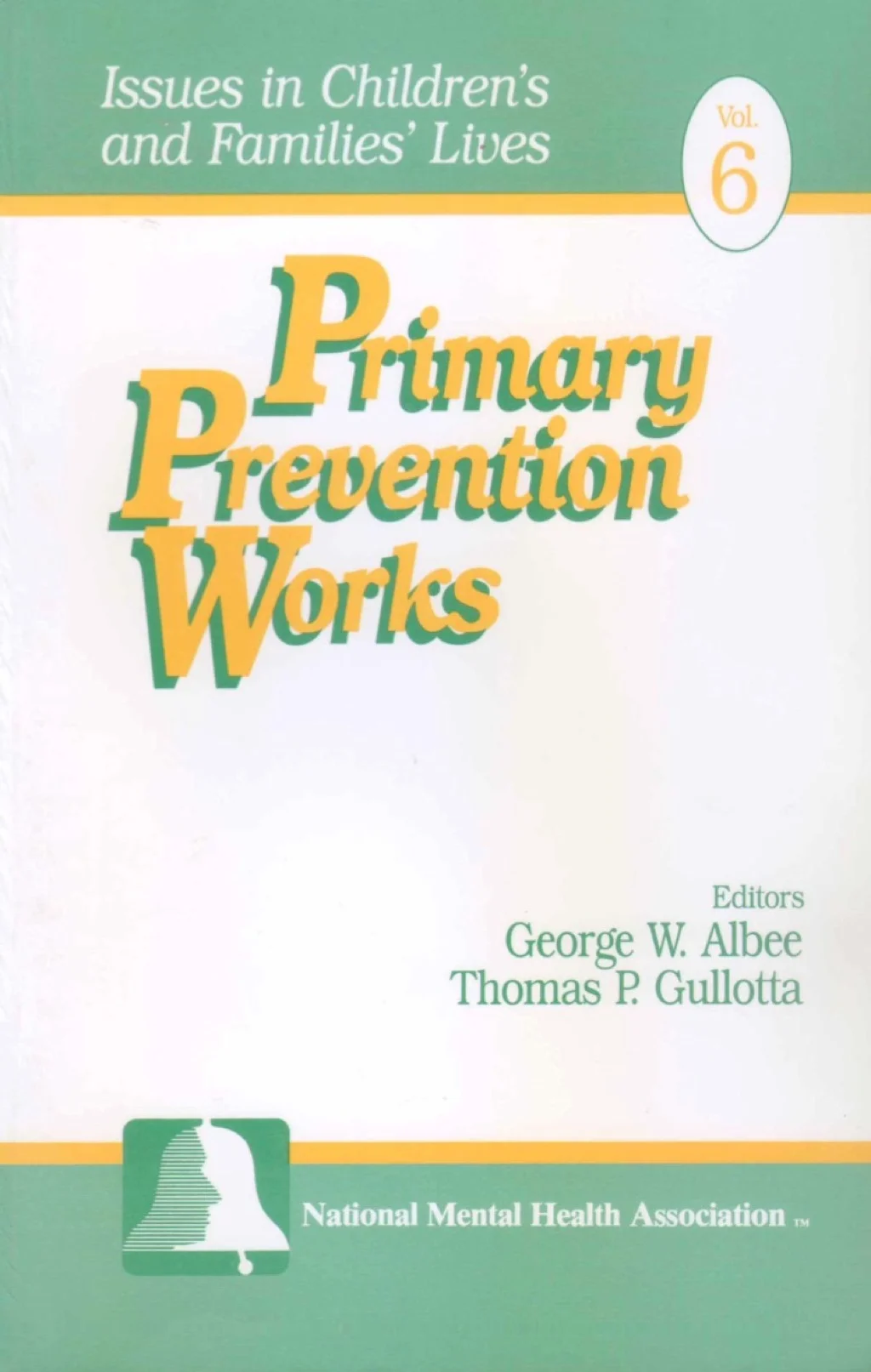
Primary Prevention Works
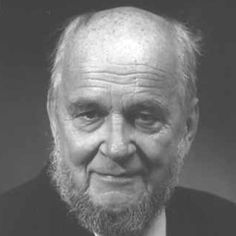 George Wilson Albee
Albee and Gullotta's 1997 volume assembles two decades of evidence to demonstrate that primary prevention programs actually reduce psychological distress. The book operationalizes Albee's incidence formula—the mathematical relationship between organic and environmental factors in psychopathology—and presents sixteen case studies spanning infancy through adulthood: prenatal home visiting, preschool interventions like High/Scope Perry, school-based social competence programs, and adult job-loss coping. Its distinctive contribution is not theory but demonstration: each chapter documents a program with outcome data, collectively arguing that prevention works when it targets the social conditions that produce disorder, not merely treating casualties after they emerge.
Key Details
Related Books
View AllSimilar books from the same category, ranked by shared topics and reader engagement.



Key Insights — Read in 10 Minutes
What is the central argument of Primary Prevention Works, and how does it differ from Albee's earlier volumes?
The volume argues that primary prevention programs demonstrably work—not just in theory but in documented practice. Where earlier Vermont Conference volumes established prevention's necessity and political requirements, this 1997 collection shifts to evidence: sixteen case studies with outcome data showing that prevention programs reduce psychological distress across the lifespan. The editors open with Albee and Gullotta's overview of prevention's evolution in America and Gullotta's chapter operationalizing Albee's incidence formula, which specifies the mathematical relationship between organic and environmental factors in psychopathology . The book's distinctive contribution is this pairing of theoretical framework with concrete, evaluated programs. A reviewer for the Journal of Community & Applied Social Psychology noted that Albee and Gullotta 'have marshalled an army of preventionists who parade evidence, very convincingly, that in the battle against the overwhelming incidence of psychological distress primary prevention does work' .
What is Albee's incidence formula, and how does this volume operationalize it?
Albee's incidence formula expresses the relationship between the organic and environmental factors that determine the rate of psychopathology in a population. Thomas Gullotta's chapter, 'Operationalizing Albee's Incidence Formula,' translates this theoretical model into practical terms for program design and evaluation . The formula's logic is that mental disorders arise from the interaction of innate vulnerabilities and environmental stressors, and that reducing environmental stressors—poverty, abuse, inadequate parenting—reduces incidence. The chapter demonstrates how prevention programs can be designed with this formula in mind, targeting the modifiable environmental factors that contribute most to distress. This operationalization is the volume's key theoretical contribution beyond the original formula, bridging Albee's conceptual work and the practical programs documented in subsequent chapters.
What specific prevention programs are documented in the volume, and what outcomes do they report?
The volume's sixteen case studies span five developmental stages: infant and toddler programs (David Olds's Prenatal/Early Infancy Project, Grace-Ann Whitney's early intervention for high-risk families, Elsie Broussard's Infant-Family Resource Program), preschool programs (Mildred Winter's Parents as Teachers, David Weikart and Lawrence Schweinhart's High/Scope Perry Preschool, Myrna Shure's Interpersonal Cognitive Problem-Solving), school-age programs (A. Dirk Hightower's Primary Mental Health Project, JoAnne Pedro-Carroll's Children of Divorce Intervention Program, Roger Weissberg's Social-Competence Promotion Program), adolescent programs (Steve Danish's Going for the Goal, Laurie Bauman's Teen Education and Employment Network), and adult programs (Robert Caplan's job-loss coping experiments, Ricardo Muñoz's San Francisco Depression Prevention Research Project) . Each chapter documents program design and reported outcomes, collectively demonstrating prevention's effectiveness across diverse populations and settings.
How does the volume's structure reflect Albee's theoretical commitments?
The volume's organization embodies Albee's lifespan approach to prevention. Beginning with infancy and toddlerhood, moving through preschool and school-age years, and concluding with adult interventions, the structure treats prevention as a continuous process across development, not a single intervention at one stage. This reflects Albee's argument that psychopathology arises from cumulative exposure to social stressors and that prevention requires intervention at multiple points. The inclusion of adult programs—particularly Caplan's work on job loss and Muñoz's depression prevention project—also demonstrates that prevention is not solely about childhood; the social conditions that produce distress persist throughout life. Rosalynn Carter's foreword, 'The Importance of Prevention,' signals the volume's ambition to reach both scholarly and policy audiences .
What was the immediate reception of the volume, and what did reviewers emphasize?
The volume was reviewed in the Journal of Community & Applied Social Psychology by S. McKenna in 1998 . The review praised the assembled evidence as convincing, quoting the editors' central claim that no mass disorder afflicting humankind has ever been eliminated by treating affected individuals . This framing—the treatment model's structural failure—anchors the volume's rhetorical strategy: the programs documented are not merely alternatives to treatment but necessary complements to it, given treatment's inability to reach the scale of need. The volume was published as part of the Issues in Children's and Families' Lives series, edited by Gullotta, and carried a foreword by Rosalynn Carter, lending it visibility beyond academic audiences .
How does this volume relate to Albee's earlier work on mental health manpower and the politics of prevention?
Primary Prevention Works completes a trajectory that began with Mental Health Manpower Trends (1959), where Albee demonstrated that treatment capacity could never meet population needs, and continued through Prevention, Powerlessness, and Politics (1988), which specified the political requirements of prevention. The 1997 volume answers a question the earlier works left open: does prevention actually work when implemented? The sixteen case studies provide affirmative evidence. Albee's consistent argument—that no mass disorder has ever been controlled by treating affected individuals—appears in the volume's introduction , linking this collection to his four decades of advocacy. The book thus functions as both a continuation of the Vermont Conference tradition and a capstone statement of the empirical case for prevention.
Show 1 more insights
What limitations or criticisms should readers consider when evaluating the volume's evidence?
The volume presents programs that have been evaluated and found effective, but the case studies vary in methodological rigor. Some programs, like High/Scope Perry Preschool, had long-term follow-up data; others relied on shorter-term outcome measures. The volume does not systematically address publication bias—the possibility that programs with null or negative results were not included. Additionally, the book's claim that 'primary prevention works' is demonstrated through selected successful programs, not through meta-analysis of all prevention efforts. Readers should treat the volume as evidence that prevention can work when well-designed and well-implemented, not as proof that all prevention programs succeed. The editors' advocacy stance is clear throughout, and the volume is best read alongside critical evaluations of prevention science.
Wealthy Psyche is an intellectual archive. We do not host, distribute, or sell book copies — physical or digital. We provide structured knowledge to help you think better, faster.