


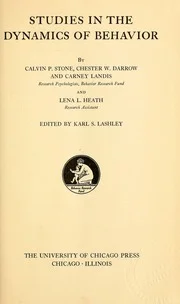
Studies in the Dynamics of Behavior
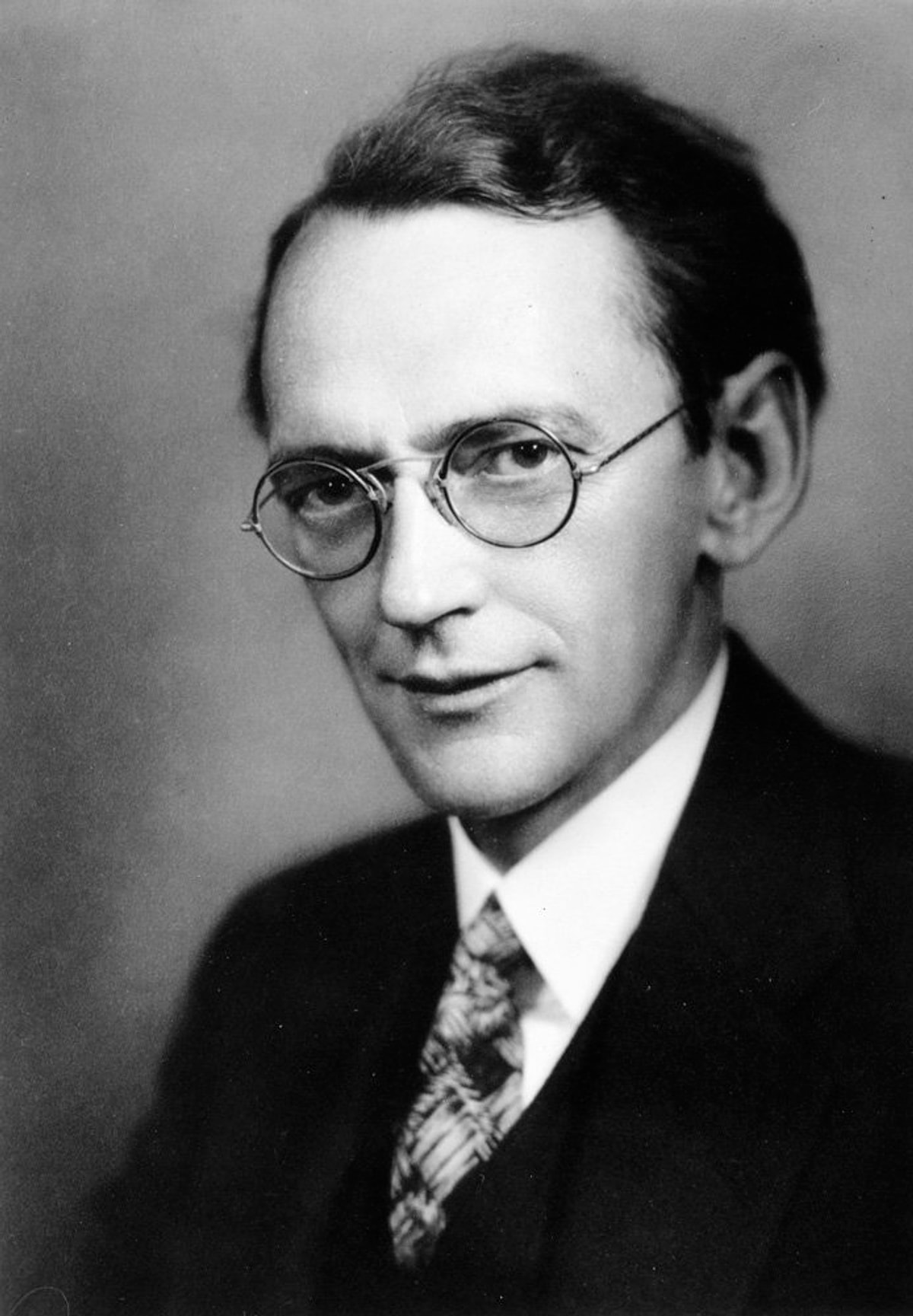 Karl Spencer Lashley
This 1932 volume, edited and introduced by Karl Lashley, collects three independent monographs that apply quantitative and physiological methods to problems of personality and conduct. Its unifying methodological premise is that emotional and behavioral traits—wildness in rats, neurotic tendencies in college students, emotional instability in juvenile delinquents—can be measured through carefully standardized procedures and correlated with physiological responses. The book is less a unified theory than an "adventure in methodology," testing whether rigorous measurement can replace speculation in the study of temperament and its biological correlates.
Key Details
Related Books
View AllSimilar books from the same category, ranked by shared topics and reader engagement.



Key Insights — Read in 10 Minutes
What is the methodological premise that unites the three studies in this volume?
Lashley's preface describes the volume as 'an adventure in methodology'—an attempt to determine whether emotional and behavioral traits can be measured through standardized procedures and correlated with physiological responses [citation:5]. The three studies apply this premise to different populations and problems: Stone rates wildness and savageness in rat strains; Darrow and Heath correlate personality questionnaire scores with galvanic skin, blood pressure, and respiratory measures in college students; and Landis attempts similar correlations in delinquent adolescents. The volume's contribution is exploratory rather than conclusive, testing whether rigorous measurement can bring the study of temperament closer to the natural sciences.
What did Stone's study of wildness in rats actually find?
Stone used five rat strains—wild-trapped, pure albino, half-breeds, quarter-breeds, and yellow-hooded—and developed a quantitative rating scale for wildness and savageness. The strains ranked consistently: wild rats highest, albinos lowest, with crosses intermediate . Wild rats also showed stronger hiding tendencies and could not be induced to learn a simple maze, while half-breeds and quarter-breeds outperformed albinos. A 1933 review noted the evidence 'strongly suggested that wildness and savageness in rats are hereditary rather than environmental,' though training was appreciably effective in taming animals [citation:2]. The study thus supported a constitutional factor in temperament while leaving room for experience.
Why were the results of the physiological-personality correlations essentially negative?
Darrow and Heath measured galvanic skin responses, blood pressure, and respiration under standardized conditions and correlated these with Thurstone Neurotic Inventory scores in roughly 100 college students. Despite careful methodology, only 14 of 240 correlations exceeded 0.20, and the five highest ranged from 0.26 to 0.31 . The authors concluded that physiological measures did not predict individual personality scores, though slight general trends appeared—extraverts showed greater physiological reactivity, and higher intelligence scores correlated weakly with larger conditioned galvanic responses. A contemporary reviewer noted the findings were 'essentially negative' while praising the study's thoroughness as a contribution to physiological technique .
How did contemporary reviewers assess the volume's overall contribution?
Reviews were mixed but generally respectful of the methodological effort. The Journal of Educational Psychology described it as 'intelligent groping in the dark' that 'adds little to the minute amount already known concerning the sources of human conduct' [citation:20]. The Psychiatric Quarterly noted the studies' value was 'difficult to appraise' because they were only slightly connected to the objectives Lashley set out in his preface . The Journal of Abnormal and Social Psychology acknowledged the negative results while recognizing the rigor of the physiological techniques [citation:2]. The consensus was that the volume tested methods rather than settled questions—an exploratory exercise whose chief value lay in clarifying what would not work.
How does this volume relate to Lashley's better-known work on brain mechanisms and intelligence?
Studies in the Dynamics of Behavior occupies a different methodological register from Lashley's ablation experiments. Brain Mechanisms and Intelligence (1929) tested whether learning functions are localized in cortex; this 1932 volume, which Lashley edited rather than authored, explores whether personality and temperament can be quantified through rating scales, questionnaires, and physiological recording. Both reflect a commitment to quantitative rigor and skepticism toward speculative theorizing, but the 1932 book operates at the level of correlation rather than lesion-behavior mapping. It represents Lashley's institutional role as a research organizer and editor, bringing together collaborators from the Behavior Research Fund at the University of Chicago.
Wealthy Psyche is an intellectual archive. We do not host, distribute, or sell book copies — physical or digital. We provide structured knowledge to help you think better, faster.