


The Administrative State: A Study of the Political Theory of American Public Administration
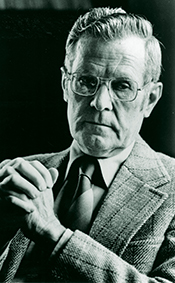 Dwight Waldo
Waldo's 1948 book argues that public administration is not a neutral science of efficiency but a political theory in disguise. Its central claim is that the 'gospel of efficiency' that dominated the field rested on unexamined philosophical commitments—utilitarianism, pragmatism, and faith in scientific management—that clashed with democratic values. Waldo insisted that administrators in a democracy are not mere executors of policy but political actors who must negotiate between efficient management and constitutional imperatives like due process and public accountability. The book's enduring provocation is its refusal to let administration escape the question: efficiency for what?
Key Details
Related Books
View AllSimilar books from the same category, ranked by shared topics and reader engagement.



Key Insights — Read in 10 Minutes
What is the central claim of The Administrative State, and what does it reject?
Waldo argues that public administration is not a value-neutral science of efficiency but an implicit political theory that requires conscious examination. He rejects the notion that administration can be reduced to scientific management or business principles. The 'gospel of efficiency,' he contends, smuggles in philosophical commitments—utilitarianism, pragmatism, and a belief in scientific expertise—that may conflict with democratic values like due process and accountability. As Waldo asked, 'Efficiency for what?' Efficiency cannot be its own justification; it must be measured against substantive democratic ends.
How does Waldo's critique of the politics-administration dichotomy differ from earlier critiques?
Waldo's 1948 critique was not the first, but it was distinctive in reframing the dichotomy as a problem for political theory rather than merely administrative practice. He argued that administrators inevitably make political choices because they must balance competing values and exercise discretion. The dichotomy was not just empirically false but philosophically incoherent, resting on a naive positivism that treated efficiency as a neutral standard. Waldo's later writings, however, offered a more ambivalent view, reconceptualizing the dichotomy as a layered constitutional doctrine rather than a simple error to be discarded.
Why did Waldo write this book as a critic rather than an advocate of public administration?
Waldo explained in his Preface that he set himself the role of a critic, finding 'in other doctrines what I believe are sound bases of criticism for many theories that public administration has accepted'. He was not hostile to the field but worried that its practitioners were insufficiently self-aware about the political and philosophical assumptions embedded in their work. As one account notes, Waldo wanted public administration to see that 'expertise was not merely a claim of technical competence; it was a claim to power'. The book was meant to provoke self-examination, not to discredit the administrative enterprise.
How did Herbert Simon and Peter Drucker respond to Waldo's argument?
Simon and Drucker, representing behaviorist and managerial perspectives, resisted Waldo's political theorizing. In a notable exchange, Waldo published 'Development of Theory of Democratic Administration' in the American Political Science Review, and both Simon and Drucker responded in the next issue, with Waldo's rejoinder also published. Simon's Administrative Behavior had argued for a behavioral science of administration grounded in decision-making; Waldo insisted that such a science could not be value-neutral. The debate crystallized the divide between those who saw administration as a technical domain and those who, like Waldo, saw it as inescapably political.
How has The Administrative State held up as a work of scholarship since 1948?
The book is widely regarded as one of the defining works of public administration and political science written in the last 75 years. Gary Wamsley, longtime editor of Administration & Society, called it 'the most important book ever written on American public administration'. Its contemporary relevance persists: a 2006 volume, Revisiting Waldo's Administrative State, asked whether modern efforts like 'reinventing government' and New Public Management constitute a coherent political theory capable of meeting democratic challenges, and concluded by calling for a return to conscious consideration of accountability, fairness, justice, and transparency.
What role did Waldo's own government experience play in shaping this book?
Waldo worked at the Office of Price Administration in Washington during World War II, an experience he called profoundly educational. He wrote that 'ever since my Washington years I have regarded it as appalling that it is permitted to teach Political Science without any significant experience in public affairs'. This firsthand encounter with administrative realities gave him what he called 'a very wholesome respect for the difficulties of administration'. The book emerged from his Yale dissertation, originally titled Ideas of Expertise in the Democratic Tradition, which already contained the tension between expertise and democracy that would animate the published work.
Wealthy Psyche is an intellectual archive. We do not host, distribute, or sell book copies — physical or digital. We provide structured knowledge to help you think better, faster.