


Dwight Waldo
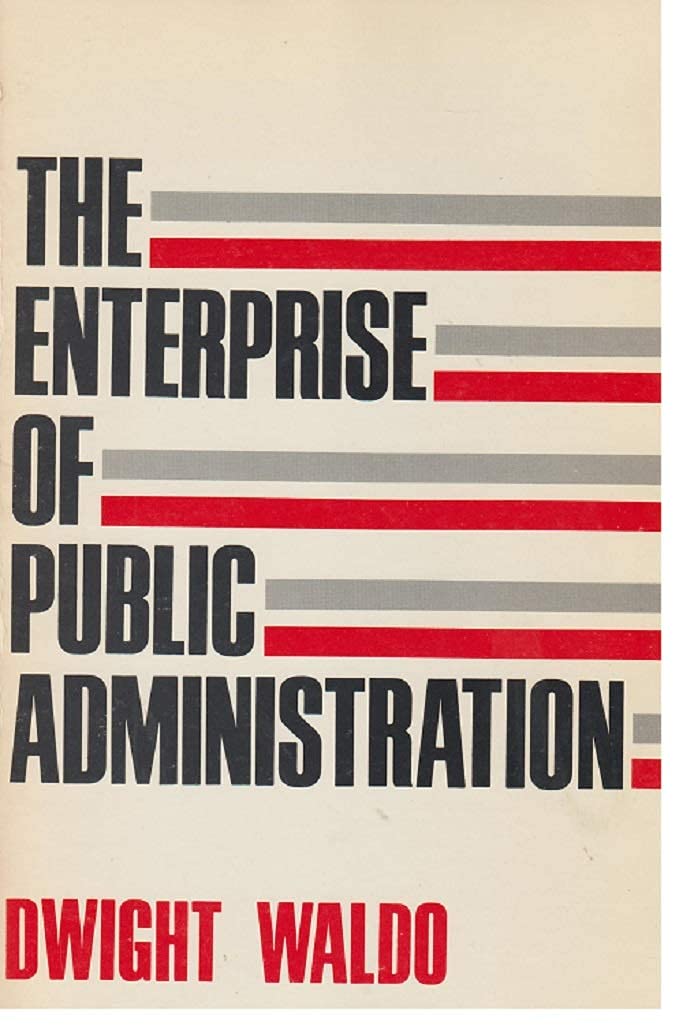
Dwight Waldo fundamentally challenged the intellectual foundations of public administration, arguing that the field had mistaken its own normative assumptions for scientific fact. In his seminal 1948 book *The Administrative State*, he dismantled the politics-administration dichotomy and the 'gospel of efficiency' that dominated the field, demonstrating that these were value-laden choices rather than neutral principles. By asking 'efficiency for what?', Waldo forced the field to confront its democratic responsibilities. A professor at UC Berkeley and Syracuse University, and longtime editor of *Public Administration Review*, he also sponsored the New Public Administration movement, which called for greater social equity and relevance in the field.[reference:0][reference:1][reference:2]


✦What is the central argument of *The Administrative State*?
Waldo's 1948 book argued that the field of public administration had built itself on unexamined value premises, particularly the politics-administration dichotomy and the 'gospel of efficiency.'[reference:3] He showed that efficiency is not a neutral scientific standard but a political value that can conflict with democracy, equity, and other goals.[reference:4] By raising the question 'efficiency for what?', Waldo forced administrators to consider the normative purposes of their work rather than treating administration as a purely technical enterprise.[reference:5]
✦How did Waldo challenge the politics-administration dichotomy?
Waldo rejected the classic Wilsonian notion that politics and administration could be separated. He argued that administration is inherently political because it involves the exercise of discretion and the allocation of values. His work showed that the dichotomy was not a scientific fact but a normative preference that served to insulate bureaucracy from democratic accountability. This critique opened the door for scholars to examine the value-laden nature of administrative decisions and the need for democratic control over bureaucracy.
✦What was the New Public Administration movement?
Waldo sponsored the New Public Administration movement through a series of conferences beginning at Minnowbrook, New York, in 1968.[reference:6] The movement rejected the value-neutral, efficiency-focused orthodoxy of the field. Instead, it called for public administration to embrace social equity, relevance, and a commitment to addressing pressing social problems like poverty and racial injustice. Waldo's sponsorship gave intellectual legitimacy to a generation of scholars who sought to make the field more responsive to democratic values and social needs.[reference:7]
✦What is a common misconception about Waldo's work?
A common misconception is that Waldo was anti-administration or that he rejected the importance of efficiency. In fact, he was not against efficiency; he argued that efficiency should not be the *only* or even the primary value guiding administrative action.[reference:8] His point was that efficiency is a value like any other, and it must be weighed against competing democratic values. He sought to broaden the conversation, not to dismiss the practical concerns of public administration.
✦What is Waldo's intellectual legacy in public administration?
Waldo is considered the most influential American public administration theorist of the twentieth century.[reference:9] His work fundamentally shifted the field from a focus on technical efficiency and formal structure toward a concern with values, democracy, and social purpose. He is credited with helping to establish public administration as a serious academic discipline, distinct from political science and business management.[reference:10] His questions about the proper role of bureaucracy in a democracy continue to animate debates in the field.[reference:11]
✦What were Waldo's major professional roles and honors?
Waldo taught at the University of California, Berkeley, and later at the Maxwell School of Syracuse University.[reference:12][reference:13] He served as editor-in-chief of *Public Administration Review* from 1967 to 1978[reference:14] and as president of the National Association of Schools of Public Affairs and Administration (NASPAA) from 1977 to 1978.[reference:15] He delivered the prestigious John Gaus Lecture for the American Political Science Association.[reference:16] The American Society for Public Administration has named an award in his honor—the Dwight Waldo Award—given for distinguished contributions to the literature of public administration.[reference:17]