


.jpg?alt=media&token=8abda4ad-3894-4da4-b3d4-ce793ae53908)
The History of Ten Years, 1830–1840
_-_(MeisterDrucke-924659).jpg?alt=media&token=da0d1cd5-1724-4f38-ba69-3bc18d7a9eb0) Louis Blanc
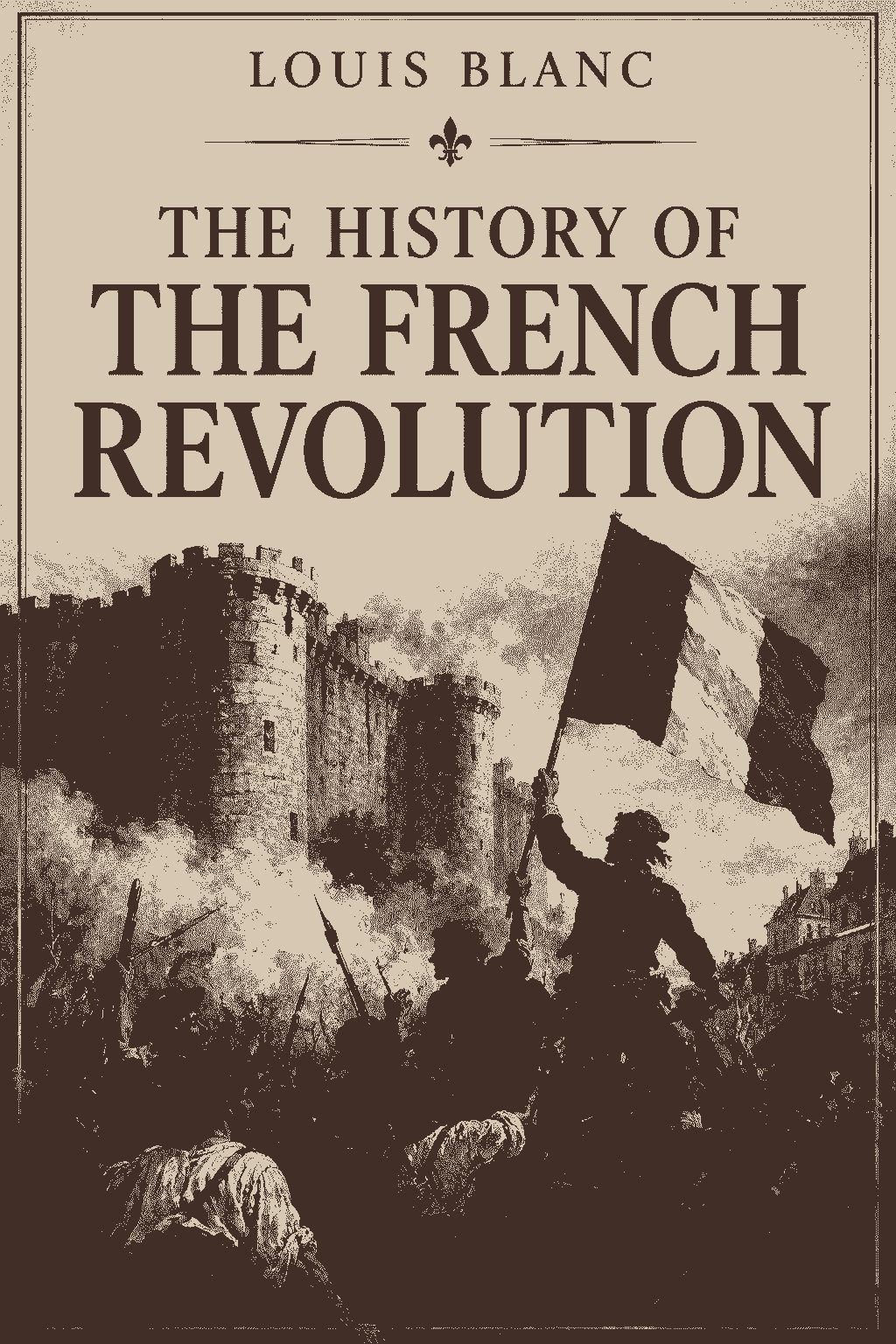
Louis BlancBlanc's massive history of the July Monarchy is less a neutral chronicle than a socialist indictment of the Orleans regime. Writing as an engaged republican, he traces France's political and social transformations from the 1830 Revolution through the corruptions of Louis Philippe's reign, using the class struggle between bourgeoisie and people as his interpretive lens. The book's detailed account of the February 1848 Revolution, which Blanc helped lead, made it a primary source for contemporaries and a foundational document of French socialist historiography, though critics fault its sprawling detail and polemical edge.
Key Details
Related Books
View AllSimilar books from the same category, ranked by shared topics and reader engagement.


Key Insights — Read in 10 Minutes
What is the central interpretive claim of Blanc's History of Ten Years?
Blanc argues that the July Monarchy was a regime in which the bourgeoisie replaced the feudal aristocracy as the dominant exploiting class, and that the political conflicts of 1830–1840 were fundamentally expressions of class struggle between the possessing bourgeoisie and the working people. His history is designed not merely to narrate events but to expose the social antagonisms beneath political surface, preaching socialist doctrine while assailing Louis Philippe's government.
What concrete evidence from the book shows its socialist commitments?
The introductory portion, spanning roughly 250 pages, traces French affairs from Napoleon's downfall to 1830 as a series of class-based reflections rather than neutral history. Blanc's account of the 1830 Revolution and its aftermath consistently frames political actors by their economic interests. The book was designed, in the words of a contemporary reviewer, 'to preach socialistic doctrines and assail the government of Louis Philippe,' making it 'a political pamphlet rather than a history.'
How did Engels and later Marxists regard Blanc's historical work?
Engels assessed Histoire de dix ans very highly, and Plekhanov noted that its introduction alone was enough to give Blanc a place among the first teachers of economic materialism. However, Plekhanov also drew a sharp distinction between Blanc's conception of class struggle and Marx's, arguing that Blanc, like Guizot, could not explain where property relations themselves came from, and thus reverted to idealism despite his attention to economics.
What was the original French title and publication history of this work?
The original French title was Révolution française: histoire de dix ans, first published in Paris in five volumes from 1841 to 1844. It was later reissued under the simpler title Histoire de dix ans, 1830–1840. The first English translation appeared in London in 1844–1845 under Chapman and Hall, and an American edition was published in Philadelphia in 1848 by Lea & Blanchard.
Why is the book considered a primary source for the 1848 Revolution?
Blanc was a member of the provisional government after the February 1848 Revolution and chaired the Luxembourg Commission on labor. His history of the preceding decade was written from the perspective of a leading participant who had been preparing the ground for that revolution. Contemporary readers turned to it not as detached scholarship but as the account of a revolutionary who had helped shape the events he described, and its influence was explicitly political.
Wealthy Psyche is an intellectual archive. We do not host, distribute, or sell book copies — physical or digital. We provide structured knowledge to help you think better, faster.