


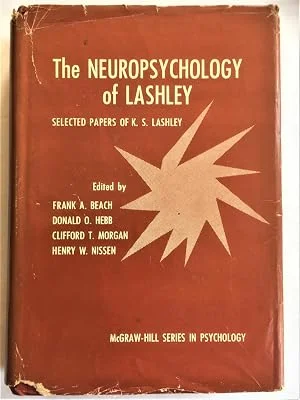
The Neuropsychology of Lashley: Selected Papers
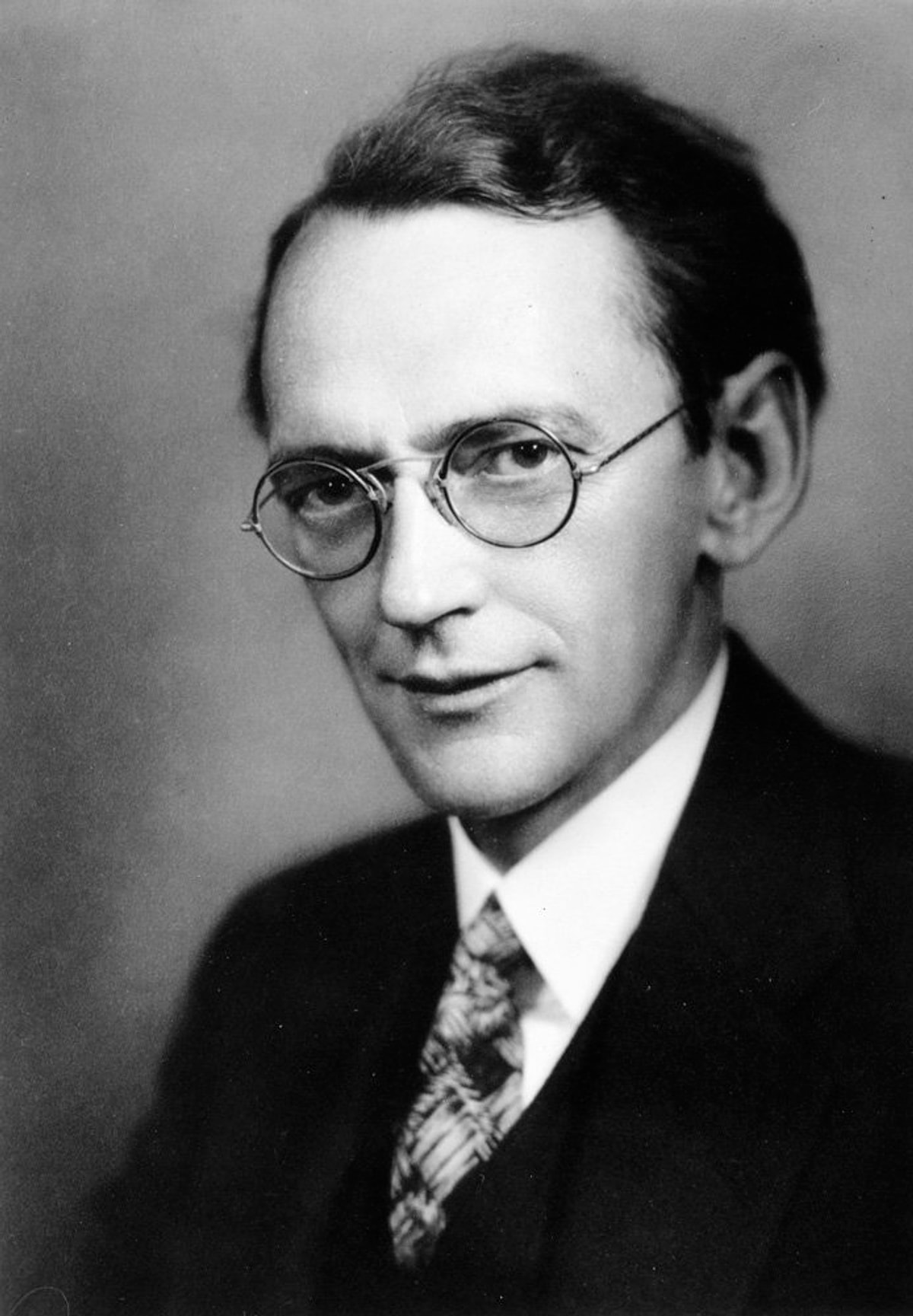 Karl Spencer Lashley
This 1960 memorial volume collects 31 papers spanning Lashley's career from 1915 to 1958, edited by four of his former students. Its organizing contribution is not a single thesis but a documentary record of Lashley's sustained attempt to locate the neural mechanisms of learning and intelligence in the cerebral cortex. The papers trace his movement from ablation studies of the rat brain through the principles of equipotentiality and mass action, to his later critiques of reflex-chain theories and his final syntheses on cerebral organization and serial order in behavior. The volume includes a complete bibliography of Lashley's publications.
Key Details
Related Books
View AllSimilar books from the same category, ranked by shared topics and reader engagement.



Key Insights — Read in 10 Minutes
How was this memorial volume assembled, and what selection principles guided the editors?
The volume was planned after Lashley retired from the Yerkes Laboratories in 1955, and Lashley himself approved the plan in 1958 shortly before his death . Four former students and associates—Frank A. Beach, Donald O. Hebb, Clifford T. Morgan, and Henry W. Nissen—edited the collection. They selected 31 papers from Lashley's approximately 109 publications, aiming to reflect his interests and achievements, avoid duplication, and keep the volume within reasonable limits . The editors excluded the 1929 monograph Brain Mechanisms and Intelligence as already widely available, meaning the collection represents roughly one-third of Lashley's total output .
What did reviewers identify as the most significant omissions from the collection?
A review in the American Journal of Psychology noted several papers whose exclusion weakened the volume's coverage. The two short papers developing the reduplicated trace and interference pattern theories (1931, 1942) were omitted, as was the gold foil experiment with Chow and Semmes (1951), the anatomic contribution on thalamo-cortical relations in the rat (1941), and the effects of destroying visual association areas in monkeys (1948) . The reviewer argued that the latter, together with earlier rat and monkey work, developed the model for subsequent ablation studies using Lashley's tests and brain reconstruction techniques . The foray into libido theory (1924) was also excluded, though the reviewer suggested it might have illustrated the range of Lashley's interests .
What do the introductory essays by Boring and Cobb contribute to the volume?
The volume opens with a dual introduction: Edwin G. Boring's 'Lashley and Cortical Integration' and Stanley Cobb's 'A Salute from Neurologists' . Boring's essay is more than an appreciation—it traces the broad outlines of Lashley's professional career, identifies the salient features in the development of his thinking, and seeks to evaluate his impact on psychology . Cobb provides the perspective of neurology on Lashley's contributions. Together, these introductions frame the papers that follow by establishing the intellectual context and the specific problems Lashley addressed across his career .
How do the papers in the volume reflect Lashley's critique of connectionist and reflex-chain theories?
The collection includes Lashley's 1930 critique of the reflex and connectionism in general, which challenged the Watsonian view that maze learning consists of chained motor habits . Lashley observed that rats with lesions affecting motor movements could still complete mazes efficiently, sometimes dragging themselves or rolling over at turns without losing their way, which could not be explained by chained specific responses . The volume also includes his later papers on serial order in behavior (1951), which developed an alternative account emphasizing central regulation and directionality rather than peripheral chains . These papers document his sustained argument that complex learning requires explanations at the level of central neural organization, not simple stimulus-response connections.
How did reviewers assess the collection's value for researchers and students?
Reviewers agreed the volume performed a significant service by making Lashley's scattered journal articles accessible. The American Journal of Psychology review noted that students of brain and behavior who had previously consulted dozens of different journals would find the volume 'exceedingly useful' . Eliot Stellar, writing in Contemporary Psychology, described it as 'an important book, for it tells about one of psychology's great scholars,' and argued that reading Lashley's papers would benefit modern psychologists still tied to simple stimulus-response theory . A French review in L'Année psychologique called it a 'precious collection' of Lashley's principal publications . The main criticism was that omissions left important papers still scattered and neglected .
Wealthy Psyche is an intellectual archive. We do not host, distribute, or sell book copies — physical or digital. We provide structured knowledge to help you think better, faster.