


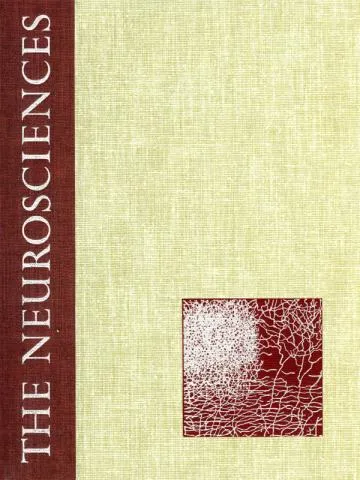
The Neurosciences: Third Study Program
 Brenda Milner
This volume compiles the proceedings of the 1972 Intensive Study Program in Boulder, Colorado, organized by MIT's Neurosciences Research Program. It is not a unified argument but a collaborative survey of neuroscience at a pivotal moment, structured into twelve topics spanning molecular, cellular, and behavioral levels. Its distinctive contribution lies in the section on hemispheric specialization and interaction, edited by Brenda Milner, which consolidated her pioneering work on the complementary functions of the left and right cerebral hemispheres. The volume represents a deliberate effort to identify promising research frontiers and avoid overlap with prior surveys.
Key Details
Related Books
View AllSimilar books from the same category, ranked by shared topics and reader engagement.


Key Insights — Read in 10 Minutes
What was the organizational structure of the Third Study Program?
The volume is organized into twelve topics, each introduced by a chairperson and followed by six to ten papers, totaling ninety-three chapters [citation:16]. The topics span hemispheric specialization and interaction, feature extraction by neurons, central processing of sensory input, motor output, invertebrate neurons, circadian oscillations, hormonal factors, biochemistry and behavior, membrane molecular machinery, regulatory biochemistry, synaptic modulation, and brain cell-virus interactions [citation:16]. This structure reflected a deliberate shift from the first two programs, which had attempted broad coverage, toward identifying specific areas of promising research progress [citation:16]. The book runs over 1,100 pages and was later reprinted in twelve paperback volumes [citation:6].
What was Brenda Milner's specific contribution to the volume?
Milner served as the contributing editor for the opening section on Hemispheric Specialization and Interaction and authored its introductory chapter [citation:2][citation:4]. She also wrote a key paper in that section titled 'Hemispheric Specialization: Scope and Limits' [citation:4]. Her contribution drew on her extensive work with patients who had undergone unilateral temporal-lobe removals and with commissurotomized patients, demonstrating material-specific memory deficits that varied with the side of the lesion [citation:4]. The section addressed how the left and right hemispheres work together, a question Milner later pursued further with funding from her 2009 Balzan Prize [citation:4].
How does this volume relate to the Neurosciences Research Program's broader publishing history?
The Third Study Program was the third in a series of intensive study programs organized by MIT's Neurosciences Research Program, following volumes based on conferences held in 1966 and 1969 [citation:16]. The 1972 Boulder conference represented a conceptual shift: rather than attempting comprehensive coverage, it sought to 'recognize and evaluate critically important advances in neuroscience research' and 'identify opportunities for further research efforts' [citation:16]. The volume was edited by Francis O. Schmitt and Frederic G. Worden, with George Adelman as associate editor and a team of contributing editors including F.E. Bloom and Brenda Milner [citation:1][citation:2].
What does the volume reveal about the state of neuroscience in the early 1970s?
The book captures a field in transition, bridging molecular and behavioral levels of analysis while beginning to consolidate the cognitive turn in neuroscience. The inclusion of hemispheric specialization as the opening section reflects growing interest in how brain structure relates to cognitive function, a question Milner had been pursuing since the 1950s [citation:4]. The topics span from membrane biochemistry to invertebrate neurons to conscious processes, demonstrating both the breadth of the field and the emerging integration of cellular and systems-level approaches. The conference's focus on 'critically important advances' and 'opportunities for further research' marks a self-conscious effort to define the field's agenda [citation:16].
How was the volume reviewed by contemporaries?
The review in a medical journal described it as a 'must' for working scientists and students of the nervous system, praising its 'exposition at the most advanced and challenging level suitable for experts' combined with coverage that is 'comprehensible and tutorial for scientists in other research areas' [citation:16]. The reviewer noted that the book followed the conference format, with each topic introduced by a chairperson and papers beginning with abstracts and ending with extensive bibliographies [citation:16]. The volume was seen as continuing the high standard set by its two predecessors while adapting the format to reflect the NRP's evolving mission.
What role did this volume play in Milner's career trajectory?
The Third Study Program appeared at a point when Milner was already established as a pioneering neuropsychologist, having published her landmark work on patient H.M. in 1957 and held a tenured research position at the Montreal Neurological Institute since the 1950s [citation:3][citation:17]. Her contribution to this volume consolidated her reputation as the leading authority on hemispheric specialization in memory and cognition. She would continue this line of inquiry for decades, later receiving the 2009 Balzan Prize specifically for her work on hemispheric interaction, with her prize statement explicitly referencing her 1974 chapter in this volume [citation:4].
Show 1 more insights
What are the limitations of treating this volume as a coherent work?
The volume is fundamentally a conference proceedings, not a unified monograph, and its ninety-three chapters vary in scope, style, and level of specificity. The editorial decision to include 'shorter papers, in the form of research reports, along with the authoritative review-type articles' [citation:16] means readers should expect unevenness. The book's value lies in its snapshot of a field at a particular moment rather than in any single sustained argument. For readers interested specifically in Milner's contributions, her section on hemispheric specialization is best consulted as a standalone unit, later reprinted in paperback form [citation:6].
Wealthy Psyche is an intellectual archive. We do not host, distribute, or sell book copies — physical or digital. We provide structured knowledge to help you think better, faster.