



Brenda Milner
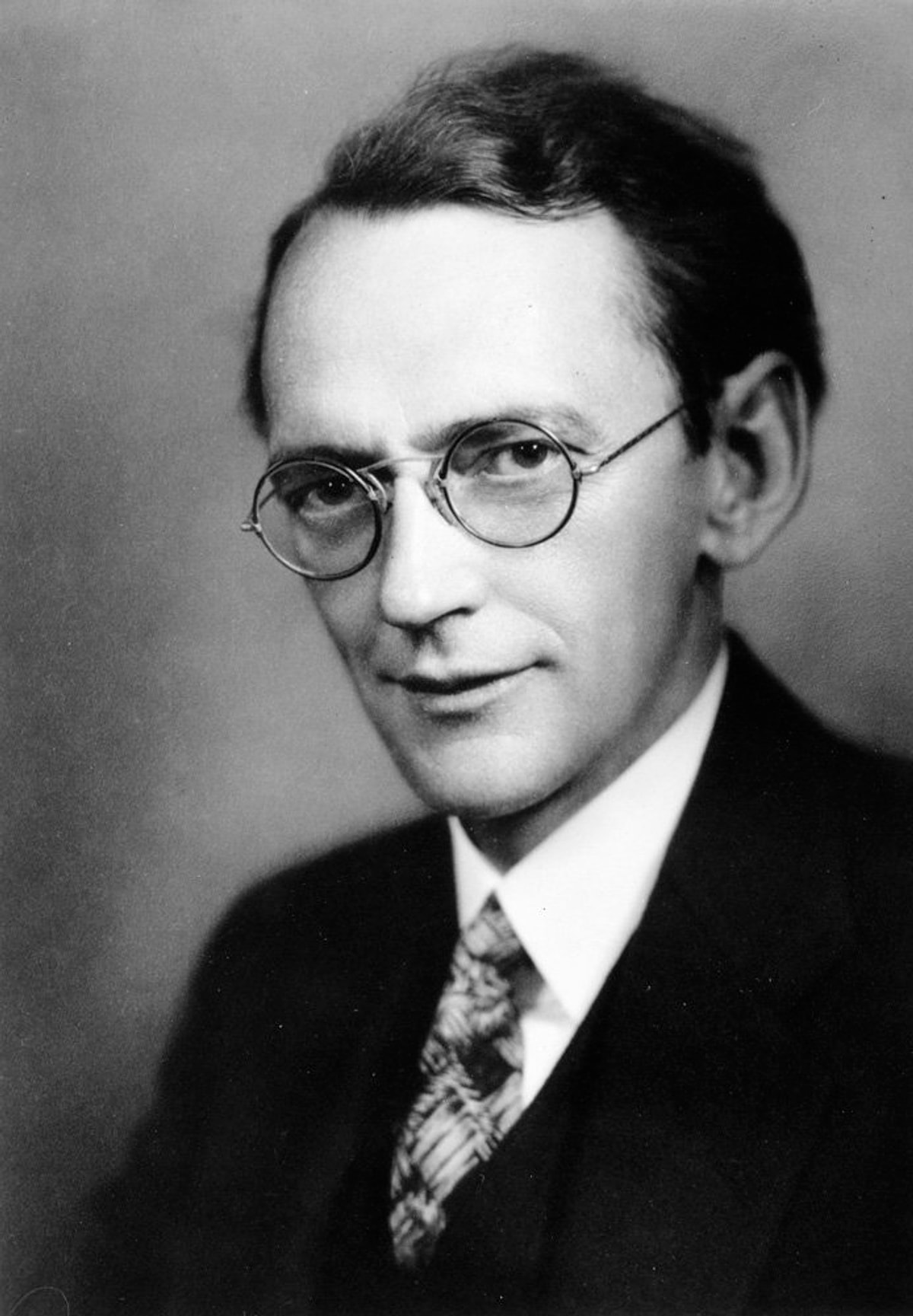
0Dr. Brenda Milner (née Langford; born July 15, 1918) is a British-Canadian neuropsychologist who is widely regarded as a founder of clinical neuropsychology and cognitive neuroscience[reference:0][reference:1]. A professor in the Department of Neurology and Neurosurgery at McGill University and the Dorothy J. Killam Professor at the Montreal Neurological Institute, she pioneered the study of memory and cognitive functions in humans[reference:2][reference:3]. Her landmark work with the famous patient H.M. revealed the critical role of the medial temporal lobe in memory formation and established the existence of multiple memory systems[reference:4][reference:5]. Over a career spanning more than 70 years, she has received numerous honors, including the Kavli Prize in Neuroscience (2014) and the Balzan Prize (2009)[reference:6][reference:7].




Key Insights
- ✦
Who is Brenda Milner?
Dr. Brenda Milner (born July 15, 1918) is a British-Canadian neuropsychologist and a professor at McGill University's Montreal Neurological Institute[reference:8][reference:9]. She is considered one of the founders of clinical neuropsychology and cognitive neuroscience[reference:10][reference:11]. Her pioneering research on memory and brain function, particularly her work with the famous amnesic patient H.M., revolutionized our understanding of how the brain stores and retrieves memories[reference:12].
- ✦
What is Brenda Milner best known for?
Brenda Milner is best known for her groundbreaking work with patient H.M. (Henry Molaison), which demonstrated that the medial temporal lobe, particularly the hippocampus, is essential for forming new long-term memories[reference:13][reference:14]. Her studies showed that while H.M. could not form new episodic memories, he could learn new motor skills, providing the first clear evidence of multiple memory systems in the brain[reference:15]. This work laid the foundation for modern cognitive neuroscience[reference:16].
- ✦
What is the significance of Milner's work with patient H.M.?
Milner's work with patient H.M., who had large portions of his medial temporal lobes removed to treat epilepsy, revealed that the hippocampus is critical for the formation of new declarative memories[reference:17]. She discovered that while H.M. could not remember new facts or events, he could learn new motor skills—a finding that established a fundamental distinction between declarative (explicit) and procedural (implicit) memory systems[reference:18][reference:19]. This research transformed the scientific understanding of memory and brain function[reference:20].
- ✦
What awards has Brenda Milner won?
Brenda Milner has received numerous prestigious awards, including the Kavli Prize in Neuroscience (2014)[reference:21][reference:22], the International Balzan Prize for Cognitive Neuroscience (2009)[reference:23][reference:24], the Gairdner International Award (2005)[reference:25][reference:26], and the NAS Award in the Neurosciences (2004)[reference:27]. She is a Companion of the Order of Canada, a Grand Officer of the Order of Quebec, a Fellow of the Royal Society of London, and a Foreign Associate of the U.S. National Academy of Sciences[reference:28][reference:29].
- ✦
Where did Brenda Milner study and work?
Brenda Milner earned her B.A. (1939) and M.A. (1949) in Experimental Psychology from the University of Cambridge[reference:30]. She completed her Ph.D. in Physiological Psychology at McGill University in 1952 under the supervision of Donald Hebb[reference:31][reference:32]. She began working at the Montreal Neurological Institute in 1950 with Wilder Penfield and has been affiliated with McGill University ever since[reference:33][reference:34]. She is currently the Dorothy J. Killam Professor at The Neuro[reference:35].
- ✦
What is Brenda Milner's educational background?
Milner initially enrolled at Cambridge University in 1936 to study mathematics but switched to experimental psychology[reference:36]. She earned her B.A. in 1939 and her M.A. in 1949 from Cambridge[reference:37]. She completed her Ph.D. in physiological psychology at McGill University in 1952[reference:38]. She later received a D.Sc. from Cambridge in 1972[reference:39]. She holds more than 25 honorary degrees from universities around the world[reference:40][reference:41].
- ✦
How old is Brenda Milner?
Brenda Milner was born on July 15, 1918, in Manchester, England[reference:42][reference:43]. She turned 100 in July 2018[reference:44] and has continued to work and oversee research well into her centenarian years[reference:45]. As of 2026, she is 108 years old.
- ✦
What is Brenda Milner's legacy in psychology and neuroscience?
Brenda Milner is considered one of the founders of neuropsychology and a pioneer of cognitive neuroscience[reference:46][reference:47]. Her rigorous and imaginative studies on memory and brain function established the empirical foundation for understanding how different brain structures support different types of memory[reference:48]. Her work with patient H.M. remains one of the most important case studies in the history of neuroscience[reference:49]. She has inspired generations of researchers and continues to be an icon in the field.