

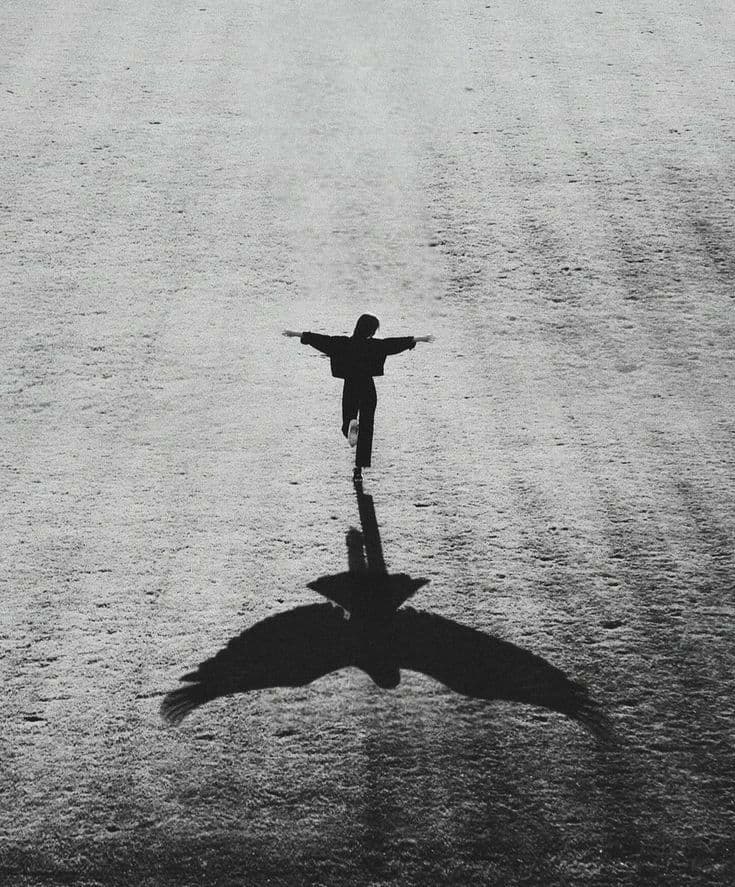
The word "detachment" has been poisoned. For most people, it conjures a monk on a mountaintop, a cold partner who cannot commit, or a philosophy of polite indifference to suffering. You have been taught, implicitly, that to care deeply is to cling, and to let go is to stop caring. This is a catastrophic misunderstanding. And it has prevented more people from genuine freedom than any other single confusion.
Non-attachment is not the absence of care. It is the absence of a contract. A contract that says: "I will be okay only if this person stays, this goal materializes, this image holds, this body does not age." When you love without that contract, you love more fully, not less. When you work without that contract, you work more clearly, not less. When you live without that contract, you are not escaping life. You are finally inhabiting it.
Advaita Vedanta offers the most refined understanding of non-attachment ever articulated. Not as a technique for withdrawal, but as the natural consequence of seeing through the illusion of a separate self. The one who clings was never real. The one who feared loss was never born. And when that recognition lands—not as belief but as direct perception—detachment ceases to be a practice and becomes the effortless texture of awareness itself.
The Great Confusion: Detachment as Disengagement
You have observed the caricature. The spiritually inclined person who says "I am detached" as an excuse for passivity, for emotional unavailability, for refusing to show up when things get difficult. This is not detachment. This is dissociation dressed in philosophical clothing. It is fear masquerading as wisdom.
How Renunciation Became a Weapon of the Timid
Traditional renunciation—leaving the world, taking vows, withdrawing from relationship and ambition—was never the core of Advaita Vedanta. It was a provisional path for certain temperaments at certain historical moments. The Upanishads themselves are filled with householders, kings, and warriors who attained self-knowledge without leaving their lives. The Bhagavad Gita, which is the practical heart of Vedanta, takes place on a battlefield. Not a cave. A battlefield.
Arjuna does not need to escape his duty. He needs to perform his duty without attachment to the results. That is the teaching. Fight, but do not cling to victory or fear defeat. Love, but do not demand that love never change. Build, but do not build your identity on the building. This is engagement so complete that it leaves no residue of the ego. It is the opposite of withdrawal.
Misunderstood Detachment | Actual Non-Attachment |
|---|---|
Emotional coldness | Full feeling without ownership |
Withdrawal from relationships | Deep presence without demand |
Passivity in work | Engaged action without outcome fixation |
Indifference to suffering | Compassion without burnout |
Avoiding pleasure | Enjoying without clinging |
Numbness | Sensitivity without entanglement |
The Psychology of Clinging: Why You Hold On
You do not cling because you love too much. You cling because you are afraid of a version of reality without the object of attachment. The fear is not about the object. It is about the self that believes it needs the object to remain intact. When you examine any strong attachment honestly, you will find a threat beneath it: "If I lose this, I will not know who I am."
The Ego's Dependency on External Anchors
The ego has no independent existence. It requires constant confirmation from outside itself—from roles, relationships, possessions, achievements, and the recognition of others. Each attachment is an anchor. And anchors are fine when you want to stay in place. But they become chains when you need to move, when reality changes, when the natural flux of life rearranges itself without your permission.
Carl Jung observed that the psyche projects its own contents onto external objects. The beloved is not just a person. The beloved carries the projection of the anima or animus, the ideal image of the opposite. The career is not just work. It carries the projection of worth, identity, and meaning. When you lose the object, you do not merely lose the object. You lose the projection. And the ego, suddenly exposed as empty, panics. That panic is what you call grief, jealousy, fear of abandonment, or the desperate need to control.
Why "Letting Go" Fails When You Try to Do It
Here is a subtle but crucial observation: letting go cannot be done. If you try to let go, the "you" that is trying is the same "you" that is attached. You are attempting to use the ego to dissolve the ego. This is like trying to lift yourself off the ground by pulling on your own shoelaces. It does not work. And the failure is not a sign of insufficient effort. It is a sign of mistaken strategy.
The Paradox of Effortful Release
When you notice yourself clinging—to a person, an outcome, an identity—and you say "I must let go," what happens? Usually, a subtle tension arises. You are now trying not to cling. That trying is itself a form of clinging. Clinging to non-clinging. The spiritual literature is filled with people who spent decades "practicing detachment" without ever tasting freedom. They became experts at watching their attachments, renouncing their desires, and feeling quietly superior about their renunciation. But the ego was never touched. It simply rebranded itself as the detached one.
Advaita Vedanta offers a different approach. Do not try to let go. Instead, investigate the one who is attached. Ask: who is this "I" that cannot release its grip? Track that "I" back to its source. Look for its location. Look for its edges. Look for its independent reality. You will not find a solid self. You will find thoughts, sensations, and memories—all appearing in awareness. The attachment was never yours. It was just a pattern arising and subsiding. When you see this, the grip loosens without effort. Not because you detached. Because there was never anyone attached in the first place.
Attachment as a Dopamine Loop
Neuroscience offers a complementary lens. Attachment, in the brain, is mediated by the same dopamine circuitry that drives craving. When you are attached to an outcome, your brain is in a state of prediction—anticipating a reward that will confirm the self's value. The attachment feels like love, loyalty, or commitment. But at the neural level, it is indistinguishable from addiction.
The Neurochemistry of Clinging
Dopamine is not released upon reward. It is released upon anticipation of reward. The more uncertain the reward, the higher the dopamine spike. This is why intermittent reinforcement—someone who sometimes gives you love and sometimes withdraws it—creates the strongest attachments. The brain is hooked on the uncertainty. Letting go, in this framework, means deregistering the prediction. The brain must learn that the anticipated reward is not coming, and that you will survive its absence. This is painful. This is withdrawal. This is why detachment feels like dying.
But the pain is not a sign that you are doing something wrong. It is a sign that your nervous system is recalibrating. The freedom on the other side of that recalibration is not numbness. It is the capacity to enjoy without needing, to love without clinging, to work without burnout. The brain can learn this. But it cannot learn it through effort alone. It learns it through exposure to the feared outcome—loss, failure, rejection—while remaining present. Non-attachment is not avoiding the fear. It is feeling the fear and not running.
Attachment Type | Dopamine Profile | Withdrawal Experience |
|---|---|---|
Romantic relationship (uncertain) | High anticipation, variable reward | Intense craving, rumination |
Social media validation | Rapid, unpredictable micro-rewards | Restlessness, phantom notifications |
Career achievement | Goal-contingent, delayed | Emptiness after success, immediate new goal |
Status signaling | Social comparison-dependent | Envy, vigilance, performance anxiety |
Identity (self-image) | Maintenance of narrative | Defensiveness, avoidance of disconfirming evidence |
The Relationship Trap: Clinging Disguised as Love
You have been told that love means never letting go. This is a beautiful sentiment for greeting cards and a disaster for actual relationships. The strongest, most enduring relationships are not those in which partners cling. They are those in which partners choose each other daily from freedom, not from fear.
Non-Attachment in Intimacy
To love without attachment means: I am with you because I want to be, not because I cannot survive without you. I will grieve if you leave, but I will not be destroyed. I will care for you deeply, but I will not try to control you to manage my own anxiety. I will be present, fully, without demanding that you stay the same to keep my identity intact.
This kind of love is rare. Not because it is difficult to achieve, but because most people have never seen it modeled. They have seen dependency called love. They have seen codependency called devotion. They have seen fear of abandonment called loyalty. Non-attachment in relationship is not coldness. It is the courage to love without a safety net. It is saying "I am here, fully, and I am also complete whether you stay or go." That is not less love. That is love without the desperation that eventually poisons love.
Attachment-Based Relationship | Non-Attached Relationship |
|---|---|
"I need you" | "I want you" |
Fear of abandonment drives behavior | Freedom drives behavior |
Jealousy as proof of caring | Trust as foundation |
Controlling to manage anxiety | Communicating to share reality |
Collapse if partner leaves | Grief without destruction |
Identity fused with partner | Identity intact, relationship chosen |
Ambition, Success, and the Art of Non-Clinging Achievement
You can build an empire without being owned by it. This is not a compromise. It is a higher-order skill. The entrepreneur who is attached to the outcome makes desperate decisions. The entrepreneur who is non-attached sees clearly, adapts quickly, and walks away when the numbers say walk away. The attachment does not help the ambition. It hinders it.
Why Desperation Sabotages Performance
When your identity is riding on the outcome, your nervous system is in threat detection mode. Cortisol rises. Peripheral vision narrows. Cognitive flexibility decreases. You become less creative, less strategic, less resilient. The athlete who needs to win chokes. The founder who needs the funding negotiates poorly. The artist who needs approval produces safe, forgettable work.
Non-attachment is not laziness. It is the removal of the performance-impairing drug of outcome dependence. You can prepare obsessively, work ferociously, and then release the result completely. That release is not giving up. It is the ultimate strategic advantage. You have done everything you can. The rest is not yours to control. And the peace of that recognition allows you to act with a clarity that the desperate striver will never know.
Outcome-Attached Mindset | Non-Attached Action Mindset |
|---|---|
"I must succeed or I am nothing" | "I will give my best, then release" |
Anxiety before execution | Calm engagement |
Catastrophizing potential failure | Realistic risk assessment |
Burnout from overidentification | Sustainable effort |
Identity collapse after failure | Learning, then moving on |
Brief high after success, then new anxiety | Gratitude, then equanimity |
The Existential Emptiness That Attachment Masks
Underneath every attachment is an existential ache. A sense that something is missing. A quiet, pre-verbal feeling of incompleteness that you have carried since before you had words for it. Attachment is the ego's attempt to fill that ache with objects. The object never fits. The ache remains. And then you attach more fiercely, hoping that more intensity will finally close the gap.
The Silence Beneath the Clinging
When you pause the pursuit—stop checking your phone, stop planning the next achievement, stop managing the relationship—you feel something. It is not pleasant at first. It feels like lack. Like a hole. Like a question with no answer. Most people interpret this feeling as evidence that something is wrong. They immediately reach for a distraction. But the feeling is not wrong. It is the raw data of the separate self. The ache is the sensation of the ego looking for itself and not finding anything solid.
Non-attachment is not the filling of that ache. It is the recognition that the ache was never a problem. It was just the friction of the ego trying to be real. When you stop trying to fill it, when you sit in the ache without running, something shifts. The ache begins to reveal itself as not an ache but a sensation. And sensations, when not resisted, flow through and dissolve. What remains is not emptiness. It is the peace that was always there, hidden by the frantic effort to escape the ache that was never actually unbearable.
Non-Attachment and the Body: The Gym, The Image, The Fear of Decay
Few attachments are as visceral as the attachment to the body. You have been taught that caring for your body means never accepting it as it is. The fitness industry runs on a simple formula: convince you that you are not enough, sell you the solution, and ensure the solution never fully satisfies so you keep buying. This is not a conspiracy. It is the logic of capitalism applied to existential insecurity.
Loving the Body Without Clinging to Its Form
Non-attachment to the body does not mean neglecting it. It means caring for it without demanding that it never age, never change, never fail. You can train hard, eat well, and pursue strength or aesthetics. The attachment is not in the action. It is in the demand. "I must look this way to be acceptable." "I cannot tolerate this wrinkle, this softness, this decline."
The body will decline. This is not pessimism. This is biology. Attachment to the body's permanence is attachment to an impossibility. Non-attachment is the radical acceptance of impermanence without resignation. You care for the body as a guest. A dear guest. But a guest. Not a permanent resident. Not the source of your worth. When you release the demand for the body to be unchanging, you can actually enjoy movement, food, and rest. The desperation falls away. What remains is pleasure without addiction to pleasure.
The Fear That Non-Attachment Means Not Caring
The most persistent objection: "If I become non-attached, I won't care about anything. I'll be passive. I'll lose my drive." This objection reveals the extent to which you have confused caring with clinging. You have never seen genuine caring without clinging. You have only seen desperate caring. And desperate caring looks like passion. But it is not passion. It is anxiety dressed up as enthusiasm.
Caring Without a Contract
Try a small experiment. Think of something you care about deeply—a person, a project, a place. Now notice: does your caring include a demand that things go a specific way? If the demand is present, you are not caring purely. You are caring with a contingency. "I care about you, but only if you stay." "I care about this work, but only if it succeeds." That is not care. That is a transaction.
Non-attachment removes the contingency. You care fully, without requiring the universe to comply with your preferences. This is not less caring. It is caring without the background hum of threat. It is caring without burnout. It is caring that can survive loss, change, and disappointment without turning into bitterness. That is the most mature form of care there is.
Contingent Care (Attachment) | Non-Contingent Care (Non-Attachment) |
|---|---|
"I love you if you love me back" | "I love you, period" |
"I care about my work if it succeeds" | "I care about the work itself" |
"I will be happy if this body stays perfect" | "I will care for this body as it changes" |
"I need this outcome to be okay" | "I prefer this outcome but am okay either way" |
Non-Attachment Is Not Stoicism (Though They Are Cousins)
A common confusion: non-attachment is often equated with Stoic indifference. The Stoic aims to eliminate negative emotions by eliminating value judgments about external events. This is a noble and useful practice. But it is not Advaita Vedanta. Vedanta's non-attachment is not about suppressing desire or reframing thoughts. It is about seeing that the self to whom desire appears is not ultimately real.
The Difference Between Control and Recognition
Stoicism says: you cannot control external events, only your responses. Vedanta says: there is no separate controller to control responses. The sense of a controller is part of the illusion. When you see that, responses happen spontaneously, appropriately, without the burden of a self trying to manage them. This is more radical than Stoicism. It is also more effortless.
You do not need to become a Stoic sage who never feels disturbance. You need to recognize that the one who feels disturbance is a thought. Disturbance can still arise. But it arises in awareness, not in a self. And awareness is not disturbed. This recognition is not intellectual. It is a direct seeing. And when it lands, non-attachment is not a practice you maintain. It is the default state of clarity.
How to Live Non-Attachment in a World Designed for Clinging
You cannot opt out of the attachment economy entirely. You will receive notifications. You will be marketed to. You will be surrounded by messages that say "more will make you happy," "this image will make you worthy," "this achievement will complete you." Non-attachment is not living in a cave. It is living in the world without being colonized by it.
The Four Pillars of Engaged Non-Attachment
Clear intention without demand. Set goals. Work toward them. But notice the difference between "I intend to achieve this" and "I demand that the universe deliver this." The first is healthy. The second is suffering.
Full presence without performance. Be where you are. When you are with someone, be with them. When you are working, work. When you are resting, rest. The attached mind is always elsewhere—planning, regretting, comparing. The non-attached mind is here.
Open hands without grasping. Hold your preferences, your possessions, your relationships. But hold them like a hand holding water—closed enough to contain, open enough to let flow. The moment you feel desperate to keep something, you have already lost the peace of it.
Gratitude without relief. Gratitude is often felt as relief that something bad did not happen or that something good did. That gratitude is attached to conditions. Deeper gratitude is not relief. It is recognition of the sheer fact of awareness itself. You do not need a reason to be grateful. You are awareness. That is enough.
The Recognition That Ends the Search
All of this—the tables, the distinctions, the practices—points to a single recognition. You have been searching for non-attachment as if it were a state to achieve, a skill to master, a mindset to cultivate. It is none of those. Non-attachment is what you are when you stop looking for yourself in objects. It is not something you do. It is something you see.
You see that the one who was afraid to let go never existed. You see that the ache beneath attachment was never a problem. You see that silence is not loneliness. You see that loss is not annihilation. And in that seeing, the desperate grip relaxes. Not because you forced it. Because there is no one left to grip.
You can still want. You can still love. You can still build. But the wanting, loving, and building arise in awareness without leaving a mark. You are not the doer. You are not the feeler. You are not the thinker. You are the awareness in which doing, feeling, and thinking appear. And awareness has never been attached to anything. It cannot be. Attachment requires a self. Awareness is before self.
Search | What You Thought You Were Looking For | What You Actually Find |
|---|---|---|
Non-attachment as practice | A way to stop suffering | The recognition that the sufferer was never real |
Detachment from outcomes | Freedom from anxiety | The peace of not being the controller |
Letting go of identity | A new, better identity | No identity, only awareness |
Freedom from desire | Cessation of wanting | Wanting without suffering |
Spiritual attainment | A special state | Ordinary awareness, always already here |
The Only Practice That Matters
If you take nothing else from this inquiry, take this: do not try to become non-attached. Instead, sit in silence and ask "Who is it that is attached?" Do not answer with words. Look. Feel for the one who clings. Search for its location. Examine its composition. See if you can find a self that exists independently of thoughts about a self.
You will not find one. You will find sensations, memories, beliefs, and fears—all appearing in awareness. The attachment was never yours. It was just weather passing through the sky of consciousness. And you are the sky. The sky does not cling to the clouds. It does not push them away. It holds them, allows them, watches them dissolve. That is non-attachment. Not a practice. Your nature.
Live your life. Love deeply. Work passionately. Fail publicly. Succeed quietly. Enjoy pleasure. Grieve loss. Do all of it. But know that none of it touches who you are. You are the awareness in which the entire drama unfolds. And awareness has never been attached to anything. It cannot be. It is already free.
