

Dani Rodrik
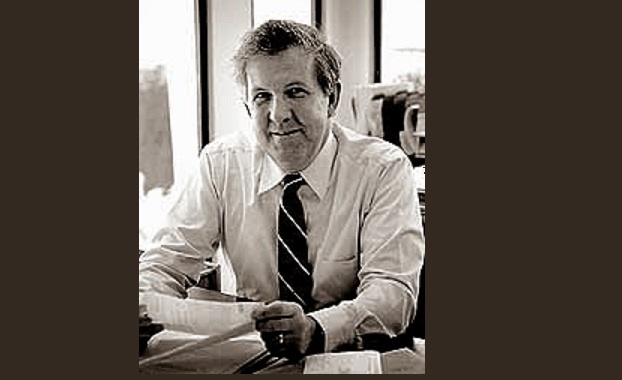
0Turkish-American economist who formulated the political trilemma of the world economy: deep economic integration, national sovereignty, and democratic politics cannot all be pursued simultaneously. His Globalization Paradox (2011) argued that hyper-globalization undermines democracy by narrowing domestic policy space, and that national democracies must retain authority to shape their own social contracts. Rodrik proposed 'productivism' as a post-neoliberal paradigm emphasizing good jobs and productive opportunity over redistribution or market faith. A critic from within economics, he defended mathematical models as tools while attacking universal theories that ignore context. He is Ford Foundation Professor at Harvard Kennedy School.


Key Insights
- ✦
What exactly is Rodrik's 'political trilemma of the world economy'?
Rodrik's trilemma states that deep economic integration (hyper-globalization), national sovereignty, and democratic politics cannot all be pursued simultaneously. You can have at most two. The gold standard combined globalization with national sovereignty by sacrificing democracy—countries had little policy space for domestic economic management. Bretton Woods combined democracy with national sovereignty by limiting globalization through capital controls. Rodrik argues that since democracy is non-negotiable, the choice must be between globalization and national sovereignty. He recommends a 'thin' globalization: international rules that leave substantial domestic policy space intact .
- ✦
How does Rodrik's trilemma differ from the 'impossible trinity' in open economy macroeconomics?
The impossible trinity (Mundell-Fleming) concerns monetary policy: a country cannot simultaneously have a fixed exchange rate, free capital movement, and independent monetary policy. Rodrik's trilemma operates at a broader political level. It is not about exchange rates or central bank tools but about the fundamental tension between democratic governance and international economic integration. The impossible trinity describes a technical constraint within a given policy regime; Rodrik's trilemma describes a constitutional-level constraint on what regimes themselves can coexist. His framework treats democracy not as a variable to be optimized but as a foundational commitment that constrains the range of acceptable globalization models .
- ✦
What is 'productivism' and why does Rodrik propose it as a replacement for neoliberalism?
Productivism prioritizes the dissemination of productive economic opportunities throughout all regions and labor force segments. Unlike neoliberalism, it assigns governments and civil society significant roles; unlike the Keynesian welfare state, it focuses less on redistribution and more on supply-side measures to create good jobs. Rodrik sees productivism as emerging from both left and right—evident in Biden's industrial policy, Republican support for manufacturing investment, and progressive interest in state capacity. It reflects skepticism toward technocrats and large corporations, emphasizing production and local communities over finance and globalization .
- ✦
Why does Rodrik defend economic models while attacking universal theories?
In Economics Rules (2015), Rodrik distinguishes between models and theories. Models are partial, context-specific tools—each tells a story about how the world works under certain assumptions. Theories claim universal applicability. Rodrik argues that economics' strength lies in its diverse model toolkit, but its weakness is mistaking one model for the model that applies everywhere. The 2008 crisis exposed economists who believed free-market models were universally valid. Rodrik advocates 'pragmatic model selection': choosing the model whose assumptions best fit the context, rather than applying a single framework dogmatically .
- ✦
What does Rodrik mean by 'hyper-globalization' and why is it dangerous?
Hyper-globalization is Rodrik's term for a world economy where national borders impose no transaction costs on trade and finance—where global markets are as integrated as national ones. Achieving this requires nations to harmonize domestic regulations and credibly commit not to deviate, which narrows domestic policy space to the point where democratic choices about social contracts, labor standards, and industrial policy become impossible. Rodrik argues hyper-globalization's flaw is that it lacks sufficient global governance mechanisms to support such integration while simultaneously weakening the national institutions that previously ensured prosperity for all .
- ✦
How did Rodrik's views anticipate the populist backlash against globalization?
Rodrik's 1997 book Has Globalization Gone Too Far? warned that trade and financial integration would strain social cohesion when large groups were left behind. The Brexit vote and Trump's election vindicated his prediction. In Straight Talk on Trade (2017), Rodrik argued that economists overreached in translating models into policy, emphasizing aggregate gains while ignoring distributional losses. He contended that the backlash had more to do with the need for a villain than trade's actual role—but that deeper integration was a policy choice feeding workers' anger, stoking nationalism, and endangering democracy .
- ✦
What is Rodrik's institutional position and how has his career evolved?
Rodrik is the Ford Foundation Professor of International Political Economy at Harvard Kennedy School, where he rejoined in 2015 after two years at the Institute for Advanced Study as Albert O. Hirschman Professor. He holds a PhD in economics and an MPA from Princeton and an AB from Harvard College. He served as President of the International Economic Association from 2021 to 2023 and co-directs the Economics for Inclusive Prosperity network. His awards include the inaugural Albert O. Hirschman Prize and the Princess of Asturias Award for Social Sciences .