


Susan Strange
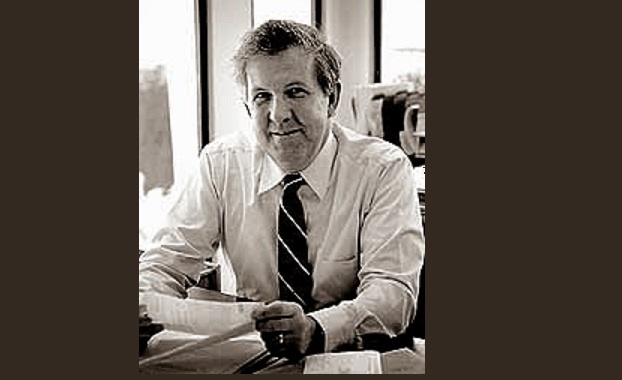
0British scholar who almost single-handedly created international political economy (IPE) as a field of study. Her 1970 article 'International Economics and International Relations: A Case of Mutual Neglect' challenged the disciplinary divide, arguing that economists ignored power while political scientists ignored markets . Her concept of structural power—the ability to shape the frameworks within which others operate—identified four structures: security, production, finance, and knowledge . She was the first woman to hold a professorship at LSE and served as Montague Burton Professor of International Relations there from 1978 to 1988 .


Key Insights
- ✦
What is Susan Strange's concept of structural power?
Structural power is the ability to shape the frameworks within which others must operate, rather than merely influencing outcomes within existing structures . Strange identified four structures of structural power: security (the ability to provide protection), production (determining what gets made and by whom), finance (gatekeeping credit and money), and knowledge (shaping what is believed and legitimized) . She argued that the United States retained hegemonic power through these structures even as its relational power declined, challenging the 'American decline' thesis . This framework shifted IPE analysis away from state-centric power toward the deeper architecture of the global economy.
- ✦
Why did Strange argue that the state was retreating?
In The Retreat of the State (1996), Strange argued that the authority of national governments was being eroded by the growing power of markets, firms, and other non-state actors . She noted that markets had gained significant power relative to nation-states since the 1970s, creating a 'dangerous gap' between the two . She even offered a mea culpa regarding her earlier emphasis on the state, suggesting her 1988 textbook States and Markets might have been more accurately titled 'Markets and Authorities' . However, she did not predict the state's disappearance—she analyzed the diffusion of power in the world economy.
- ✦
What did Strange mean by 'casino capitalism'?
In her 1986 book Casino Capitalism, Strange described a form of capitalism that had become extremely volatile and unpredictable due to speculative finance capital . She saw the international financial system as dangerously unstable, a diagnosis vindicated by the 1997 Asian financial crisis . She traced the growth of this casino-like system to four trends: the disappearance of exchange controls, financial liberalization, the growth of tax havens, and new financial technologies like securitization and derivatives . Her central point was that financial integration had erased the distinction between national financial systems, complicating national governments' ability to manage their own economies.
- ✦
How did Strange challenge the male-dominated field of international relations?
Strange entered academia relatively late, after raising six children and working as a financial journalist . She openly mocked the 'barons and top brass' of mid-century British IR, accusing them of wanting to create 'a crowd of uncritical acolytes' . She derided the notion of a genealogical line of 'fathers of international thought' . As the first woman at LSE to hold the Montague Burton Professorship, she broke the glass ceiling while refusing to conform to expectations. She described herself as an outsider—'a woman and an ex-journalist'—and cultivated an iconoclastic persona that challenged the field's hierarchies .
- ✦
What was the significance of Strange's 1970 article on the 'mutual neglect' of economics and IR?
Her 1970 International Affairs article 'International Economics and International Relations: A Case of Mutual Neglect' has been retrospectively described as a manifesto . It challenged the disciplinary separation that kept economists and political scientists apart, pointing to a gap in understanding of the economic power relationships underpinning world politics . The article directed the way toward defining a new area of study that soon became identified as international political economy . It was the founding gesture of what Strange would build into a distinct field, one she defended with such robustness that her influence was felt across most other areas of international studies .
- ✦
What is the main limitation of Strange's structural power framework?
Scholars have noted that Strange maintained a materialist conception of power that prevented her from fully engaging with non-material forms of power . Specifically, she did not systematically investigate how ideational and epistemic power—the power to shape what people think and believe—constructs material power . This caused her to conflate knowledge with information, treating knowledge as a more complex but essentially similar category rather than as socially constructed . Later scholars have addressed this by disaggregating knowledge into 'knowledge-legitimation' (determining what counts as true) and 'knowledge-regulation' (controlling how knowledge is produced and disseminated) .
- ✦
What were Strange's key institutional positions?
Strange served as Montague Burton Professor of International Relations at the London School of Economics from 1978 to 1988, the first woman at LSE to hold the chair . She then became Professor of International Political Economy at the European University Institute in Florence from 1989 to 1993 . Her final academic post, from 1993 until her death in 1998, was Chair of International Relations at the University of Warwick, where she built the graduate programme in IPE . She was a founding member and first treasurer of the British International Studies Association and served as the third female President of the International Studies Association in 1995 .
- ✦
What was the 'market-authority nexus' in Strange's work?
The market-authority nexus was Strange's analytical focus on the see-saw of power between markets and political authority . She argued that the global market had gained significant power relative to the nation-state since the 1970s, creating a 'dangerous gap' between the two . Nation-states were inflexible, limited by territorial boundaries in a world of fragile intergovernmental cooperation. She coined the term 'Westfailure' to describe the Westphalian system's inability to manage globalized markets . Her analysis of this nexus was central to her argument that IPE must study the reciprocal interaction between wealth accumulation and the pursuit of power .