



Robert Gilpin
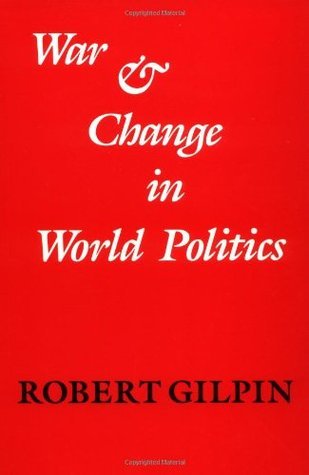
American political scientist who founded international political economy as a distinct field by insisting that economic relations cannot be separated from state power and security interests. His 1987 The Political Economy of International Relations organized the field around three competing ideologies—mercantilism, liberalism, and Marxism—and argued that a hegemon's power is essential to sustaining an open world economy. His 1981 War and Change in World Politics developed hegemonic stability theory, explaining how the rise and decline of dominant states drives cycles of international order and war. He was Eisenhower Professor at Princeton.


Key Insights
- ✦
What is hegemonic stability theory and how did Gilpin contribute to it?
Hegemonic stability theory holds that the international economic system is most stable when a single dominant power—a hegemon—provides the public goods necessary for its functioning: open markets, a stable currency, and security guarantees. Gilpin's 1981 War and Change in World Politics developed this framework by explaining how hegemons rise and decline, and why their decline creates instability and potential war. He argued that American power had been essential for establishing the postwar institutional framework—the IMF, World Bank, and GATT—and that waning American support threatened the basis of cooperation and prosperity .
- ✦
How did Gilpin organize the field of international political economy?
Gilpin proposed an influential framework for organizing schools of political thought on the relationship between politics and economics into three: mercantilism (or economic nationalism), liberalism, and Marxism. This tripartite division became a standard pedagogical device in IPE courses, allowing students and scholars to situate theories and policy positions within a coherent intellectual map. His 1987 The Political Economy of International Relations, structured around this framework, became the classic statement of the field and won the 1988 Woodrow Wilson Foundation Book Award for the best book in political science .
- ✦
How did Gilpin differ from liberal institutionalists like Robert Keohane and Joseph Nye?
Gilpin's scholarship directly challenged the liberal institutionalist claim that complex interdependence was diminishing the importance of state power in international economic affairs. Where Keohane and Nye emphasized the role of international institutions and non-state actors in facilitating cooperation, Gilpin insisted that states remained the key actors in economic relations and that security interests continued to determine state behavior. Non-state actors, he argued, were fundamentally dependent on what states did. He characterized himself as a 'soft' realist or 'state-centric realist' in the tradition of E.H. Carr and Hans Morgenthau, and his work was a strong influence on Stephen D. Krasner .
- ✦
Why did Gilpin argue that multinational corporations could accelerate power transitions?
In his 1975 book US Power and the Multinational Corporation, Gilpin warned that multinational corporations could facilitate a rapid spread of advanced technologies away from leading states to rising states, thereby facilitating more rapid power transitions. This argument was distinctive because it linked the behavior of economic actors—firms seeking profit through foreign direct investment—to the classical realist concern with shifts in the distribution of power. Gilpin's insight anticipated later debates about technology transfer, China's rise, and the strategic implications of economic globalization for American primacy .
- ✦
What was Gilpin's relationship to classical realism and the English School?
Gilpin described himself as a 'classical realist' in the tradition of E.H. Carr, Hans Morgenthau, and Hedley Bull, all of whom he identified as influences on his thinking. A colleague noted that Gilpin was 'in many ways an American analogue to Hedley Bull,' and that both regarded history and philosophy as more instructive than social science for understanding international relations. This placed Gilpin at odds with the more formally social-scientific approaches of neorealism and liberal institutionalism, and aligned him with an older tradition that treated international politics as an object of historical and philosophical inquiry rather than model-building .
- ✦
Why did Gilpin criticize the 2003 invasion of Iraq?
In an essay titled 'War is Too Important to Be Left to Ideological Amateurs,' Gilpin criticized the politics surrounding the 2003 invasion of Iraq. His opposition reflected his classical realist commitments: war is a serious instrument of statecraft to be used with prudence and in defense of vital national interests, not a vehicle for ideological transformation. His final years focused on applying realist thinking to contemporary American policies in the Middle East, and his warnings about American unilateralism—first articulated in the 1980s—seemed increasingly relevant as the costs of the Iraq War mounted .
- ✦
What was Gilpin's institutional position and academic legacy?
Gilpin was the Eisenhower Professor of Public and International Affairs Emeritus at Princeton University, where he spent most of his career and was a departmental colleague of Richard Falk for nearly forty years. He was an influential figure in international relations theory and international political economy, and his books have been translated into numerous languages. His lasting contributions are located in the sphere of knowledge rather than policy, and scholars have noted that while he observed change, he did not seek to transform the world as critical theorists like Robert W. Cox did—his mission was to understand how the world order works in relation to war and political economy .