


Pippa Norris
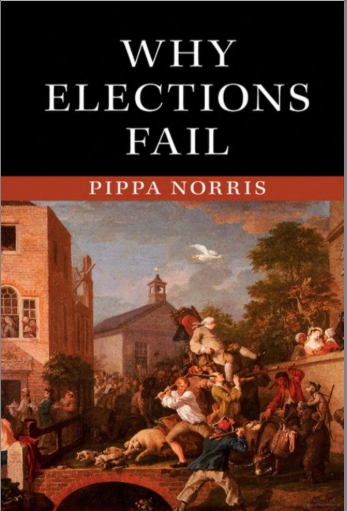
Pippa Norris (b. 1953) transformed the study of elections by shifting focus from electoral systems to electoral integrity—the systematic assessment of whether elections are free, fair, and legitimate. As founding Director of the Electoral Integrity Project (2012), she developed the Perceptions of Electoral Integrity (PEI) index, a comprehensive framework measuring eleven dimensions of electoral quality across the globe. Her trilogy—*Why Electoral Integrity Matters* (2014), *Why Elections Fail* (2015), and *Strengthening Electoral Integrity* (2017)—established a new subfield. Earlier, she challenged media pessimism with the 'virtuous circle' thesis in *A Virtuous Circle* (2000), arguing that news exposure reinforces civic engagement. A Paul F. McGuire Lecturer at Harvard Kennedy School and the second most-cited political scientist worldwide, Norris has also co-authored *Cultural Backlash* (2019) with Ronald Inglehart, diagnosing the rise of authoritarian populism.

.jpg?alt=media&token=9f0f1c19-1f08-4a6b-bd60-1c1372d60f3a)
.jpg?alt=media&token=aff5f6c9-9f3d-4508-a70a-776e23c2b6b5)



✦What is the Electoral Integrity Project and why is it significant?
The Electoral Integrity Project (EIP), founded by Norris in 2012, is a global research initiative that systematically monitors and evaluates the quality of elections worldwide. It produces the Perceptions of Electoral Integrity (PEI) index, which assesses elections across eleven dimensions—from electoral laws and voter registration to vote counting and post-election disputes. The EIP has become the gold standard for electoral observation, used by international organizations, NGOs, and scholars to identify vulnerabilities and track democratic decline.
✦What is Norris's 'virtuous circle' theory and how does it challenge media pessimism?
In *A Virtuous Circle* (2000), Norris countered the dominant 'video-malaise' thesis—which held that television news erodes civic engagement—by arguing that news exposure actually reinforces political participation. She demonstrated that attentive news consumers are more knowledgeable, more likely to vote, and more engaged in civic life. Rather than a downward spiral of cynicism, she found a virtuous circle where informed citizens remain engaged, and engaged citizens seek more information. This finding reshaped political communication research and defense of professional journalism.
✦How does Norris explain the rise of authoritarian populism in Western democracies?
In *Cultural Backlash* (2019, co-authored with Ronald Inglehart), Norris argues that the rise of Trump, Brexit, and right-wing populism is not primarily economic but cultural. Older, less educated, and predominantly white populations are reacting against progressive cultural shifts—immigration, multiculturalism, and cosmopolitan values—that have transformed their societies. This 'cultural backlash' is a defensive response to perceived threats to traditional values and group status, driving support for authoritarian populist leaders who promise to restore a lost cultural order.
✦What is Norris's contribution to understanding democratic backsliding?
Norris has been at the forefront of diagnosing democratic backsliding—the gradual erosion of democratic institutions and norms. Her work identifies three interrelated drivers: cultural backlash (value conflicts), economic inequality (distributive grievances), and institutional failures (electoral integrity deficits). In her forthcoming *The Cultural Roots of Democratic Backsliding*, she argues that cultural polarization is the primary driver, with economic and institutional factors amplifying its effects. This framework has informed policy responses by the UN, World Bank, and International IDEA.
✦How does Norris's approach to electoral studies differ from traditional electoral system analysis?
While Duverger, Sartori, and Lijphart focused on how electoral rules shape party systems, Norris shifted attention to the *quality* of the electoral process itself—whether elections are genuinely free, fair, and legitimate. She argues that electoral integrity is a prerequisite for democratic consolidation; flawed elections, even if they produce the 'correct' party system, erode public trust and democratic stability. This reframing moved the field from institutional engineering to broader questions of governance, legitimacy, and citizen confidence.
✦What is a common misconception about Norris's work on electoral integrity?
A common misconception is that Norris focuses exclusively on electoral fraud or blatant manipulation. In fact, her framework addresses a much wider range of issues: gerrymandering, media bias, voter registration barriers, campaign finance opacity, and post-election disputes. Electoral integrity is not just about stolen votes but about the entire electoral ecosystem—whether citizens perceive the process as fair and whether losers accept results. This holistic approach has made her work indispensable for election observers and democracy promoters worldwide.
✦How has Norris's work been applied in real-world election monitoring and reform?
Norris's PEI index and electoral integrity framework are used by the UN Development Programme, International IDEA, the Carter Center, and national election commissions to assess electoral quality and design reforms. Her diagnostic tools help identify specific weaknesses—such as voter registration gaps or media bias—enabling targeted interventions. In post-conflict settings like Afghanistan and Kosovo, her framework has informed electoral assistance programs. Her work bridges academic rigor and practical policy, making her one of the most influential political scientists in the applied democracy promotion community.