



A Textbook of Psychology
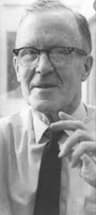
Hebb's introductory textbook applies his cell-assembly framework systematically to the standard topics of psychology, arguing that psychology is fundamentally a biological science. Rather than surveying competing perspectives eclectically, it presents a fixed conceptual approach: mind is an aspect of brain activity, and psychological phenomena—perception, learning, motivation, emotion, thought—must be understood through neurophysiological mechanisms. The book's distinctive mechanism is pedagogical consistency: every chapter reinforces the same biological orientation, training students to think about behavior in terms of neural organization rather than memorizing disconnected findings. Contemporary reviewers noted it was unlike any introductory text of its era.
Key Insights
✦What is the central claim of A Textbook of Psychology, and what does it reject?
The textbook argues that psychology is fundamentally a biological science and that introductory students should learn to think about behavior in terms of neural organization. Hebb rejects the eclectic survey model common in introductory texts of the era, which presented competing perspectives without committing to a unified framework. A contemporary reviewer noted that the book is 'not an encyclopaedic survey of psychology' but 'a statement of what psychology should be and should do,' providing 'a fixed concept applied to the organization of a limited set of phenomena' . The book systematically applies Hebb's cell-assembly theory—mind as an aspect of brain activity, learning as synaptic strengthening—across perception, motivation, emotion, intelligence, and thought.
✦How did reviewers respond to the textbook's strong biological orientation?
Reception was mixed but respectful. R. W. Gerard, reviewing the 1958 first edition in Science, acknowledged that Hebb's book 'presents an original theory and summarizes recent experiments which aim to make a rapprochement between psychology and neurophysiology,' but he explicitly stated it 'cannot be recommended for use by the beginning student,' calling the cell assemblies and phase sequences 'mythical neurological entities' inappropriate for a primary text . A reviewer in the Canadian Journal of Psychology was more positive, noting that the book is 'systematic, and almost unique in the introductory field, providing the student with an approach, avoiding the confusions of eclecticism' . A 1966 review in the Journal of Neurology, Neurosurgery, and Psychiatry praised the revised edition's 'deceptive simplicity' and called it 'an invaluable guide' .
✦What editions exist, and how do they differ?
The textbook went through three editions in Hebb's lifetime. The first edition was published in 1958 by W. B. Saunders (x + 276 pages) . The second edition appeared in 1966 (xvi + 353 pages) and added a chapter on statistics and the control group, among other revisions . The third edition was published in 1972 (xiv + 326 pages) . A fourth edition was published posthumously in 1994 by Kendall/Hunt . The edition matters for citation: the 1966 second edition's table of contents includes chapters on 'Mind and Behavior,' 'Making Inferences from Behavior,' and a 'Interlude on Statistics and the Control Group' not present in the first edition .
✦How does the textbook relate to Hebb's The Organization of Behavior?
The textbook applies the theoretical framework of The Organization of Behavior (1949) to the task of introductory teaching. Gerard's review noted that the basic problems in psychology are discussed 'in terms of a neurophysiological theory of human behavior which the author has previously published' in the 1949 monograph . The textbook translates the cell-assembly and phase-sequence concepts into pedagogical prose, with chapters on the nervous system, learning, motivation, and perception organized around the same theoretical commitments. Unlike the 1949 book, which was written for researchers and graduate students, the textbook assumes no prior knowledge and includes a glossary and chapter summaries. It is thus the pedagogical companion to Hebb's theoretical work.
✦What topics does the textbook cover, and what does it omit?
The 1966 second edition's contents include: mind and behavior; making inferences from behavior; the nervous system (pathways in learning and perception); statistics and the control group; intelligence; motivational mechanisms (arousal, sleep, hunger, pain, sex); emotion and motivation in social context; sensation and perception; the problem of thought; and psychology and the scientific method . The Canadian Journal of Psychology review of the first edition noted what is absent: 'There are no chapters on personality, adjustment, mental health, social behaviour, study habits or the like' . This omission was deliberate: Hebb's aim was to present psychology as a biological science, not to survey applied or clinical topics that dominated other introductory texts.
✦Is the textbook accessible to modern readers without a neuroscience background?
It is a mid-century introductory text written for students with no prior psychology coursework, but its assumptions and style differ from contemporary textbooks. Hebb assumes familiarity with basic neuroanatomy and uses terminology—cell assemblies, phase sequences, nonspecific afferents—that reflects the physiology of his era. The 1966 review in the Journal of Neurology, Neurosurgery, and Psychiatry praised the 'deceptive simplicity of the prose' and noted that students are helped by 'a brief review and a few carefully-chosen references' at each chapter's end . Modern readers will find the statistics chapter dated and the social psychology coverage thin. The book's value today is historical: it shows how Hebb translated his theoretical program into teaching, not as a current introduction to the field.
Wealthy Psyche is an intellectual archive. We do not host, distribute, or sell book copies — physical or digital. We provide structured knowledge to help you think better, faster.