



Essay on Mind
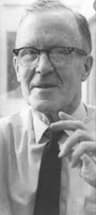
Hebb argues that mind, thought, consciousness, and free will are biologically evident phenomena best understood through evolutionary ideas, and that psychology's central problem—thought—requires a physiological theory of the brain. The book's mechanism is retrospective and philosophical: Hebb recounts the development of his cell-assembly theory, defends it against critics, and extends it to emotion, memory, and infant language, while insisting that psychological concepts must be constrained by physiological evidence rather than merely translated into brain terms. The result is a late-career summation that treats theorizing about the conceptual nervous system as a necessary tool, not speculation.
Key Insights
✦What is the central claim of Essay on Mind, and what does it reject?
Hebb argues that mind, thought, consciousness, creativity, and free will are all biologically evident phenomena, seen most clearly through evolutionary ideas . The book rejects the separation of psychology from biology and philosophy, insisting that psychology's central problem—thought—cannot be addressed without a physiological theory of the brain. Hebb also rejects the charge that his theorizing is 'mere translation' of psychological concepts into physiological language: physiological theory and data, he argues, impose genuine constraints on psychological concepts, generating new predictions and revealing how to reinterpret existing evidence . The book is thus both a defense of the conceptual nervous system and a demonstration of how biological theorizing disciplines psychological explanation.
✦How was Essay on Mind received by reviewers, and what criticisms were raised?
M. J. Morgan, reviewing in Nature (1981), found 'little here that is very new' but praised the book's historical insight into how Hebb arrived at his theory when radical behaviorism made physiological theorizing disreputable . Morgan noted that Hebb's 'gritty style' makes few concessions to professional philosophy and that counter-arguments are put into the mouths of anonymous 'writers' rather than named critics . Morgan also observed that Hebb quotes Hubel and Wiesel's hierarchical model as established fact without mentioning important criticisms, and that extending cell-assembly theory to emotion ('Emotion is a disruption of cell assemblies') will seem 'frankly metaphorical' to many readers . A Japanese review noted that the theory's very comprehensiveness makes it loosely constrained and that Hebb sometimes presents conclusions without sufficient argument .
✦What is the significance of Hebb's claim that his theory is not 'mere translation'?
This is Essay on Mind's most explicit methodological argument. Hebb contends that a physiological theory of behavior is valuable not because it restates psychological findings in brain language, but because physiological evidence and constraints can generate new predictions and reshape how psychologists interpret existing data . If the theory merely translated, it would add nothing. Hebb's claim is that cell-assembly theory, grounded in synaptic plasticity and cortical organization, tells researchers what to look for and how to look at it differently. This position distinguishes his neuropsychological theorizing from both reductionist physiology (which ignores psychological phenomena) and behaviorist psychology (which refuses to theorize about internal mechanisms). It is a middle path that became characteristic of cognitive neuroscience.
✦How does Essay on Mind relate to The Organization of Behavior?
Essay on Mind is a retrospective and extension of the 1949 framework, not a replacement. Morgan noted that Hebb summarizes the historical development of his cell-assembly theory, familiar from The Organization of Behavior, and attempts to relate it to modern neurophysiology and psychology . The later book adds discussions of free will, consciousness, introspection, extrasensory perception, and the usefulness of IQ tests—topics the 1949 monograph did not address . It also responds to the discovery of the ascending reticular activating system, which appeared the same year as The Organization of Behavior and which Hebb integrated into his thinking about arousal and motivation in the intervening decades. Essay on Mind is thus Hebb's own account of what his theory became after thirty years of testing and revision.
✦What does Hebb say about the heredity-environment issue, and why did a reviewer find it notable?
Hebb argues that extreme environmentalism can have morally dangerous effects, a position Morgan found notable because it inverts the usual assumption that environmentalists occupy the moral high ground . Hebb warns that a young student with an inherited predisposition to alcoholism will not take appropriate avoiding action if he assumes all men are born equal and can drink freely without becoming drunks. Morgan called this 'probably good advice, certainly no worse than that given by people who think that it is wicked to believe in genes' . The passage is significant because it shows Hebb, a staunch anti-racist and opponent of genetic determinism about group differences, nevertheless insisting that individual genetic predispositions are real and practically relevant—a position that resists both hereditarian overreach and environmentalist dogma.
✦Is Essay on Mind accessible to non-specialists, and what is its structure?
The publisher describes it as written for advanced undergraduates, graduates, professionals, and laypeople interested in the mind . The first three chapters establish the methodological and philosophical basis for Hebb's biologically centered theory, covering the evolution of mind, nature versus nurture, the origins of cell-assembly theory, and infant thought and language development. The book concludes with a discussion of scientific thought from a practical rather than theoretical perspective . A Japanese reviewer cautioned that despite the 'essay' label, it is not a book to be read straight through; it demands pauses for reflection, though careful reading rewards the effort with the author's distinctive personality permeating the text . Non-specialists will find the middle chapters on cell-assembly theory demanding, but the philosophical framing chapters are more broadly accessible.
Wealthy Psyche is an intellectual archive. We do not host, distribute, or sell book copies — physical or digital. We provide structured knowledge to help you think better, faster.