


Appraising Vocational Fitness: By Means of Psychological Tests
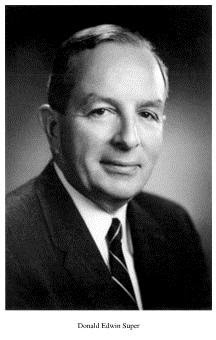 Donald Edwin Super
Super's 1949 book argues that vocational fitness must be appraised through a critical, evidence-based evaluation of psychological tests rather than by accepting test scores at face value. Its central method is to gather the significant research on each widely used test, interpret findings in light of testing theory, and assess each instrument's use and reputation in guidance, clinics, and industry. The book's distinctive contribution is its detailed, objective evaluation of specific tests—aptitude, intelligence, proficiency, interest, and personality—within a single framework for vocational appraisal.
Key Details
Related Books
View AllSimilar books from the same category, ranked by shared topics and reader engagement.



Key Insights — Read in 10 Minutes
What is the central claim of Appraising Vocational Fitness, and what problem does it address?
The book argues that vocational counselors need a critical, evidence-based basis for evaluating psychological tests rather than relying on publishers' claims or reputation alone. Super states his aim is to provide the user of vocational tests with a detailed and objective answer to the question of how good a given test is—the Kuder Preference Record, the Crawford Spatial Relations, or any other—by bringing together the results of significant research, interpreting findings in light of testing theory, and viewing each test in the perspective of those who use it in schools, colleges, consultation services, business, and industry . The problem is the gap between test proliferation and informed evaluation: twenty million Americans took sixty million tests in one year .
How did reviewers assess the book's objective and its success in achieving it?
J. R. Wittenborn's review in the Journal of Applied Psychology identified two objectives: to provide an objective and detailed evaluation of important vocational tests, and to furnish readers with work habits and thought processes for evaluating new instruments. Wittenborn found the first objective realized in chapters that were thorough, straightforward, and mostly free from ambiguity, calling the work scholarly. But he judged the second objective less completely fulfilled . Milton Hahn's review in Psychological Bulletin recommended the book as professionally sound, well-written, authoritative, and thoughtful . A Journal of Consulting Psychology review noted no previous work had surveyed the application of psychological tests to vocational guidance and selection so comprehensively .
What specific limitation did reviewers identify in the book's coverage of tests?
The Journal of Consulting Psychology review identified a structural handicap: because Super's approach was to review the research evidence on particular tests, older tests with large research literatures received the most space, not always in proportion to their merit as shown by the evidence . This means the book's coverage is shaped by the accumulated research record rather than by a systematic ranking of tests by validity or usefulness. Wittenborn also noted that the book's greatest value lay in its careful delineation of the most important respects in which a test may be used, suggesting the evaluation framework itself was more valuable than any ranking of specific instruments .
What is the relationship between the 1949 first edition and the 1962 revised edition?
The revised edition, co-authored with John O. Crites and published by Harper & Row in 1962, was 688 pages compared to the original 727 pages. Bibliographic records document the revised edition's shorter length and Crites's co-authorship . William Cottle's review in Contemporary Psychology noted that changes were made in chapters on multifactor batteries, measurement of interests, and measurement of personality, attitudes, and temperament, reflecting changes in vocational testing over the intervening twelve years . The General Aptitude Test Battery material now included a much more complete discussion of developmental work and additional validation data . A Portuguese-language review added that the statistics appendix was removed as unnecessary and old case chapters were condensed into appendices .
What specific tests were added or removed in the revised edition?
The Portuguese review documented concrete substitutions. Among intelligence tests, the Cooperative School and College Ability Test was added. Among proficiency tests, the Iowa Test of Educational Development, Essential High School Content Battery, SRA Typing Skills Test, and Purdue Vocational Tests appeared. Among personality measures, the Bernreuter and Bell inventories were eliminated because research had not brought relevant information, replaced by the Rotter Incomplete Sentences (projective) and Edwards Personal Preference Schedule . Research on revisions and new editions of the GATB, DAT, Strong Vocational Interest Blank non-occupational scales, Kuder interest inventories, and Allport-Vernon Study of Values was incorporated .
How does this book relate to Super's later theoretical work on vocational development?
Appraising Vocational Fitness is Super's applied measurement text, preceding his theoretical reformulation in The Psychology of Careers (1957). The 1949 book focuses on evaluating existing tests and their predictive validity; the 1957 book reframes vocational choice as lifelong development and introduces vocational maturity. The two projects are complementary: one supplies the measurement tools and their critical appraisal, the other supplies the developmental framework in which those tools are deployed. The Career Pattern Study, which produced The Vocational Maturity of Ninth-Grade Boys (1960), operationalized concepts from the 1957 book and drew on the testing knowledge systematized in the 1949 volume.
Show 2 more insights
What does the book say about the criteria used to measure vocational success?
Super devoted a section to the history of criteria used in research on vocational success . He discussed the conception of immediate, intermediate, and ultimate criteria, drawing on Thorndike and others. This treatment reflects the book's broader methodological concern: evaluating tests requires not only knowing what a test predicts but knowing whether the outcome it predicts—job success—is itself adequately defined and measured. The criteria problem is foundational to vocational psychology because without agreement on what constitutes success, the validity of any predictive instrument remains ambiguous.
What specific guidance does the book offer counselors using test results?
The table of contents includes a chapter titled 'Using Test Results in Counseling' and illustrative cases . The book's final sections address prediction and probability, including misgivings about prediction, the multiplicity of factors affecting outcomes, taking contingency factors into account, probability, and the accuracy of estimates . Super acknowledges that prediction in vocational guidance is probabilistic rather than deterministic, and that multiple factors beyond tested aptitudes and interests shape vocational outcomes. This probabilistic framing distinguishes the book from earlier trait-matching approaches that treated test scores as direct indicators of occupational fit.
Wealthy Psyche is an intellectual archive. We do not host, distribute, or sell book copies — physical or digital. We provide structured knowledge to help you think better, faster.