


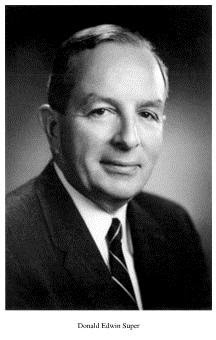
Donald Edwin Super
0Donald Edwin Super was a pioneering American psychologist and a towering figure in the field of vocational psychology and career counseling. Born in Honolulu, Hawaii, he earned his Ph.D. in psychology from Columbia University and spent most of his career at Teachers College, Columbia University. He is internationally renowned for his influential theory of career development, which emphasized the concept of self-concept and its evolution over the lifespan. Super's 'life-span, life-space' theory, including his famous career stages (Growth, Exploration, Establishment, Maintenance, and Decline), fundamentally shifted the understanding of career development from a one-time choice to a lifelong process. His work has profoundly shaped counseling psychology, career education, and human resource development.
Similar Minds
All authors →
Key Insights
- ✦
What is Donald Super best known for?
Donald Super is best known for his life-span, life-space theory of career development, which revolutionized the field of vocational psychology. He proposed that career development is not a single, discrete event but a lifelong process that unfolds across five distinct stages: Growth, Exploration, Establishment, Maintenance, and Decline. He emphasized the crucial role of self-concept in career choice, arguing that individuals seek to implement their self-concepts in their career decisions and that this process evolves as they navigate different life roles and environments over time.
- ✦
What are the five career development stages in Super's theory?
Donald Super's theory identifies five sequential career development stages across the lifespan. The Growth stage (birth to 14) involves developing a self-concept and basic values. The Exploration stage (15-24) involves trying out different career options through education and work experiences. The Establishment stage (25-44) involves settling into a chosen career and achieving stability. The Maintenance stage (45-64) involves sustaining one's position and updating skills. Finally, the Decline or Disengagement stage (65+) involves reducing work activities and preparing for retirement. This model highlights that career development is a dynamic, continuous process.
- ✦
What is the self-concept theory in Super's career development model?
Self-concept theory is central to Donald Super's model of career development. He proposed that individuals have a self-concept—a mental picture of themselves, including their abilities, interests, personality, and values. He argued that career choice is essentially the process of implementing this self-concept in the work world. People seek occupations that they believe will allow them to express and fulfill their self-concept. As people grow and gain experience, their self-concept becomes more complex and refined, leading to changes in career goals and decisions, making the career exploration and development process continuous and evolving.
- ✦
What is Donald Super's most famous book?
Donald Super's most famous book is 'The Psychology of Careers,' first published in 1957. This seminal work was a landmark in the field and laid the foundation for his life-span approach to career development. It synthesized existing research and presented his theory in a comprehensive framework that integrated the concepts of self-concept, career stages, and vocational maturity. Another highly influential work is 'Career Development: Self-Concept Theory,' published in 1963, which further elaborated on his theoretical framework. These works remain essential reading for students and practitioners of career counseling.
- ✦
Where did Donald Super work and what was his role?
Donald Super spent the majority of his distinguished academic career at Teachers College, Columbia University, in New York City. He joined the faculty in 1935 and became a full professor of psychology, eventually serving as the director of the Division of Psychology and Education. He was also a co-founder of the Career Development and Assessment Center at the college. His position at Teachers College provided him with a platform to develop and disseminate his influential theory, and he mentored numerous students who went on to become leading figures in the field of vocational psychology.
- ✦
What is the relationship between Donald Super and the vocational guidance movement?
Donald Super is a central figure in the vocational guidance movement, which was largely founded by Frank Parsons. While Parsons established the 'trait and factor' approach, Super expanded on this foundation by introducing a developmental perspective. He argued that career guidance should not be a one-time matching event but an ongoing process that supports individuals throughout their lives as their self-concept and circumstances change. His work helped to move the field beyond a simple matching model to a more holistic, life-span approach that considers the many roles and contexts that shape an individual's career trajectory.
- ✦
What is the concept of 'career maturity' in Super's work?
Career maturity, a key concept in Donald Super's theory, refers to an individual's readiness to make appropriate career decisions and to cope with the tasks of career development at different life stages. A person with high career maturity is characterized by a realistic and well-developed self-concept, knowledge about the world of work, and the ability to plan and make decisions effectively. Super and his colleagues developed measures to assess career maturity, which have been widely used in career counseling and education to identify individuals who may benefit from additional career guidance and support.
- ✦
How has Donald Super's theory influenced modern career counseling?
Donald Super's theory has had a profound and lasting impact on modern career counseling. His life-span, life-space model has become a foundational framework used by career counselors worldwide. It has shifted the focus of career counseling from a single, static decision to a dynamic, lifelong process of self-exploration and adaptation. His emphasis on self-concept has made career counseling more client-centered and holistic, encouraging practitioners to consider individuals' values, interests, and life roles. His work has also led to the development of numerous career education programs, assessment tools, and interventions designed to support people of all ages in their career journeys.