


.webp?alt=media&token=48ae434b-2ecf-4690-a2ac-e97370fc544a)
Motivating Human Behavior
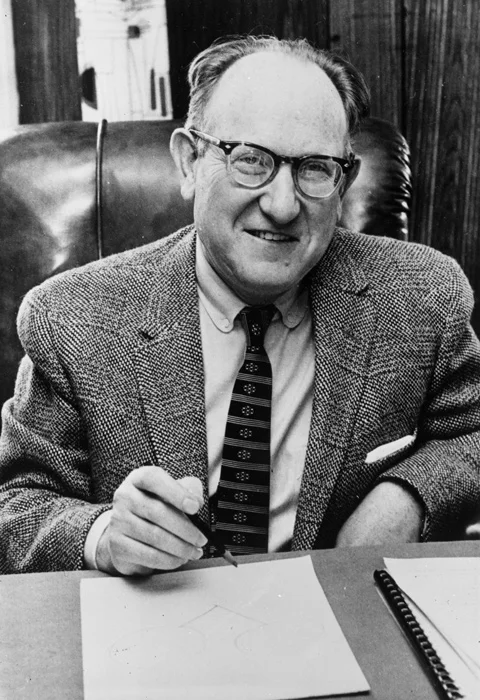 Ernest Dichter
Dichter's 1971 book argues that motivation is not a simple stimulus-response problem but a matter of finding the proper channels—convincing people rather than persuading them by helping them draw the conclusions the motivator wants. The central mechanism is indirection: direct, head-on attempts to change behavior fail because they trigger resistance, while indirect approaches that work through the target's own reactions and conclusions succeed. Dichter presents this as a general theory applicable to advertising, politics, foreign policy, and personal life, treating the behavioral scientist as a professional changer of human nature. The argument extends his motivational research from consumer products to 'twenty major human problems.'
Key Details
Related Books
View AllSimilar books from the same category, ranked by shared topics and reader engagement.



Key Insights — Read in 10 Minutes
What is the central claim of Motivating Human Behavior, and what does it reject?
Dichter argues that motivating behavior is not a direct, head-on task but a matter of finding proper channels and thinking through the target's reactions. The book rejects what Dichter presents as the naive approach of pushing people toward a goal, insisting instead that the effective motivator helps people draw the wanted conclusion themselves. His stated formulation is that motivating means finding the best methods of convincing rather than persuading—a distinction he treats as fundamental but does not define with precision. The framework applies motivational research's indirection to a wide range of contexts, from advertising and product adoption to politics, foreign policy, and organizational behavior, presenting the behavioral scientist as a professional changer of human nature.
How does the book relate to Dichter's earlier work in motivational research?
The book extends the framework Dichter developed in The Strategy of Desire and his Institute for Motivational Research consulting practice, but shifts its scope from consumer products to a broader theory of behavior change. Where earlier works applied depth psychology to buying decisions, Motivating Human Behavior generalizes the method into a set of principles for influencing people across domains. Dichter presents this as a natural expansion: the same unconscious mechanisms that govern product choice also govern political attitudes, organizational performance, and social behavior. The book is divided into two parts—principles and applications to twenty major human problems—though reviewers noted the two halves read similarly and that much of Part One reappears in Part Two, suggesting the expansion was more rhetorical than analytical.
What specific techniques does Dichter recommend for motivating behavior?
Dichter recommends indirection and absurdity as core techniques. Rather than opposing an idea directly, the motivator should draw it out to its absurd conclusions, letting the target arrive at rejection on their own. He advises communicating with young people on their own level, using body language as a motivational channel, and above all helping people draw the conclusions you want drawn. The underlying logic is that direct persuasion triggers resistance, while indirection bypasses it. This framework is consistent with motivational research's general premise that conscious resistance is the primary obstacle to behavior change. Dichter presents these techniques as general-purpose tools applicable wherever one person needs to move another toward a predetermined goal.
How did reviewers evaluate the book's scientific claims?
A contemporary review in the Journal of Economic Issues was sharply critical. The reviewer described the book as an anecdotal account of tricks of the trade dressed up as scientific discoveries, faulting its lack of evidence and its implicit assumption that man is essentially a fool. The reviewer noted that Dichter's own examples unintentionally cast doubt on whether the manipulation he described was even possible, and identified an unresolved ethical gap: Dichter confronts the question of who decides what people ought to do but answers only that there is overall agreement about right and wrong. A participant at a later symposium credited Dichter with anticipating significant themes in consumer psychology but cautioned that his explanations were too general to be effectively tested.
What is the most substantial criticism of Dichter's argument in this book?
The most pointed criticism concerns the book's unexamined assumption that the goals of motivation are uncontroversial. Dichter writes that there is overall agreement about what is right and wrong, which allows him to treat the question of who manipulates whom as unimportant. The Journal of Economic Issues reviewer found this evasion troubling: if everyone already agrees on ends, why is manipulation necessary? The review also noted Dichter's internal inconsistency—claiming that not enough has been done to dispel the misconception that American cities are identical, then asserting that their drab sameness precludes emotional attachment. These weaknesses reflect a broader problem: the book presents persuasion as a neutral technology while systematically avoiding the question of whose ends it serves.
How has the book's argument held up since its publication?
The book's specific claims have not aged well in academic terms. Dichter's anecdotal method and his reliance on unspecified motivational research findings made his conclusions difficult to verify or falsify, and the psychoanalytic framework he employed was already losing ground to cognitive and quantitative approaches by 1971. A later scholarly assessment found that Dichter's explanations were too general to be effectively operationalized. However, the underlying premise—that direct persuasion often backfires and that indirection can be more effective—has some support in later research on reactance and attitude change. The book remains valuable primarily as a historical document of motivational research's late attempt to expand its jurisdiction from consumer behavior to social engineering at large.
Show 1 more insights
Is there a translation or editorial history of note for this book?
Yes. A French translation appeared in 1972 as Motivations et comportement humain, translated by Christine Durieux and published by CLM Publi-union in their Club du livre de management series. A Japanese translation was published in 1975 by Sangyo Noritsu Junior College Press, translated by Yokota Sumiji, Kusano Yoichi, and Narita Tomoko. The German edition appeared in 1971 as Überzeugen, nicht verführen, published by Econ-Verlag, a title that translates roughly as Convince, Don't Seduce—a phrasing that foregrounds the book's central distinction more directly than the English original. These translations suggest the book found audiences in management and business contexts abroad even as its academic reception in the United States remained mixed.
Wealthy Psyche is an intellectual archive. We do not host, distribute, or sell book copies — physical or digital. We provide structured knowledge to help you think better, faster.