



The Naked Manager
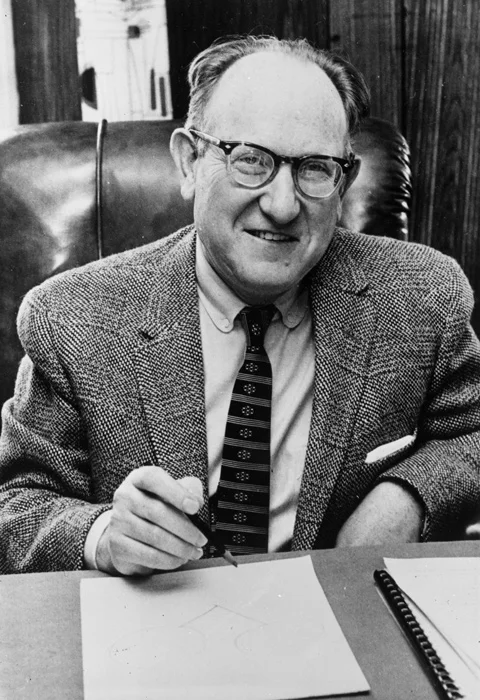 Ernest Dichter
Dichter’s management manual applies his motivational research method to the executive’s own psyche, arguing that managerial effectiveness depends less on rational systems than on the manager’s willingness to abandon rigid logic and acknowledge the unconscious drives shaping decisions. The book’s central mechanism is a deliberate inversion of Taylorist management: rather than optimizing the worker, it asks the manager to become a ‘non-logical’ operator, building error margins into plans and treating intuition as a legitimate tool. The title echoes the emperor’s-new-clothes fable: management, stripped of its procedural disguise, is revealed as a psychological practice.
Key Details
Related Books
View AllSimilar books from the same category, ranked by shared topics and reader engagement.


.webp?alt=media&token=48ae434b-2ecf-4690-a2ac-e97370fc544a)
Key Insights — Read in 10 Minutes
What is the central claim of The Naked Manager, and what does it reject?
Dichter argues that the effective manager must abandon the pretense of purely rational, systematic control. Where conventional management theory of the postwar era emphasized planning, measurement, and organizational logic, The Naked Manager treats those as psychological defenses against the messier realities of motivation and judgment. The book’s governing metaphor—the emperor’s new clothes—targets the idea that management is a coherent technical discipline. Dichter instead presents managerial work as an exercise in applied depth psychology: understanding one’s own unconscious resistances, tolerating ambiguity, and deliberately introducing slack into plans. The argument rejects Taylorist optimization and the human-relations school’s softer rationalism alike, replacing both with a Freudian-inflected skepticism toward managerial self-knowledge.
How does The Naked Manager relate to Dichter’s earlier work in motivational research?
The book is a direct application of the method Dichter developed in The Strategy of Desire (1960) and his consulting practice at the Institute for Motivational Research. In those earlier contexts, depth interviewing and psychoanalytic interpretation were used to uncover consumers’ unconscious attitudes toward products. The Naked Manager turns the same lens inward, onto the executive. Dichter does not introduce a new research technique; instead he argues that managers should treat their own decisions as data requiring motivational analysis. This makes the book a late-career extension rather than a departure: Dichter’s claim is that the same irrational drives that govern purchase behavior also govern managerial behavior, and that ignoring this fact produces predictable failures.
What specific practices does Dichter recommend to managers?
The prescriptions are anti-systematic. Dichter advises adding 20 to 30 percent margins for error to all cost and time estimates, preparing alternative plans for likely breakdowns, and deliberately leaving tasks unfinished so the next day begins with momentum rather than inertia. He recommends a ‘planned way of becoming unplanned’: once a day doing something outside routine, changing habits, cultivating interests unrelated to work. The underlying logic is that rigidity produces brittleness. By building slack and unpredictability into managerial life, the manager preserves flexibility and reduces the anxiety that drives compulsive overplanning. These recommendations are less a method than a set of psychological countermeasures against the manager’s own motivational blind spots.
How was The Naked Manager received, and where does it sit in Dichter’s bibliography?
The book appeared in 1974 from Cahners Books, a Boston publisher serving the business and industrial market, and received a brief review in Library Journal that year. It was not a major commercial or academic event in the way Dichter’s earlier consumer research had been. By the 1970s, motivational research’s Freudian foundations were increasingly contested by cognitive psychology and quantitative market research, and The Naked Manager reads partly as a restatement of Dichter’s commitments at a moment when their prestige was declining. It was translated into German as Der nackte Manager in 1975, and Dichter continued to publish on management themes, but the book has not become a standard reference in management history or consumer psychology.
Is The Naked Manager the same as Robert Heller’s book of the same title?
No. Robert Heller published The Naked Manager in 1972, a British management critique that shares the emperor’s-new-clothes metaphor but argues from a different tradition—journalistic skepticism about management fads and corporate rhetoric. Dichter’s 1974 book is unrelated in content and approach. The title coincidence is a genuine source of bibliographic confusion: library catalogs and used-book listings sometimes conflate the two, and the 1990s reissue The Naked Manager for the Nineties is Heller’s work, not Dichter’s. For readers interested in Dichter specifically, the correct bibliographic markers are the 1974 Cahners imprint and the 156-page length.
How has The Naked Manager’s argument held up since its publication?
Its cultural diagnosis has aged more durably than its prescriptions. Dichter’s claim that managerial rationality is partly a performance—a defense against anxiety and ambiguity—anticipates later work in behavioral economics and organizational psychology on cognitive biases and emotional labor. But the book’s Freudian vocabulary and its reliance on the manager’s introspective access to unconscious motivation sit awkwardly with contemporary evidence-based management. The specific advice to build 30 percent error margins into plans reads today as prudent project management rather than radical psychological insight. The book remains valuable primarily as a document of how mid-century motivational research tried to expand its jurisdiction from the consumer to the executive.
Wealthy Psyche is an intellectual archive. We do not host, distribute, or sell book copies — physical or digital. We provide structured knowledge to help you think better, faster.