



The Psychology of Everyday Living
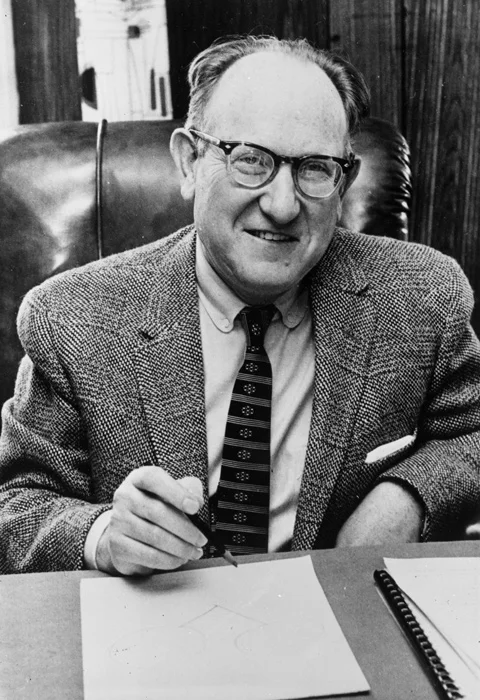 Ernest Dichter
Dichter's 1947 book argues that consumer behavior is governed by unconscious motives that people cannot accurately report, and that depth interviews, not questionnaires, are the only reliable way to reach them. Published as an accessible self-help manual, the book introduced Dichter's psychoanalytic findings about soap, cars, appliances, and cigarettes to a wide public, teaching readers to accept the morality of the good life. It is the popular statement of the motivational research position Dichter had been developing in commercial work: stated reasons for purchases are rationalizations, while actual motives are symbolic, often sexual, and reliably at odds with what consumers say.
Key Details
Related Books
View AllSimilar books from the same category, ranked by shared topics and reader engagement.


.webp?alt=media&token=48ae434b-2ecf-4690-a2ac-e97370fc544a)
Key Insights — Read in 10 Minutes
What is the central claim of The Psychology of Everyday Living, and what does it reject?
Dichter argues that consumer behavior is governed by unconscious motives that respondents cannot accurately report. Conventional market research asked people why they bought things and recorded their answers; Dichter's claim is that those answers are rationalizations produced on demand, while the actual motives are symbolic, often sexual, and reliably at odds with the stated reason. The book rejects the questionnaire as a reliable instrument for uncovering motivation. His method—small numbers of long, open, psychoanalytically informed interviews—was designed to reach the unconscious directly. This depth-interview approach is the ancestor of the focus group and of qualitative consumer research generally, making the book a foundational statement of motivational research's core methodological premise.
What specific psychoanalytic findings did Dichter introduce to a wide public in this book?
Dichter translated his commercial research into accessible claims about everyday objects. He argued that a convertible functioned as a mistress while a saloon car symbolized a wife; that baking a cake was symbolically giving birth, explaining why cake mixes sold poorly until manufacturers required the addition of a fresh egg, restoring the baker's participation; that cigarettes were about oral gratification and reward; and that soap involved more than cleanliness. He is also credited with much of the campaign framing that made a diamond an expression of commitment. These interpretations, presented as case studies rather than statistical findings, became the signature examples of motivational research and circulated widely in mid-century advertising culture.
How does the book relate to Freud's The Psychopathology of Everyday Life?
The title is a deliberate play on Freud's work, signaling Dichter's ambition to bring psychoanalytic interpretation from the clinic into the American home and marketplace. Where Freud examined slips, jokes, and symptoms as windows into unconscious conflict, Dichter examines product choices, brand preferences, and consumption habits. The relationship is one of popularization and application: Dichter adopts Freud's fundamental premise that conscious reasoning is a surface phenomenon concealing deeper drives, but redirects the analytic lens toward commercial behavior. The book presents itself as a self-help manual, teaching readers to recognize and accept their own unconscious motivations, particularly around pleasure and consumption, in a culture Dichter saw as burdened by puritanical guilt.
What was Dichter's stated social purpose in writing the book?
Dichter designed the book as an accessible self-help manual to help Americans, in his words, accept the morality of the good life. He believed the country's traditional puritanical values were out of sync with capitalist ideology and wanted to encourage people to shed guilty feelings about self-indulgent pleasures and find satisfaction in buying things. This was not merely a commercial pitch but a cultural argument: Dichter saw consumption as therapeutic, a legitimate route to self-realization. The book's framing reflects his broader vision of motivational research as a force for modernizing American attitudes toward pleasure, a vision that critics like Betty Friedan would later argue worked to contain women and squelch independence by directing their desires toward household consumption.
How has the book's method held up since its publication?
The book's psychoanalytic framework fell out of favor in academic marketing as the field moved sharply toward quantitative methods in the 1960s and after. Dichter's interpretations were produced by a method that could not be checked and were frequently asserted with more confidence than the evidence carried, making them largely unfalsifiable by the standards of later research. However, the underlying premise—that much decision-making is non-conscious—has been substantially rehabilitated by behavioral economics and dual-process theories of cognition. His practical legacy survived the theoretical repudiation: the qualitative depth interview remains standard practice in consumer research. The book is now valued less for its specific findings than as a historical document of motivational research's foundational moment.
How does The Psychology of Everyday Living relate to The Strategy of Desire?
The 1947 book is the popular statement of the position Dichter developed in commercial work and later elaborated in The Strategy of Desire (1960). Where Everyday Living introduces his psychoanalytic findings to a general audience as a self-help manual, Strategy of Desire is a more direct methodological and defensive argument, written partly as a rebuttal to Vance Packard's The Hidden Persuaders (1957). Both books share the same core premise about unconscious motivation, but Everyday Living is less polemical and more instructional. The relationship is one of application and continuation: the later book defends and systematizes the method the earlier book popularized, making Everyday Living the essential starting point for understanding Dichter's public-facing rhetoric.
Show 2 more insights
How was the book received and what is its historical significance?
The book established Dichter as a public intellectual and made motivational research a topic of popular discussion well before Packard's critique. Published by Barnes & Noble in 1947, it was widely reviewed and helped legitimate the application of depth psychology to consumer behavior. Dichter's influence in the 1950s was enormous, though his reputation became contested after Packard made him the public face of manipulative advertising. The book's significance lies in its role as a bridge between psychoanalytic theory and commercial practice, demonstrating how Freudian concepts could be translated into marketable research findings. It remains a key primary source for understanding how motivational research presented itself to the public before it became a subject of ethical controversy.
Is this book the same as Donald Norman's The Psychology of Everyday Things?
No. The titles are similar but the books are unrelated. Donald Norman's The Psychology of Everyday Things (1988), later retitled The Design of Everyday Things, is a work of cognitive psychology about how design shapes human interaction with objects. Dichter's 1947 book is a psychoanalytic study of consumer motivation. The confusion arises from the shared phrase in the titles and the fact that both books deal with everyday objects, but their methods, theoretical commitments, and historical contexts are entirely different. Dichter's book predates Norman's by four decades and belongs to the motivational research tradition, while Norman's belongs to cognitive science and human-centered design.
Wealthy Psyche is an intellectual archive. We do not host, distribute, or sell book copies — physical or digital. We provide structured knowledge to help you think better, faster.