


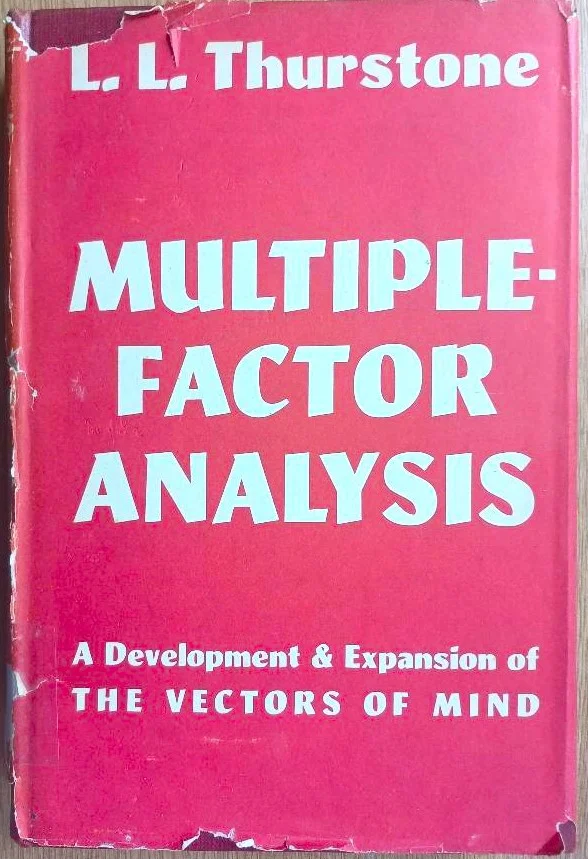
Multiple-Factor Analysis: A Development and Expansion of The Vectors of the Mind
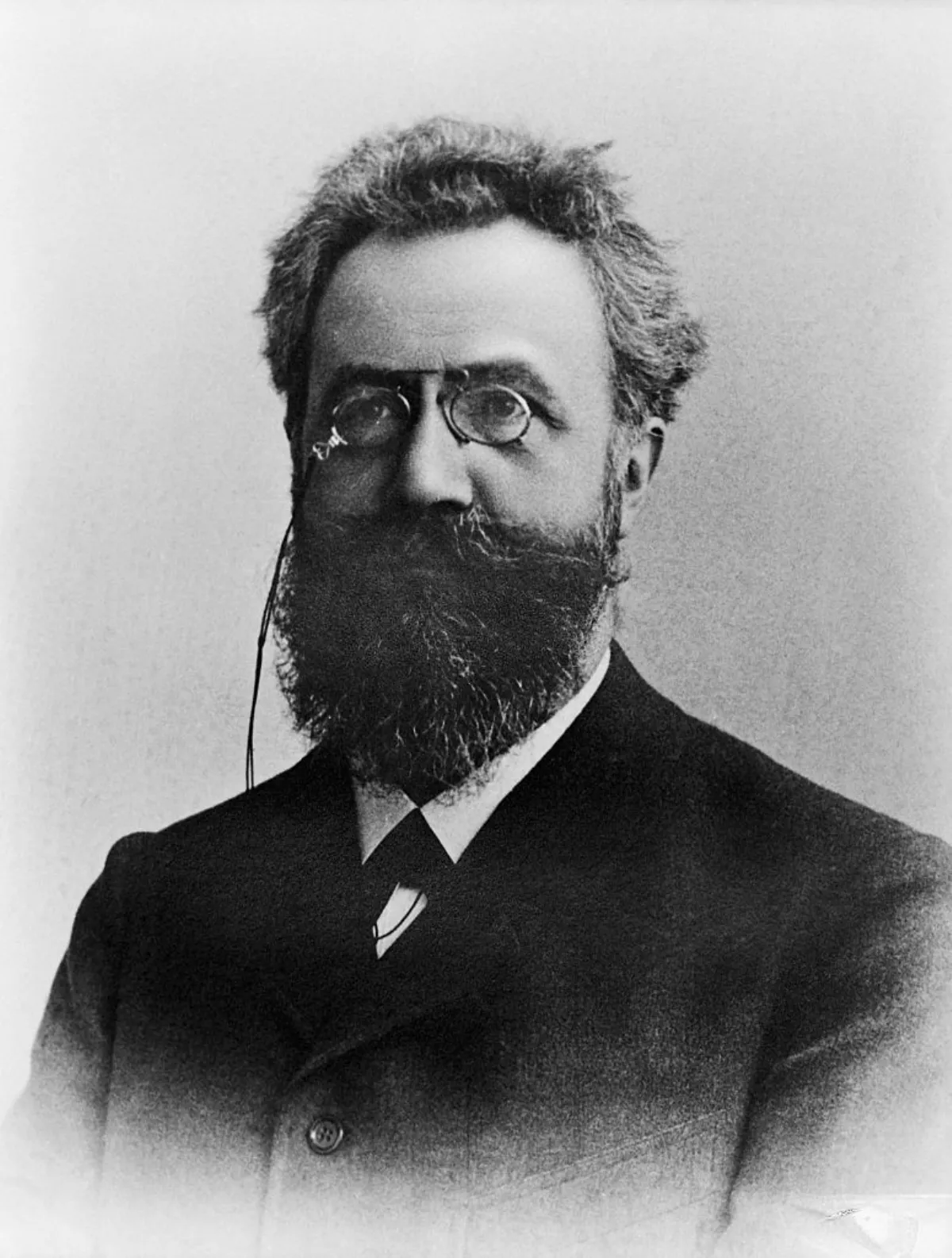 L.L. Thurstone
Thurstone's 1947 treatise is his definitive statement on the theory and operations of multiple-factor analysis, expanding the 1935 Vectors of Mind into a comprehensive methodological handbook. The book's central mechanism is the rotation of arbitrary mathematical axes to 'simple structure,' a criterion that makes factors psychologically interpretable as distinct abilities rather than artifacts of the extraction procedure. Thurstone clarifies the contested concepts of communality, simple structure, and rotation that had drawn criticism in the earlier volume, while deliberately excluding substantive applications to focus entirely on the rationale and mathematics of the method itself.
Key Details
Related Books
View AllSimilar books from the same category, ranked by shared topics and reader engagement.



Key Insights — Read in 10 Minutes
What is the central argument of Multiple-Factor Analysis, and how does it differ from Thurstone's earlier work?
The book's central argument is methodological rather than substantive: multiple-factor analysis, properly executed through the rotation of arbitrary axes to simple structure, can identify psychologically meaningful factors without assuming a single general factor. It differs from The Vectors of Mind (1935) in scope and clarity. As the Journal of Consulting Psychology review noted, the 1947 volume was initially intended as a revision but grew into an expanded treatise, with the controversial issues of the earlier volume — especially simple structure, communality, and rotation — substantially clarified . Thurstone deliberately omitted applications to psychological problems, covering those in other references, and focused entirely on the theory, rationale, and operations of the method itself .
Why does the book include a fifty-page mathematical introduction?
The mathematical introduction serves readers who need a refresher on matrix algebra and the symbolic notation used throughout the factor-analytic procedures. The reviewer in the Journal of Consulting Psychology observed that this introduction reviews the basic concepts and symbols and can serve as a reference source . Thurstone made no concession to readers without mathematical training — the reviewer stated the book 'can hardly be recommended to a reader without mathematical training' — but praised the clarity of presentation as remarkable for so symbolic a subject . This combination of mathematical rigor and pedagogical clarity became a hallmark of Thurstone's methodological writing.
What specific contribution did the book make to the concept of simple structure?
Simple structure is the criterion Thurstone developed to solve the indeterminacy problem in factor analysis: since an infinite number of factor solutions can reproduce any correlation matrix, some principle is needed to select the psychologically meaningful one. Simple structure specifies that each test should load highly on as few factors as possible and near-zero on the rest. The 1947 book clarified this concept beyond what the 1935 volume had achieved. Thurstone stressed that simple structure's invariance across different test samples was his most important contribution to factor analysis. The review noted that many parts of the book's logic 'contribute to the theory of experimental design' more broadly .
How did the book address the indeterminacy problem in factor analysis?
Factor indeterminacy is the mathematical fact that for any correlation matrix, infinitely many factor solutions exist — the factors are not uniquely determined by the data alone. Thurstone's response was to argue that simple structure provides the necessary criterion for selecting the correct solution. The book's extended treatment of rotation is central here: the arbitrary axes produced by centroid extraction must be rotated to positions where the simple structure criterion is met. The 1947 volume clarified how this rotation should be performed and why the resulting factors should be considered invariant. This argument remained contested, with critics questioning whether simple structure truly resolves the indeterminacy problem or merely imposes a particular aesthetic on the solution.
What is the relationship between this book and Thurstone's Primary Mental Abilities?
Multiple-Factor Analysis (1947) is the methodological treatise that provides the complete theoretical justification for the empirical findings reported in Primary Mental Abilities (1938). The 1938 monograph applied multiple-factor analysis to a battery of fifty-seven tests, extracting and rotating factors to reveal seven primary abilities. The 1947 book, by contrast, focuses entirely on the method itself — its theory, rationale, and mathematical operations — without presenting new empirical applications. Together they form a pair: the 1938 work demonstrates what the method can find, while the 1947 work explains why the method is sound. Britannica describes the 1947 volume as 'an extensive rewriting of Vectors' that solidified the approach .
How did contemporary reviewers assess the book's pedagogical value and intended audience?
Reviewers consistently noted the book's rigor and its demanding prerequisites. The Journal of Consulting Psychology review stated it 'can hardly be recommended to a reader without mathematical training' but praised the clarity as remarkable for so symbolic a subject, concluding it would become 'an indispensable guide for research workers using factor analysis, and a valuable textbook for advanced students' . A French review in the Conservatoire national des arts et métiers noted that numerous figures and numerical examples made the recommended procedures easily accessible, and that the preface, in which Thurstone recounted the evolution of factor-analytic methods and discussed objections, should be read profitably . The book was positioned as a working manual for serious researchers, not an introduction for general readers.
Wealthy Psyche is an intellectual archive. We do not host, distribute, or sell book copies — physical or digital. We provide structured knowledge to help you think better, faster.