


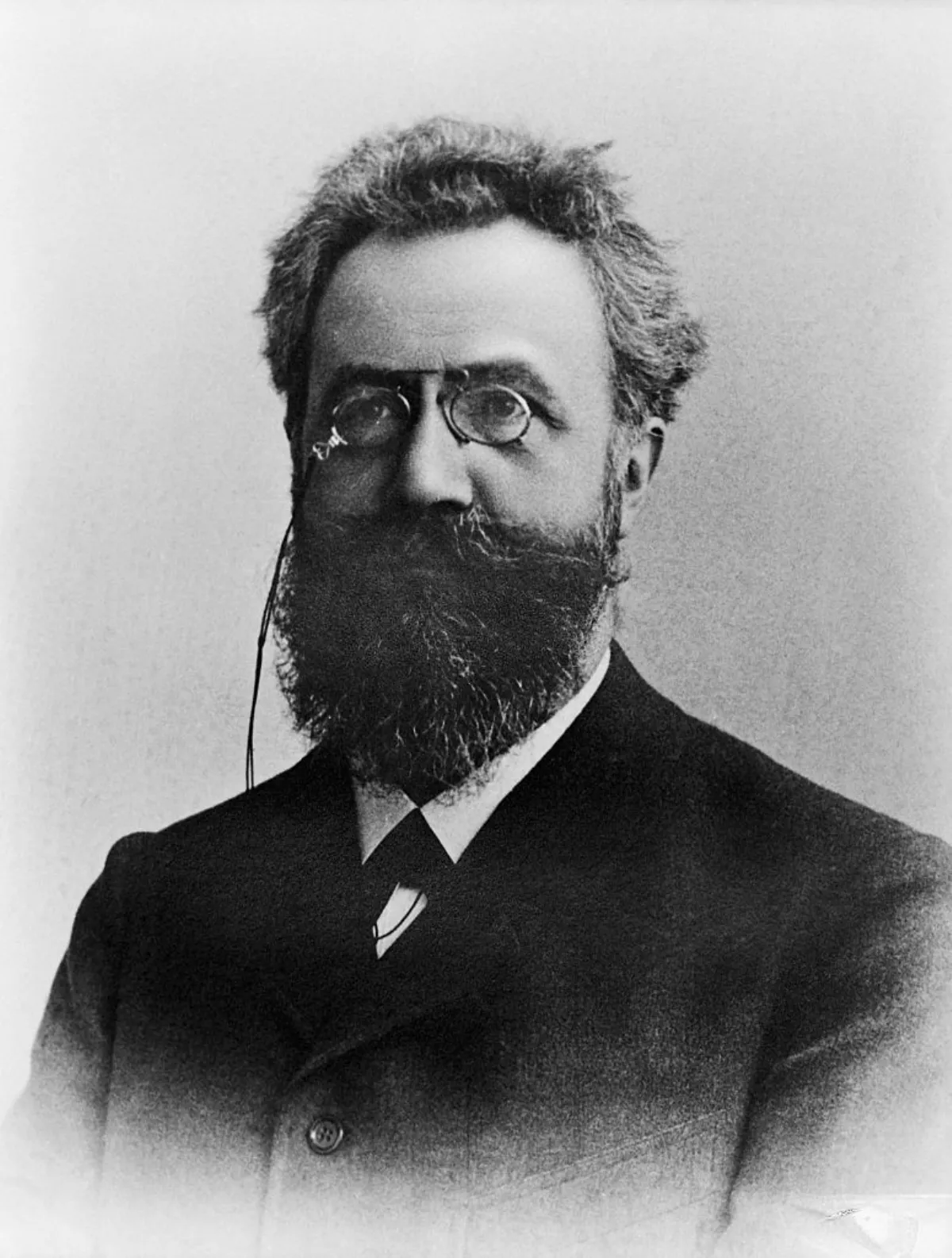
L.L. Thurstone
0Louis Leon Thurstone was an American psychologist and a seminal figure in psychometrics, renowned for his contributions to factor analysis and intelligence theory. He challenged Spearman's unitary 'g' factor by proposing a theory of primary mental abilities, identifying seven distinct factors such as verbal comprehension, spatial visualization, and numerical ability. Thurstone developed multiple statistical methods, including the centroid method of factor extraction and the law of comparative judgment, which became foundational in psychological measurement. He was a professor at the University of Chicago and later at the University of North Carolina. His work profoundly influenced personality assessment, educational testing, and the structure of cognitive abilities, establishing him as a pioneer of multivariate analysis in psychology.


Key Insights
- ✦
What is L.L. Thurstone best known for?
L.L. Thurstone is best known for his theory of primary mental abilities, which proposed that intelligence is not a single unitary factor (as Spearman suggested) but rather comprises multiple distinct factors, including verbal comprehension, word fluency, number facility, spatial visualization, associative memory, perceptual speed, and reasoning. He developed the centroid method of factor analysis to identify these factors and created the Thurstone Primary Mental Abilities Test to measure them. His work shifted the focus in psychometrics from general intelligence to multidimensional models, influencing subsequent theories such as Cattell's fluid-crystallized intelligence and Carroll's three-stratum model.
- ✦
What are Thurstone's seven primary mental abilities?
Thurstone's seven primary mental abilities are: (1) Verbal Comprehension (understanding and using language); (2) Word Fluency (ability to produce words rapidly); (3) Number Facility (speed and accuracy in arithmetic); (4) Spatial Visualization (mental manipulation of shapes and forms); (5) Associative Memory (rote memory for paired associates); (6) Perceptual Speed (rapid identification of details); and (7) Reasoning (logical problem-solving). He argued that these abilities are relatively independent and that a person's cognitive profile reflects their standing on each factor. This framework was a major departure from Spearman's g-centric view and provided a more nuanced understanding of intellectual diversity, influencing educational and vocational assessments.
- ✦
How did Thurstone contribute to factor analysis?
Thurstone made several pivotal contributions to factor analysis, including the development of the centroid method, which simplified the extraction of factors from correlation matrices and made the technique more practical before the advent of computers. He also introduced the concept of simple structure, advocating for factor rotations (oblique and orthogonal) that produce interpretable factors by maximizing the number of near-zero loadings, thereby clarifying the distinctness of each factor. His 1947 book 'Multiple-Factor Analysis' systematized these methods and became a standard reference. These innovations allowed researchers to explore complex psychological constructs and laid the groundwork for modern multivariate techniques in psychology, education, and other social sciences.
- ✦
What is Thurstone's law of comparative judgment?
Thurstone's law of comparative judgment is a mathematical model for scaling psychological stimuli based on pairwise comparisons. It posits that when individuals compare two stimuli, their judgments reflect the difference in the perceived strength of the underlying psychological attribute, plus random error. This model allowed researchers to place stimuli on a continuous scale, such as measuring attitudes, preferences, or sensory intensities, even when direct measurement was impossible. It became a cornerstone of psychophysical scaling and attitude measurement, influencing the development of Likert scales and other psychometric techniques. Thurstone's work in scaling was highly innovative, bridging the gap between psychological theory and quantitative measurement.
- ✦
How did Thurstone's theory differ from Spearman's theory of intelligence?
Thurstone's theory of primary mental abilities directly challenged Spearman's two-factor theory, which emphasized a single general intelligence (g) factor. While Spearman argued that all cognitive abilities share a common core, Thurstone maintained that intelligence is composed of multiple, relatively independent factors. He used factor analysis to demonstrate that correlations among tests could be explained better by several group factors than by a single g. However, later research showed that even Thurstone's factors are positively correlated, suggesting a higher-order g factor. In practice, both perspectives have been integrated into hierarchical models, where g sits at the top, and primary abilities are subordinate factors.
- ✦
What were Thurstone's major publications?
Thurstone's major publications include 'The Vectors of Mind' (1935), which introduced his multiple-factor theory; 'Primary Mental Abilities' (1938), which detailed his test and factor analyses; and the seminal 'Multiple-Factor Analysis' (1947), which provided a comprehensive treatise on factor analytic methods. He also authored 'A Law of Comparative Judgment' (1927), outlining his scaling model, and 'The Measurement of Values' (1959), which applied his scaling techniques to attitudes and values. These works are foundational texts in psychometrics and have been widely cited across psychology, education, and statistics, cementing his reputation as a methodological pioneer.
- ✦
How did Thurstone influence modern intelligence testing?
Thurstone's work influenced modern intelligence testing by shifting the focus from a single IQ score to multiple subtest scores reflecting distinct abilities. His Primary Mental Abilities Test was one of the first to provide a profile of strengths and weaknesses, which became a model for later tests like the Wechsler scales and the Woodcock-Johnson tests, which also report composite scores alongside separate indices for verbal comprehension, perceptual reasoning, working memory, and processing speed. Thurstone's factor analytic approach also guided the development of the Cattell-Horn-Carroll (CHC) theory, which is the current standard for many intelligence batteries. Thus, his multidimensional view enriched the assessment and interpretation of cognitive functioning.
- ✦
What were the criticisms of Thurstone's primary mental abilities theory?
Criticisms of Thurstone's theory include that his seven primary abilities are not entirely independent; they often show moderate positive correlations, suggesting an underlying general factor. Later factor analyses, including those by John Carroll, found that a hierarchical model with a general factor and broad group factors fits the data better than Thurstone's original orthogonal solution. Some researchers also argued that the number and nature of factors depend heavily on the tests selected for analysis, raising questions about the stability of the factor structure. Despite these critiques, Thurstone's emphasis on multidimensional assessment and his methodological rigor remain highly influential, and his work is widely respected for advancing understanding of cognitive abilities.