


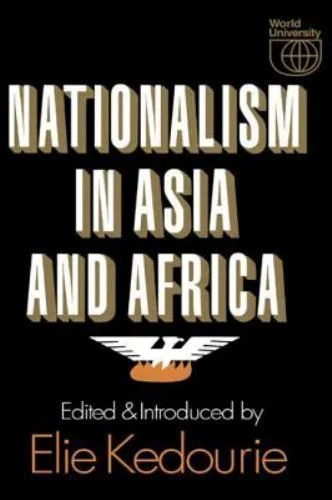
Nationalism in Asia and Africa
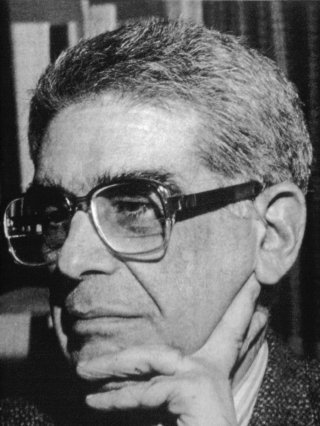 Elie Kedourie
This 1970 anthology, edited and introduced by Elie Kedourie, collects twenty-five primary writings by Asian and African nationalists, mostly from the pre-World War II era. In his long introduction, Kedourie argues against the prevailing view that Third World nationalism was a natural reaction to economic imperialism or alien rule. He instead advances a 'germ theory' explanation: nationalism was a West European doctrine exported to Asia and Africa, where it was adopted by frustrated elites and fused with local religious and cultural resentments. The selections—from Sun Yat-sen and Marcus Garvey to Frantz Fanon and a Mau Mau oath—illustrate nationalism's co-optation of religion, its search for a glorious past, and its glorification of violence.
Key Details
Related Books
View AllSimilar books from the same category, ranked by shared topics and reader engagement.



Key Insights — Read in 10 Minutes
What is Kedourie's central argument in Nationalism in Asia and Africa?
Kedourie argues against the prevailing view that Asian and African nationalism was a natural consequence of European exploitation or imperial rule. He instead advances a 'germ theory' explanation: nationalism was a West European doctrine invented in the early nineteenth century and exported to Asia and Africa, where it was adopted by frustrated elites and fused with local religious and cultural resentments . This exported doctrine, he contends, has inflicted on these regions a perversion of their proper destiny, generating resentment, a cult of violence, and a false opposition between European guilt and Asian-African innocence.
What does Kedourie mean by a 'germ theory' of nationalism?
The 'germ theory' metaphor, as identified by Kirkus Reviews, describes Kedourie's view that nationalism was a West European 'germ' that infected Asia and Africa through contact with European ideas and institutions . It was not an indigenous response to local conditions or a natural reaction to exploitation, but an imported pathogen. The frustrated elites of colonised societies—educated in European schools and excluded from power—were the carriers who spread the doctrine. Kedourie's introduction also argues that the concept of 'imperialism' as economic exploitation was itself a recent European invention, propagated by European publicists who inculcated guilt in Western audiences .
What selections does the anthology include, and how do they illustrate Kedourie's thesis?
The twenty-five selections range widely: Adamantios Koraes on Greek civilisation, Ziya Gökalp on Turkish nationalism, Surendranath Banerjea on Indian history, Choudhary Rahmat Ali's 'The Idea of Pakistan,' Edward Blyden on the Negro in ancient history, Cheikh Anta Diop on Ethiopia-Nubia-Egypt, Marcus Garvey, Sun Yat-sen, Frantz Fanon's 'Concerning Violence,' a Mau Mau oath, a messianic creed from the Congo, and Bolshevik position papers by Stalin and Sultan Galiev . Kedourie chose documents that illustrate his themes: nationalism's co-optation of religion, its 'search for a past' to amplify nationalist sentiment, and its glorification of violence .
How was Nationalism in Asia and Africa received by reviewers?
Reception was sharply divided. A reviewer in The Journal of Modern African Studies found Kedourie's thesis provocative but noted his 'aggrieved hostility' toward Asian and African nationalism, viewing it as a Western import that perverted local destinies . The reviewer also observed that the volume's selections are uneven—Gandhi, Nehru, Jinnah, and Sukarno are absent or given only brief mention in the introduction . Kirkus Reviews called it 'an odd book, not comprehensive in any sense, but potentially worthwhile for industrious students of history and ideology' . The Times Literary Supplement correspondence between Kedourie and editor Arthur Crook regarding the review survives in the Kedourie papers .
How does this anthology relate to Kedourie's earlier book Nationalism (1960)?
Nationalism in Asia and Africa applies and extends the argument of Kedourie's 1960 monograph to the non-European world. Where the earlier book traced nationalism's philosophical origins to Kantian self-determination and its nineteenth-century European development, the 1970 anthology demonstrates how the same doctrine was exported to Asia and Africa and adopted by local elites. The long introduction develops the 'germ theory' metaphor and engages directly with Marxist and anti-imperialist accounts of Third World nationalism, which Kedourie rejects. The anthology thus serves as both a sourcebook of nationalist writings and a polemical extension of Kedourie's critique.
What is the most common criticism of Kedourie's approach in this book?
The most persistent criticism is that Kedourie reduces Asian and African nationalism to a Western import while neglecting the genuine grievances, aspirations, and agency of colonised peoples. The reviewer in The Journal of Modern African Studies argued that Kedourie pays 'too little attention to the simpler thesis that there came a time, under special circumstances well worth exploring, when peoples who had been overrun and subordinated by aliens demanded the right to run their own affairs, whether well or badly' . This critique anticipates later postcolonial scholarship that emphasises the indigenous roots and varied forms of anti-colonial nationalism.
Show 1 more insights
Why does the anthology include Bolshevik documents on the national question?
Kirkus Reviews notes that the inclusion of three Bolshevik position papers—theses of the Second Congress of the Communist International, Stalin's 'Nationalism Outside Europe,' and Sultan Galiev's 'Social Revolution and the East'—'somewhat compensate[s] for Kedourie's scanty treatment of the opposition between anti-capitalist nationalism and class-struggle socialism' . The Bolshevik documents represent an alternative Marxist analysis of nationalism in colonial contexts, which Kedourie's introduction criticises but which the selections allow readers to encounter directly. Their presence gives the anthology a broader ideological range than Kedourie's own editorial stance might suggest.
Wealthy Psyche is an intellectual archive. We do not host, distribute, or sell book copies — physical or digital. We provide structured knowledge to help you think better, faster.